Fashion
Martine Rose Is Back at Balenciaga, and This Time She’s in Charge
Kering has named the London designer creative director, effective 16 November. After years bending the uniforms of everyday life, she inherits a house big enough to make the whole world look twice.

Text

Text

Noah Cruz

Noah Cruz

Fashion
Martine Rose Is Back at Balenciaga, and This Time She’s in Charge
Kering has named the London designer creative director, effective 16 November. After years bending the uniforms of everyday life, she inherits a house big enough to make the whole world look twice.

Martine Rose has spent years making a football shirt look as charged as an evening dress. Now she gets Balenciaga. Kering confirmed her appointment on Friday, 6 November; she begins the Paris-based role on 16 November, following Pierpaolo Piccioli’s departure. The job comes with couture ateliers, a global business and the dangerous opportunity to turn a very particular eye into the language of an entire house.

It is a return with considerably more power. Rose previously worked on Balenciaga menswear during Demna’s tenure. Her own label, founded in 2007, made a different kind of case for fashion’s future: club clothes, football culture, tailoring and the people who wear them all allowed into the same room. She has always been alert to the tiny social signals in an outfit. A trouser leg, a collar, a shoe suddenly says who you are trying to be and where you have just come from.
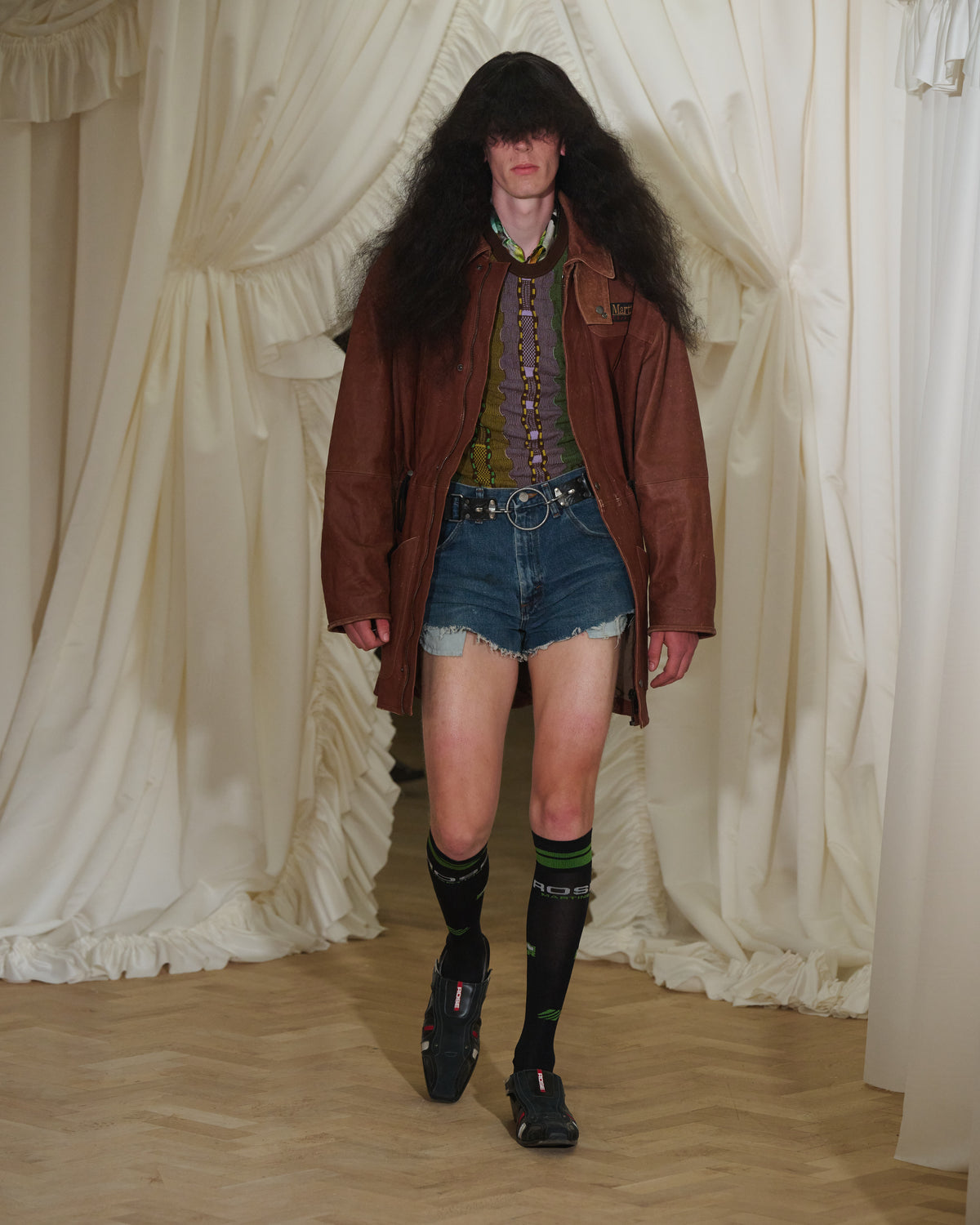
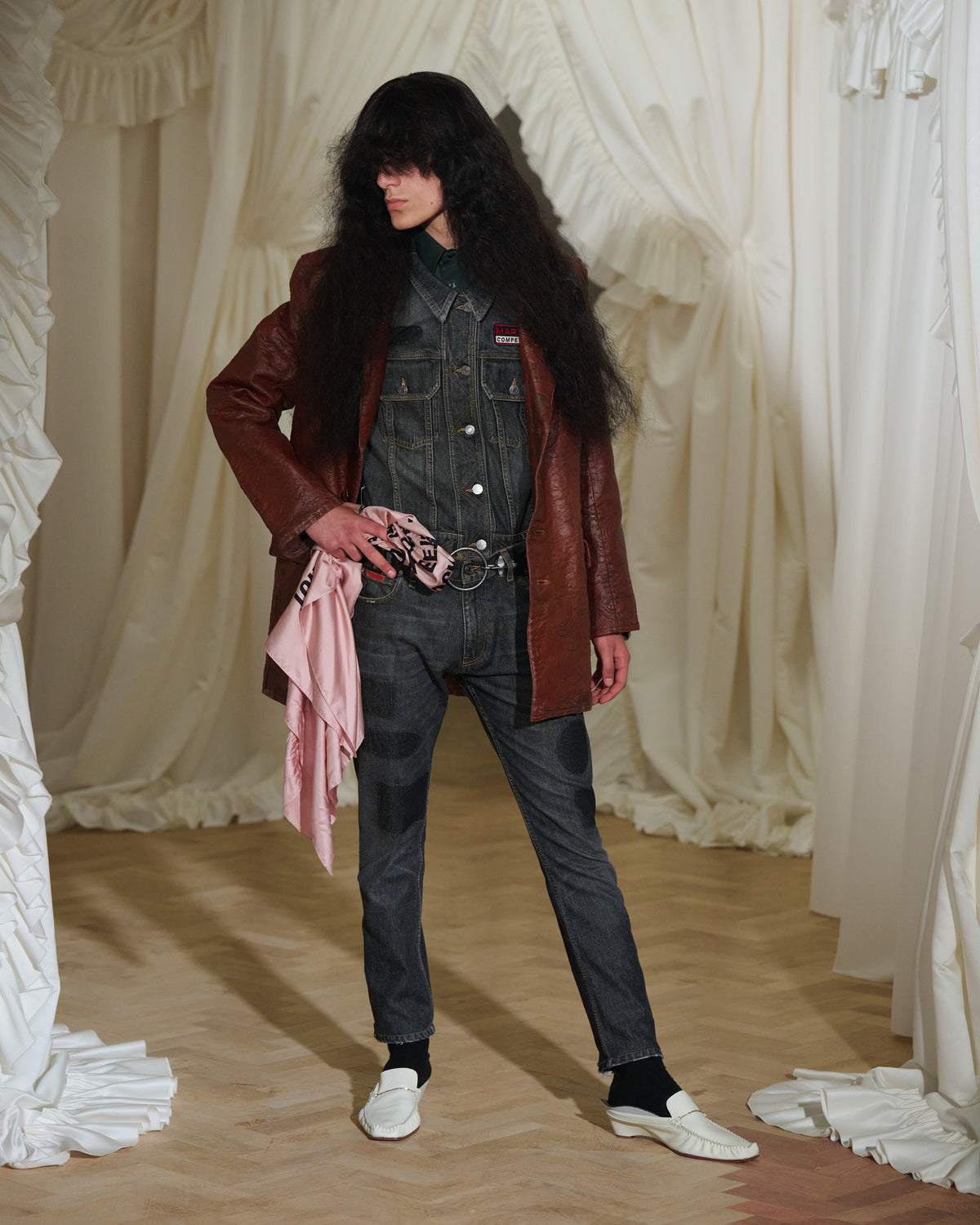
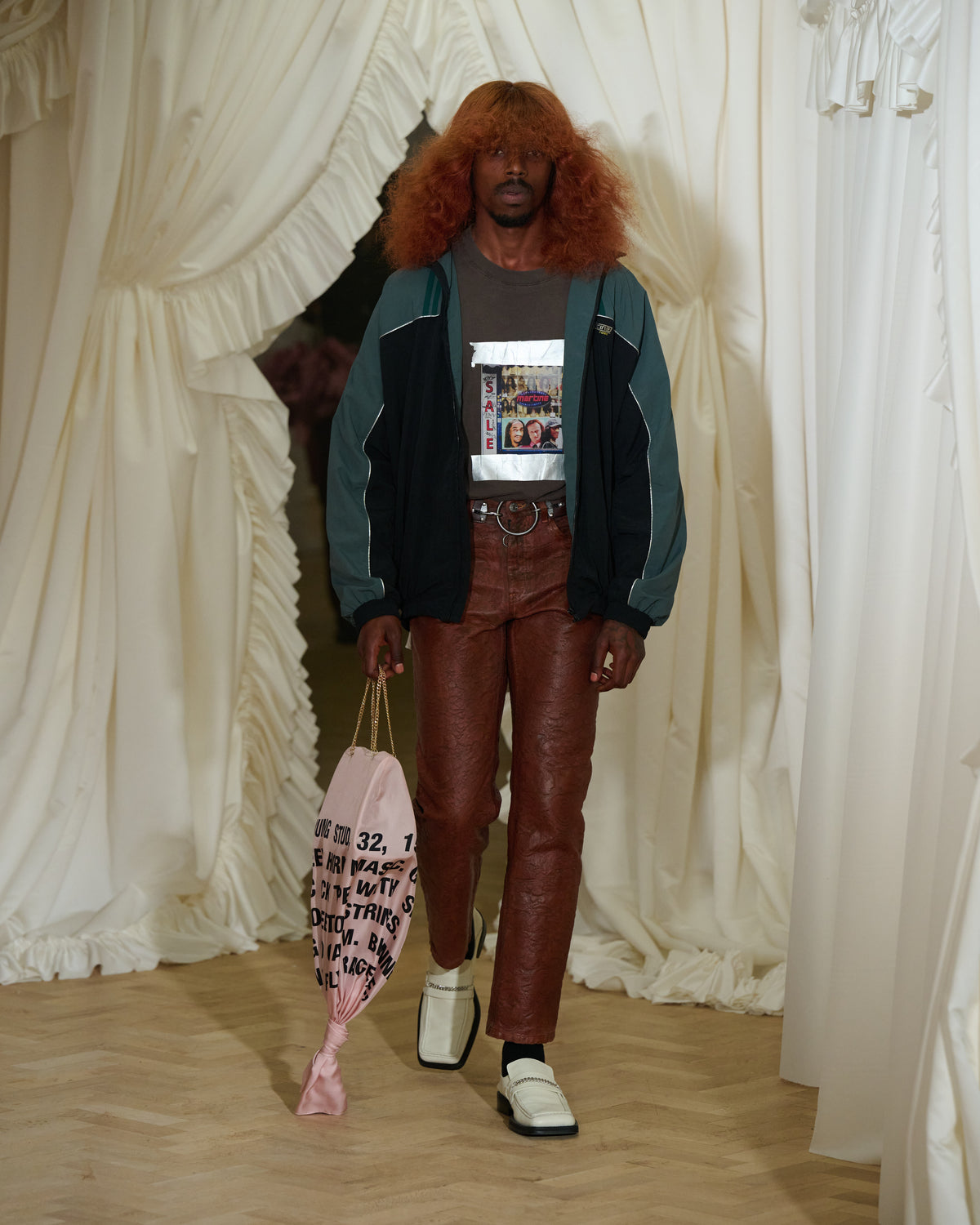
Look at her Spring/Summer 2026 show. A disused London job centre became a salon under swathes of curtains, while independent traders filled the floor below. The clothes carried the same collision of moods. Tailoring tightened around the body, puffers clung where they were expected to billow, and sportswear caught a strange, intimate charge. Rose’s show notes traced details back to newsagents, barbers and the local high street. These were garments designed with a city’s actual inhabitants in mind.

That attention is what makes this appointment more interesting than a familiar luxury reset. Balenciaga knows how to make a silhouette enormous; its founder changed fashion by reconsidering the space between fabric and body. Rose asks what happens when a body also brings a class code, a night out, a football allegiance, a memory of somebody’s dad. Her proportions can be funny, erotic and deeply precise at once. The person inside the clothes never vanishes beneath the idea.

A look from the Martine Rose Spring Summer 2026 campaign
Martine Rose Spring/Summer 2026 campaign · Photograph by Camille Vivier, courtesy of Martine Rose.

The scale of the new job is the real test. A house that sells worldwide can turn a subcultural reference into an instantly legible product. Rose’s strongest work resists that speed. It asks you to spend time with a character, to notice why a jacket feels slightly wrong and then realise that the wrongness is the whole seduction. Her arrival gives Balenciaga access to that instinct. Whether a vast luxury operation can make room for it remains the question worth watching.

Kering has announced no debut collection or show date. For now, the news is enough to change the temperature. Rose knows the house from the inside, but this time the decisions are hers. If she carries the nerve of her London work into Paris, Balenciaga’s next chapter could begin with something more compelling than a spectacle: a familiar garment, a recognisable stranger, and a silhouette that makes you look again.

Fashion
Martine Rose Is Back at Balenciaga, and This Time She’s in Charge
Kering has named the London designer creative director, effective 16 November. After years bending the uniforms of everyday life, she inherits a house big enough to make the whole world look twice.

Text

Noah Cruz

Martine Rose has spent years making a football shirt look as charged as an evening dress. Now she gets Balenciaga. Kering confirmed her appointment on Friday, 6 November; she begins the Paris-based role on 16 November, following Pierpaolo Piccioli’s departure. The job comes with couture ateliers, a global business and the dangerous opportunity to turn a very particular eye into the language of an entire house.

It is a return with considerably more power. Rose previously worked on Balenciaga menswear during Demna’s tenure. Her own label, founded in 2007, made a different kind of case for fashion’s future: club clothes, football culture, tailoring and the people who wear them all allowed into the same room. She has always been alert to the tiny social signals in an outfit. A trouser leg, a collar, a shoe suddenly says who you are trying to be and where you have just come from.
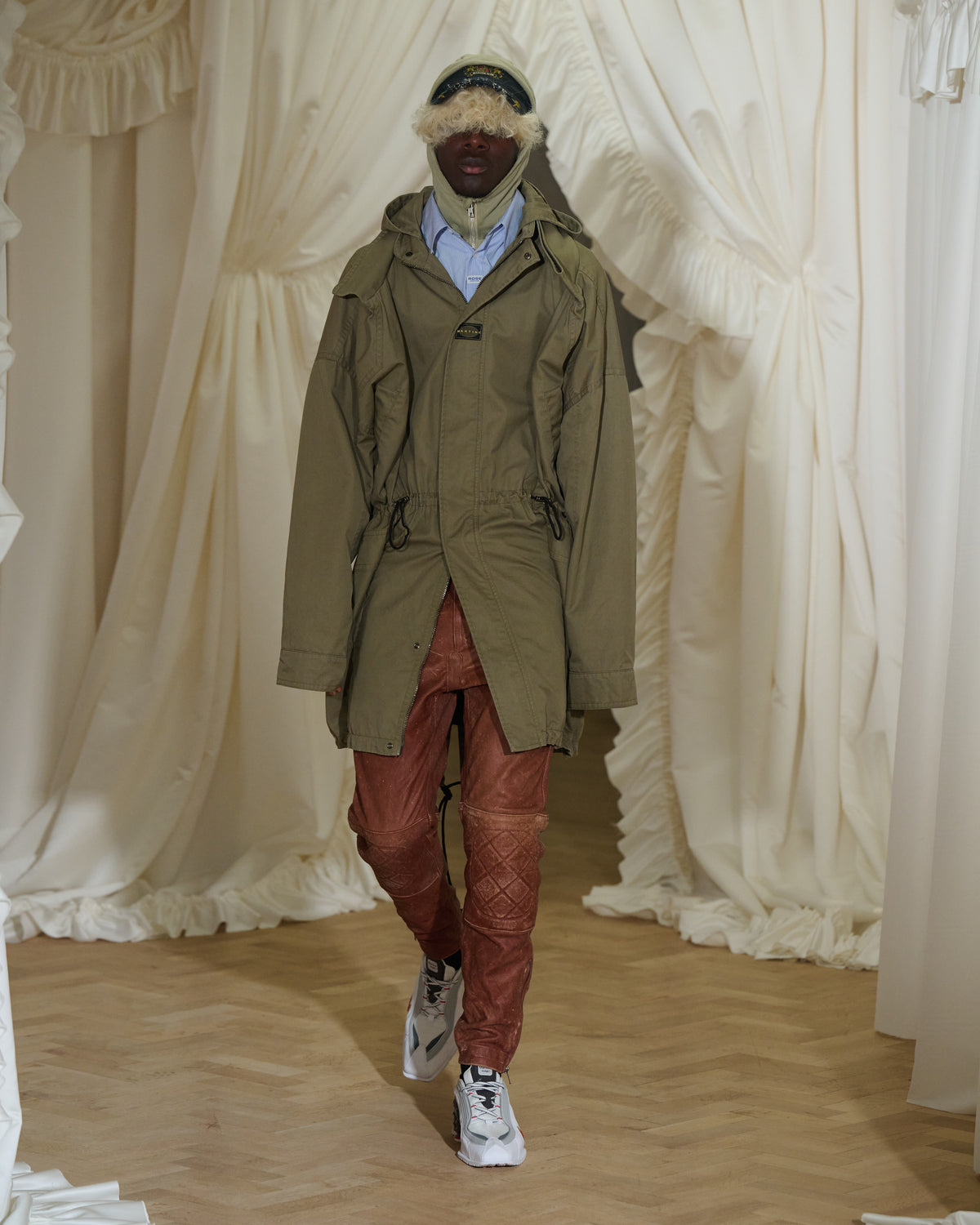
Look at her Spring/Summer 2026 show. A disused London job centre became a salon under swathes of curtains, while independent traders filled the floor below. The clothes carried the same collision of moods. Tailoring tightened around the body, puffers clung where they were expected to billow, and sportswear caught a strange, intimate charge. Rose’s show notes traced details back to newsagents, barbers and the local high street. These were garments designed with a city’s actual inhabitants in mind.

That attention is what makes this appointment more interesting than a familiar luxury reset. Balenciaga knows how to make a silhouette enormous; its founder changed fashion by reconsidering the space between fabric and body. Rose asks what happens when a body also brings a class code, a night out, a football allegiance, a memory of somebody’s dad. Her proportions can be funny, erotic and deeply precise at once. The person inside the clothes never vanishes beneath the idea.

A look from the Martine Rose Spring Summer 2026 campaign
Martine Rose Spring/Summer 2026 campaign · Photograph by Camille Vivier, courtesy of Martine Rose.

The scale of the new job is the real test. A house that sells worldwide can turn a subcultural reference into an instantly legible product. Rose’s strongest work resists that speed. It asks you to spend time with a character, to notice why a jacket feels slightly wrong and then realise that the wrongness is the whole seduction. Her arrival gives Balenciaga access to that instinct. Whether a vast luxury operation can make room for it remains the question worth watching.

Kering has announced no debut collection or show date. For now, the news is enough to change the temperature. Rose knows the house from the inside, but this time the decisions are hers. If she carries the nerve of her London work into Paris, Balenciaga’s next chapter could begin with something more compelling than a spectacle: a familiar garment, a recognisable stranger, and a silhouette that makes you look again.

Fashion
Martine Rose Is Back at Balenciaga, and This Time She’s in Charge
Kering has named the London designer creative director, effective 16 November. After years bending the uniforms of everyday life, she inherits a house big enough to make the whole world look twice.

Text

Noah Cruz

Martine Rose has spent years making a football shirt look as charged as an evening dress. Now she gets Balenciaga. Kering confirmed her appointment on Friday, 6 November; she begins the Paris-based role on 16 November, following Pierpaolo Piccioli’s departure. The job comes with couture ateliers, a global business and the dangerous opportunity to turn a very particular eye into the language of an entire house.

It is a return with considerably more power. Rose previously worked on Balenciaga menswear during Demna’s tenure. Her own label, founded in 2007, made a different kind of case for fashion’s future: club clothes, football culture, tailoring and the people who wear them all allowed into the same room. She has always been alert to the tiny social signals in an outfit. A trouser leg, a collar, a shoe suddenly says who you are trying to be and where you have just come from.
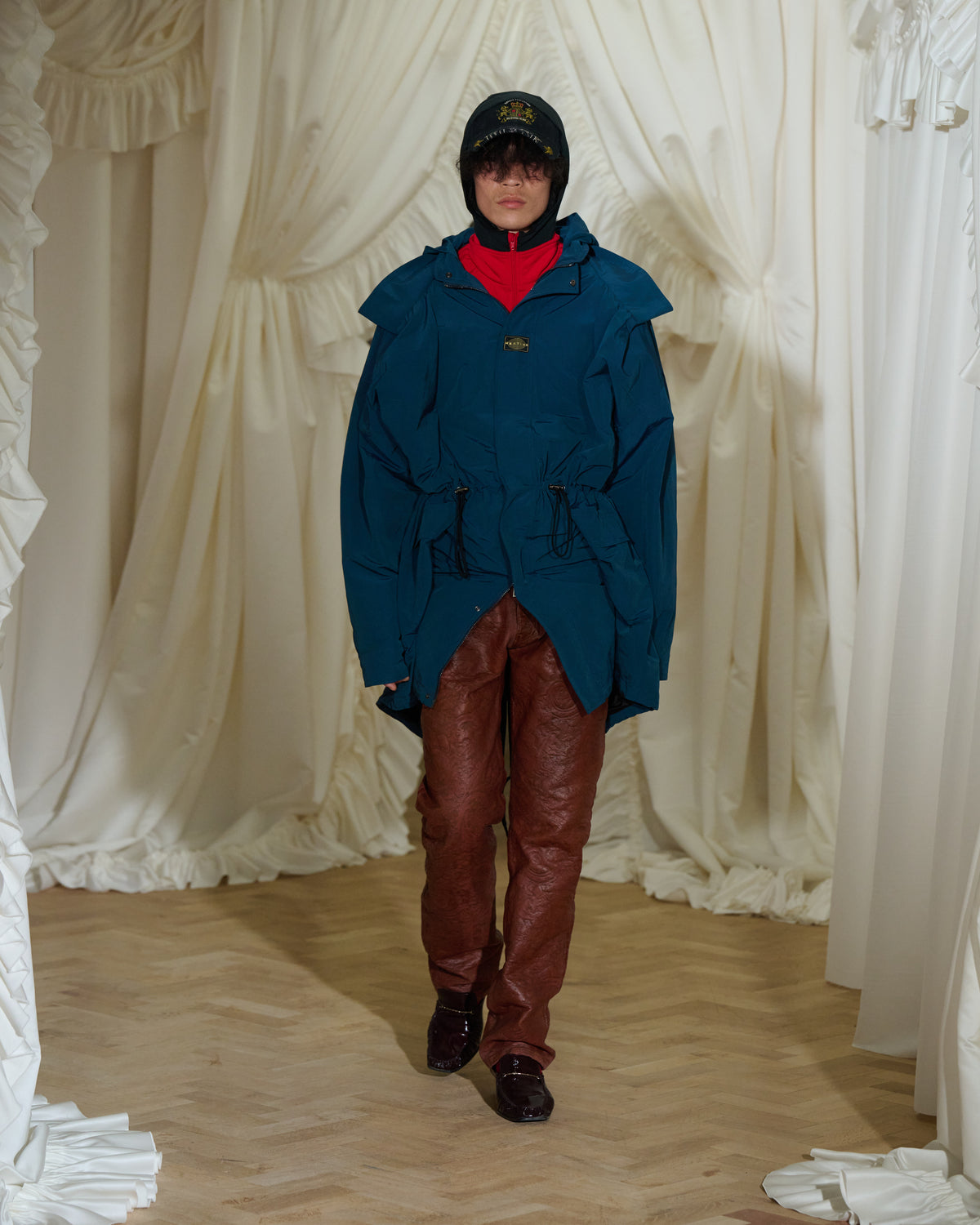
Look at her Spring/Summer 2026 show. A disused London job centre became a salon under swathes of curtains, while independent traders filled the floor below. The clothes carried the same collision of moods. Tailoring tightened around the body, puffers clung where they were expected to billow, and sportswear caught a strange, intimate charge. Rose’s show notes traced details back to newsagents, barbers and the local high street. These were garments designed with a city’s actual inhabitants in mind.

That attention is what makes this appointment more interesting than a familiar luxury reset. Balenciaga knows how to make a silhouette enormous; its founder changed fashion by reconsidering the space between fabric and body. Rose asks what happens when a body also brings a class code, a night out, a football allegiance, a memory of somebody’s dad. Her proportions can be funny, erotic and deeply precise at once. The person inside the clothes never vanishes beneath the idea.

A look from the Martine Rose Spring Summer 2026 campaign
Martine Rose Spring/Summer 2026 campaign · Photograph by Camille Vivier, courtesy of Martine Rose.

The scale of the new job is the real test. A house that sells worldwide can turn a subcultural reference into an instantly legible product. Rose’s strongest work resists that speed. It asks you to spend time with a character, to notice why a jacket feels slightly wrong and then realise that the wrongness is the whole seduction. Her arrival gives Balenciaga access to that instinct. Whether a vast luxury operation can make room for it remains the question worth watching.

Kering has announced no debut collection or show date. For now, the news is enough to change the temperature. Rose knows the house from the inside, but this time the decisions are hers. If she carries the nerve of her London work into Paris, Balenciaga’s next chapter could begin with something more compelling than a spectacle: a familiar garment, a recognisable stranger, and a silhouette that makes you look again.

Fashion
Fashion
Martine Rose Is Back at Balenciaga, and This Time She’s in Charge
Kering has named the London designer creative director, effective 16 November. After years bending the uniforms of everyday life, she inherits a house big enough to make the whole world look twice.

Text

Text

Noah Cruz

Noah Cruz

Martine Rose has spent years making a football shirt look as charged as an evening dress. Now she gets Balenciaga. Kering confirmed her appointment on Friday, 6 November; she begins the Paris-based role on 16 November, following Pierpaolo Piccioli’s departure. The job comes with couture ateliers, a global business and the dangerous opportunity to turn a very particular eye into the language of an entire house.

It is a return with considerably more power. Rose previously worked on Balenciaga menswear during Demna’s tenure. Her own label, founded in 2007, made a different kind of case for fashion’s future: club clothes, football culture, tailoring and the people who wear them all allowed into the same room. She has always been alert to the tiny social signals in an outfit. A trouser leg, a collar, a shoe suddenly says who you are trying to be and where you have just come from.
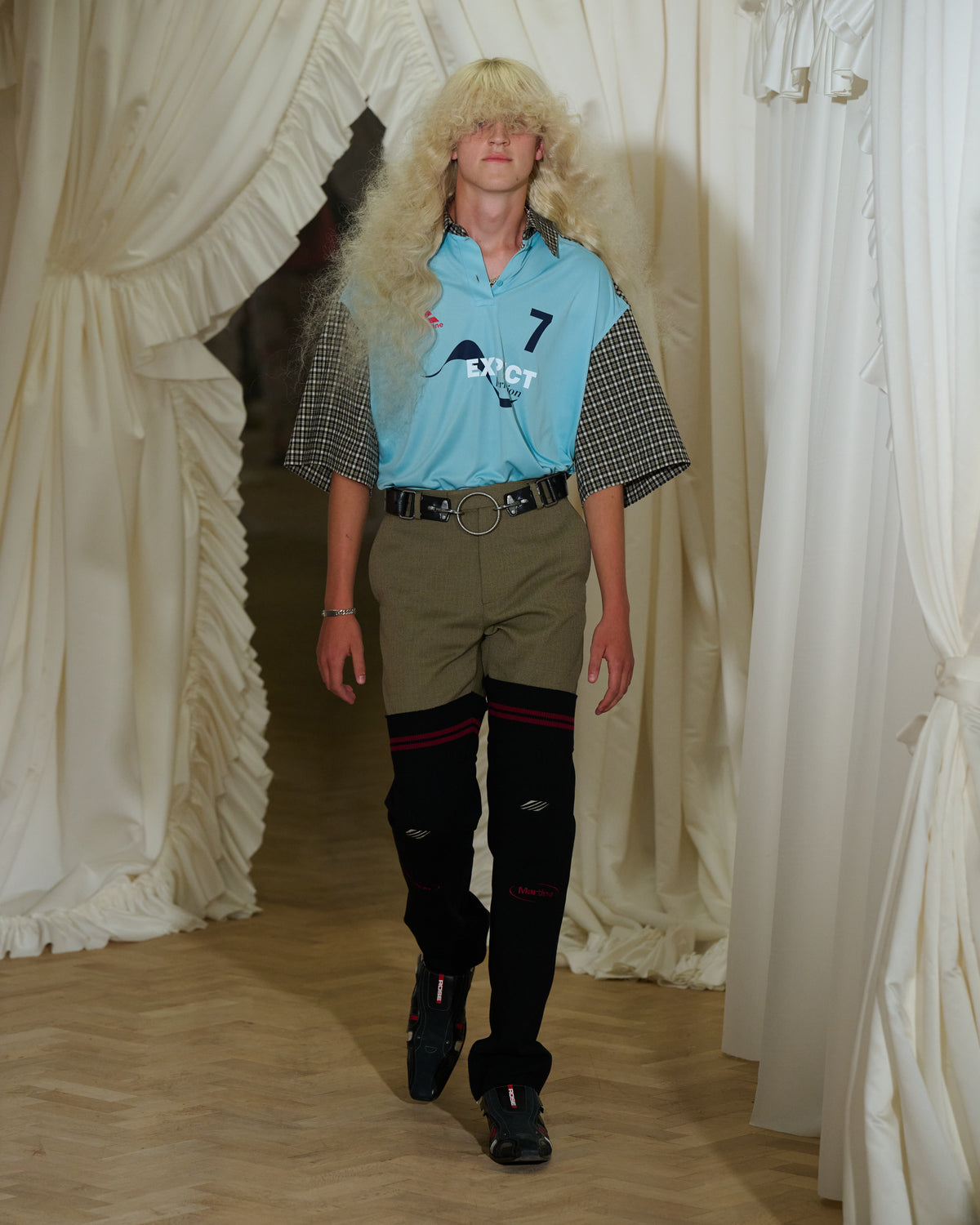
Look at her Spring/Summer 2026 show. A disused London job centre became a salon under swathes of curtains, while independent traders filled the floor below. The clothes carried the same collision of moods. Tailoring tightened around the body, puffers clung where they were expected to billow, and sportswear caught a strange, intimate charge. Rose’s show notes traced details back to newsagents, barbers and the local high street. These were garments designed with a city’s actual inhabitants in mind.

That attention is what makes this appointment more interesting than a familiar luxury reset. Balenciaga knows how to make a silhouette enormous; its founder changed fashion by reconsidering the space between fabric and body. Rose asks what happens when a body also brings a class code, a night out, a football allegiance, a memory of somebody’s dad. Her proportions can be funny, erotic and deeply precise at once. The person inside the clothes never vanishes beneath the idea.
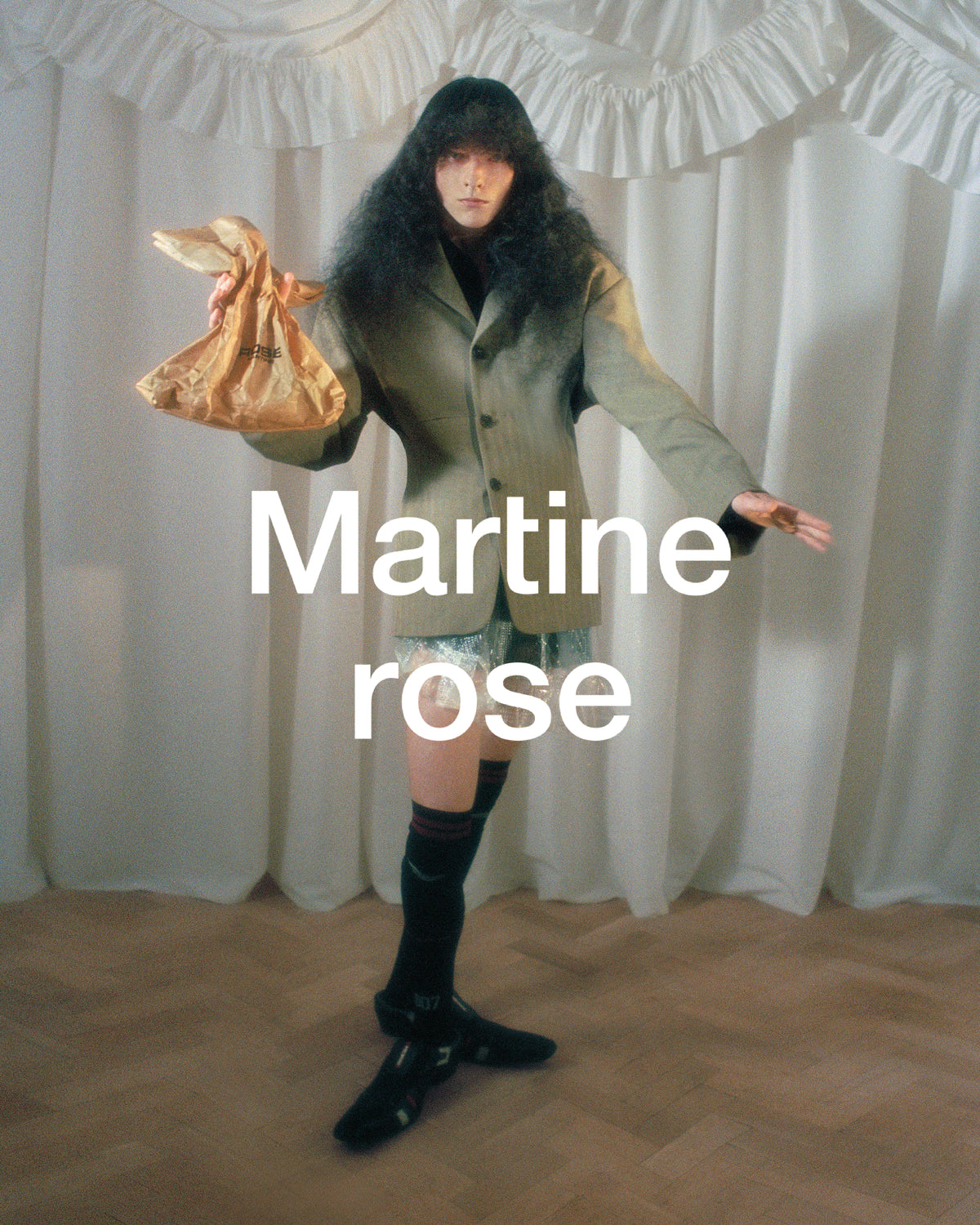
A look from the Martine Rose Spring Summer 2026 campaign
Martine Rose Spring/Summer 2026 campaign · Photograph by Camille Vivier, courtesy of Martine Rose.

The scale of the new job is the real test. A house that sells worldwide can turn a subcultural reference into an instantly legible product. Rose’s strongest work resists that speed. It asks you to spend time with a character, to notice why a jacket feels slightly wrong and then realise that the wrongness is the whole seduction. Her arrival gives Balenciaga access to that instinct. Whether a vast luxury operation can make room for it remains the question worth watching.

Kering has announced no debut collection or show date. For now, the news is enough to change the temperature. Rose knows the house from the inside, but this time the decisions are hers. If she carries the nerve of her London work into Paris, Balenciaga’s next chapter could begin with something more compelling than a spectacle: a familiar garment, a recognisable stranger, and a silhouette that makes you look again.