

Mia Khalifa is on the pavement in a mountain of fur, looking back at the camera as though it has stopped her on her way somewhere more interesting. Another model reclines beside her. Under the photograph, the words In Divine Trust, Proceed read like a command that has lost control of the person receiving it. Trashy Clothing’s new campaign knows exactly how much power a stare can hold.
Photographed by Pablo Mas, the Fall/Winter 2026 campaign places Khalifa inside a larger cast of bodies, clothes and attitudes. She is its star, but she is no borrowed face dropped into a pretty set. The Palestinian label, founded by Omar Braika and Shukri Lawrence, had her walk its Paris show earlier this year. Her jewellery line Sheytan is also part of the collection. Khalifa is wearing the world Trashy has built, and helping to build it.
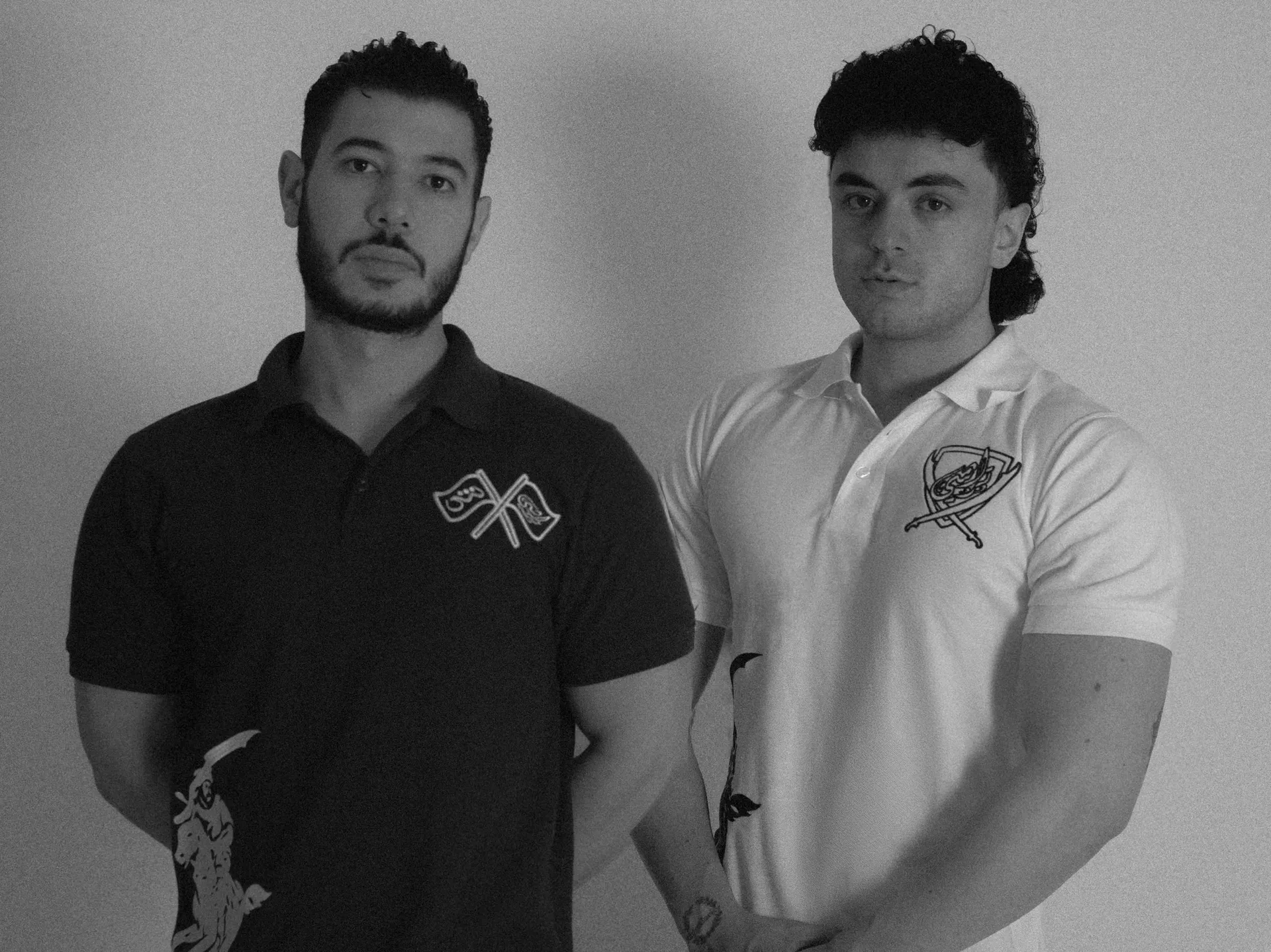
The collection takes its cue from Elia Suleiman’s 2002 film Divine Intervention. Trashy points in particular to a woman crossing a checkpoint without acknowledging the soldiers around her. The soldiers are still there; the imbalance has not vanished. What changes is her refusal to supply the fear, explanation or deference that their authority expects. It is a difficult idea to translate into fashion without turning occupation into a dramatic backdrop. Trashy keeps the Palestinian reality that produced the idea in view.
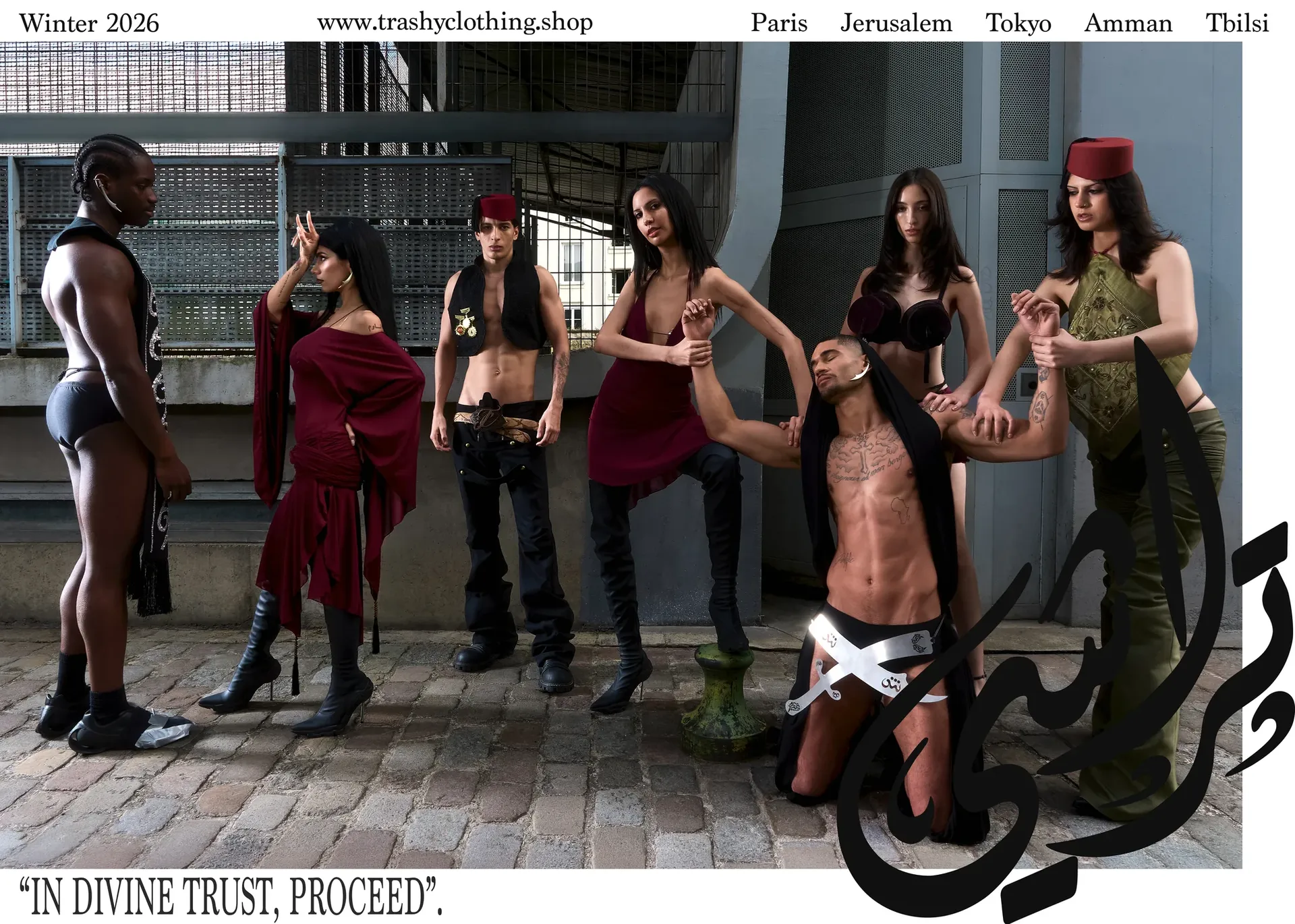
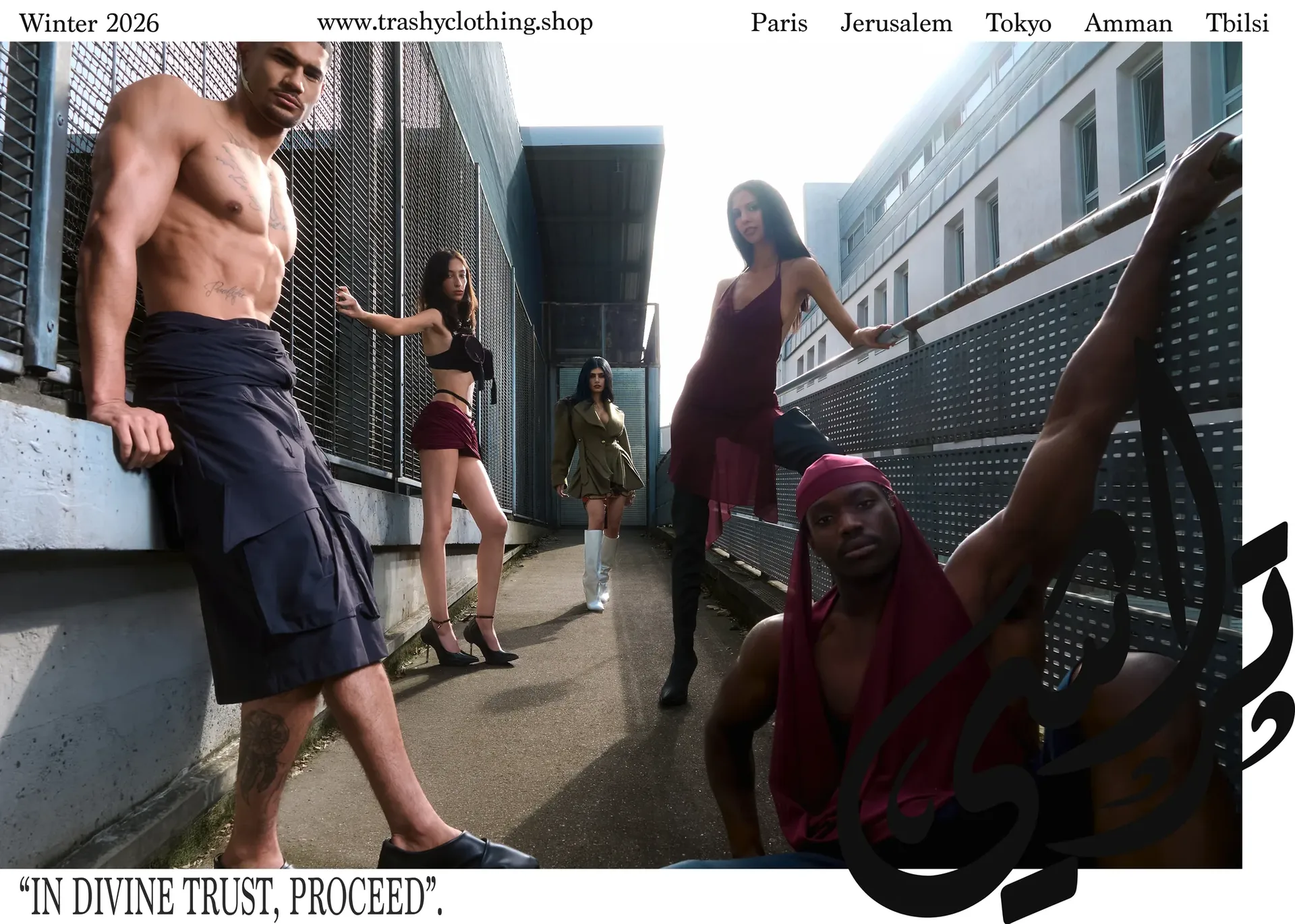
That tension is in the clothes. Burgundy fabric falls off shoulders, tailored pieces grip and release the body, and exposed skin sits beside heavy fur and hard metal. The cast gathers by fences and concrete passages; nobody looks eager to explain themselves to the camera. The images are theatrical, sometimes knowingly excessive, yet the attitude is cool enough to deny the viewer an easy climax. The clothes make room for bravado and composure at the same time.
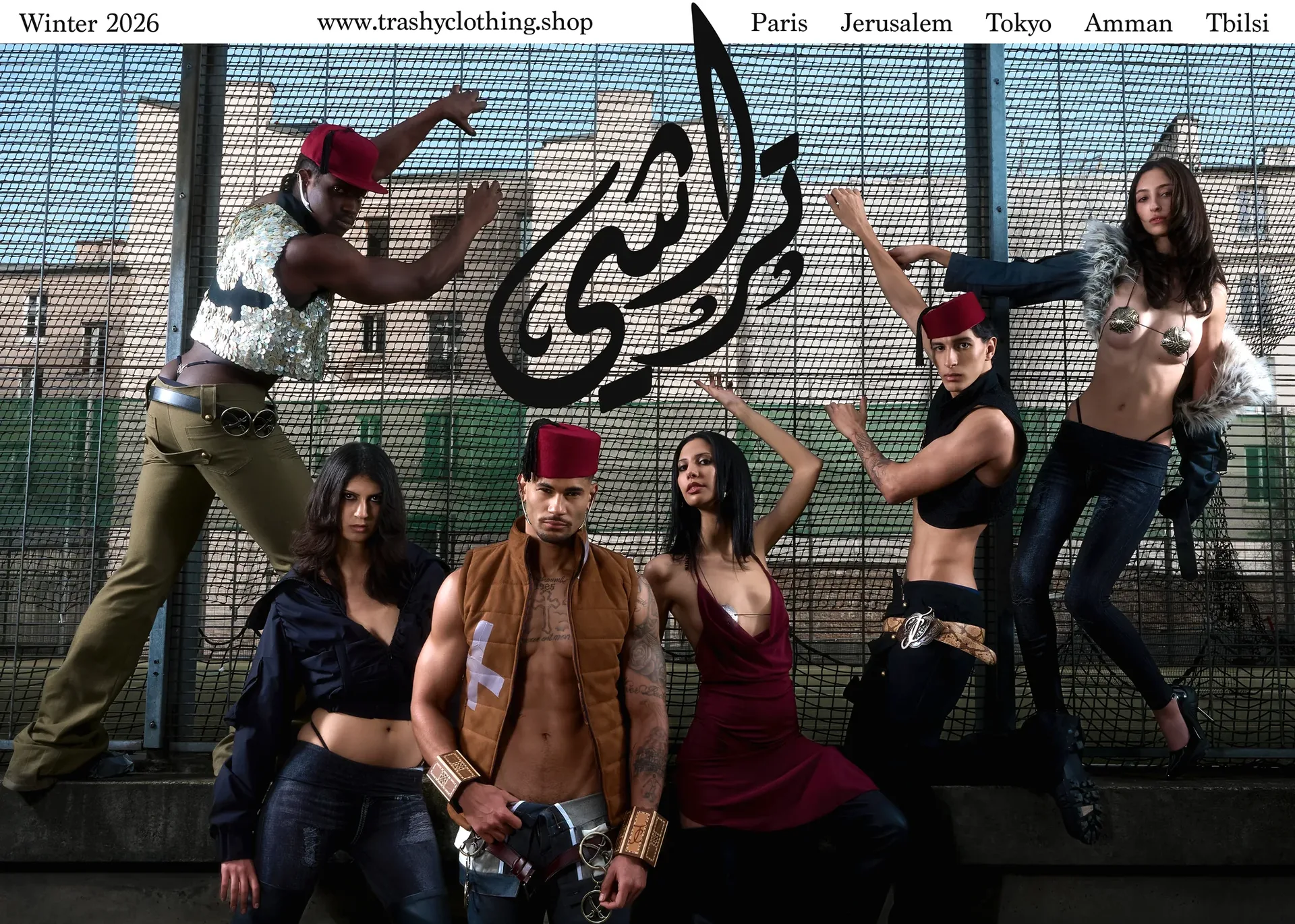
Look closely at the jewellery. Sheytan’s curved sword motif cuts across an ear, while related forms run through chains, pendants and belts in the collection. Trashy describes the pieces as structural, not decorative. That distinction matters: Khalifa’s contribution is visible on the body rather than buried in a press release. In a campaign led by a woman whose image has been endlessly interpreted by other people, the detail feels pointed. She gets to make part of what we are looking at.
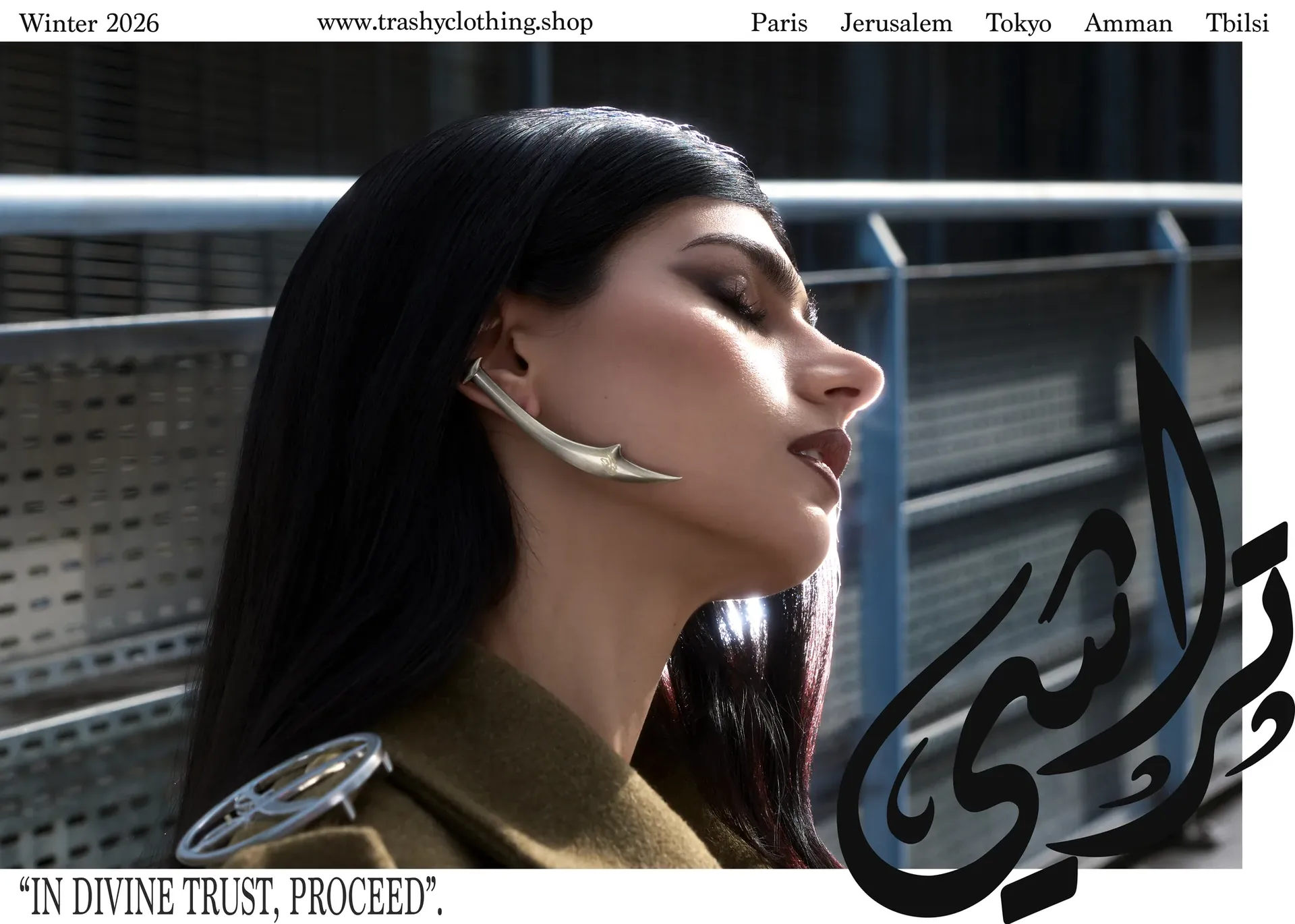
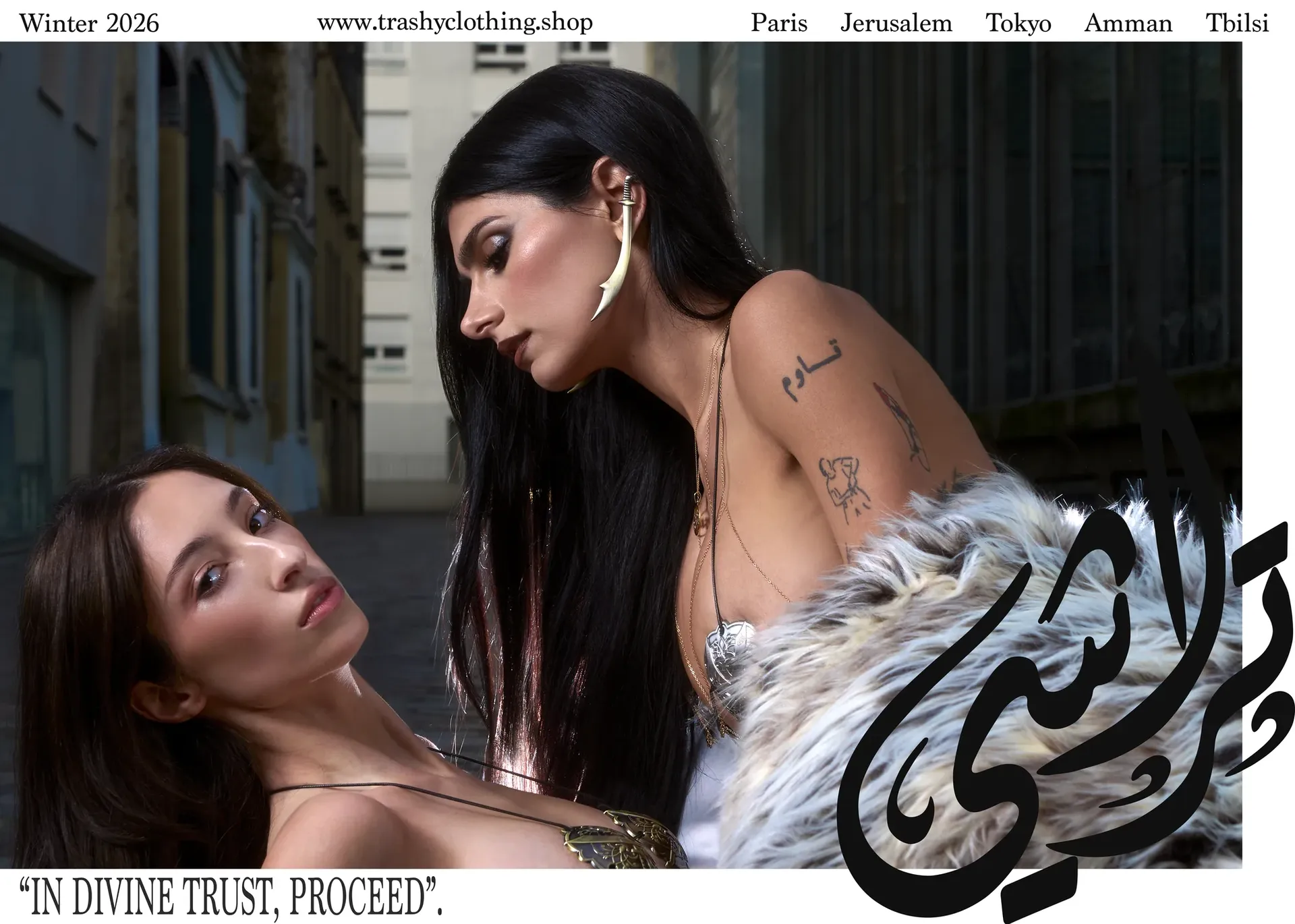
Celebrity casting often asks us to believe the star and the clothes have a relationship because the billboard says so. Here, there is evidence: a runway appearance, a jewellery collaboration and a shared appetite for making a polished image carry an uncomfortable question. Khalifa can hold the camera’s gaze without letting it decide what she means. Trashy Clothing gives that refusal a wardrobe.


