

The first scratch on an expensive suitcase can feel like a tiny financial crime. RIMOWA and Maison Margiela have made that feeling the point. Their limited-edition travel pair puts Margiela’s hand-painted white Bianchetto over a Classic Cabin and a 5AC XL bag, then leaves the finish to crack and change with use. The immaculate object is only the opening scene.
This is luggage for people who understand that a trip leaves evidence. RIMOWA already treats dents on its aluminium cases as a record of movement. Margiela has spent decades making the unfinished, the exposed and the apparently worn feel more desirable than a perfect surface. Together, they have produced two pieces that look less like a matching set than accomplices returning from somewhere they will not explain.
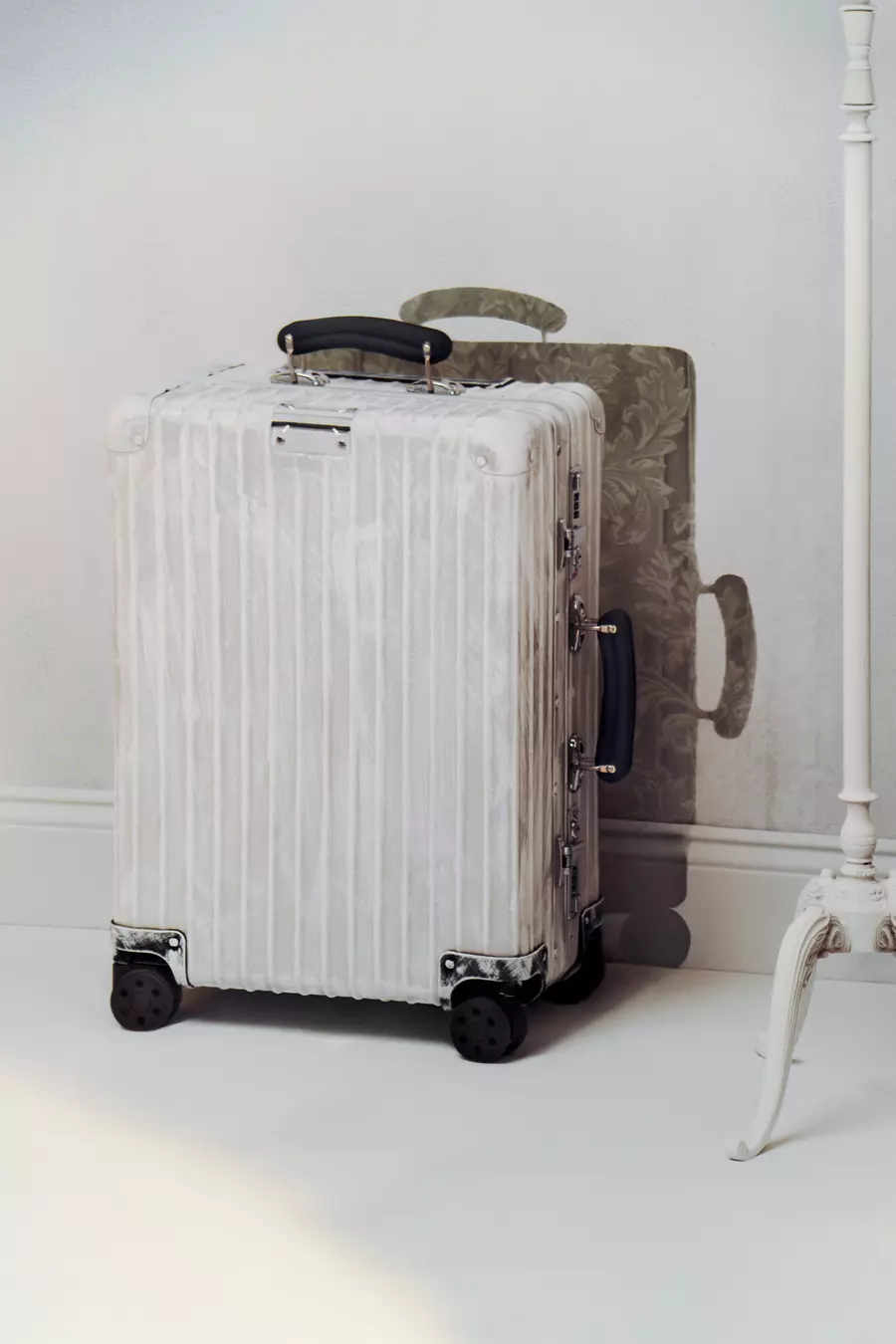
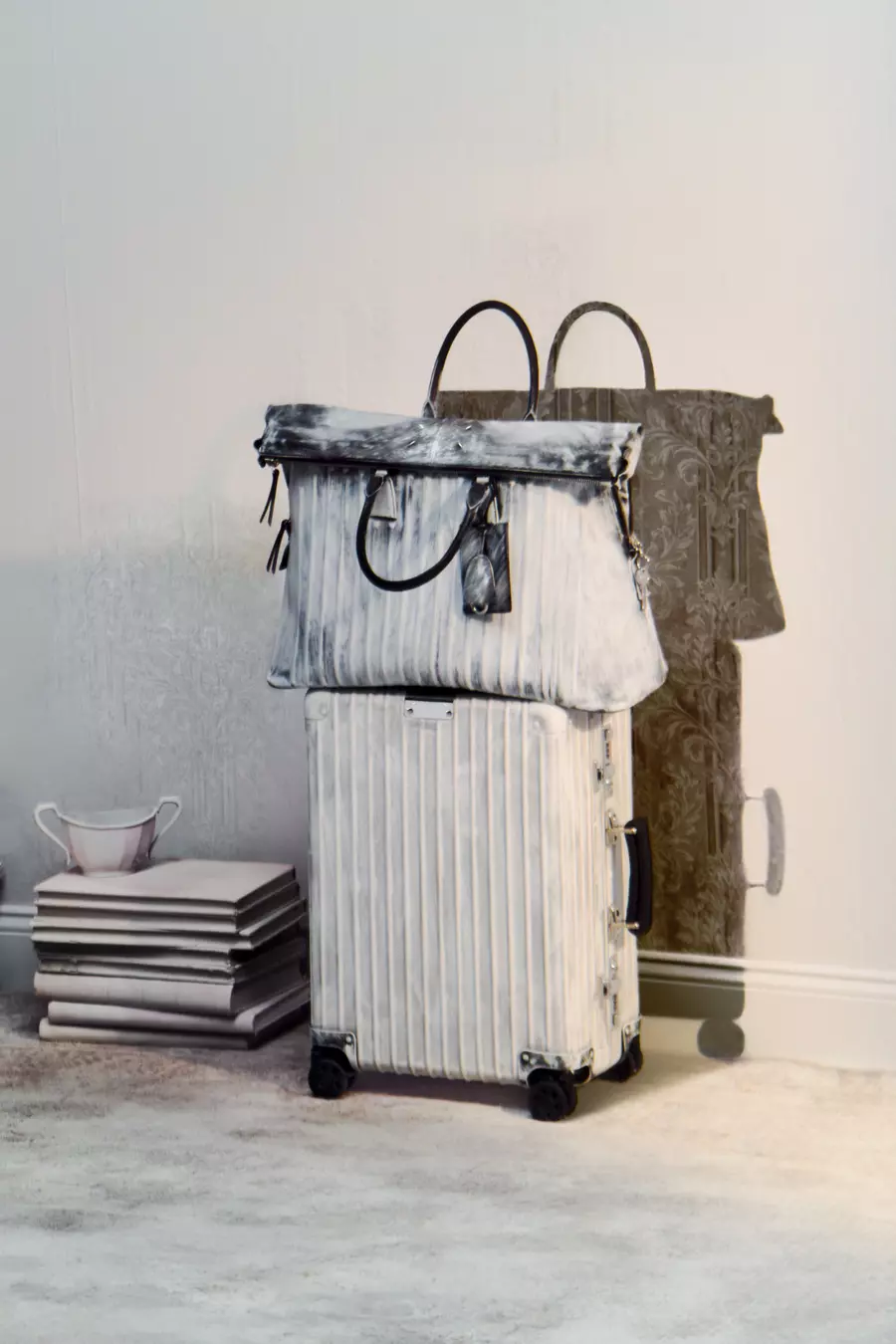
The exchange of signatures is precise. The Cabin keeps RIMOWA’s vertical aluminium grooves; the 5AC carries their rhythm in leather, formed by a high-frequency process rather than sewn into place. When the bag sits on the suitcase, the lines meet. Removable leather loops hold it there, so the effect survives the walk from the taxi to the gate. One brand’s most recognisable shape has crossed into the other’s material, and neither has to shout its name.
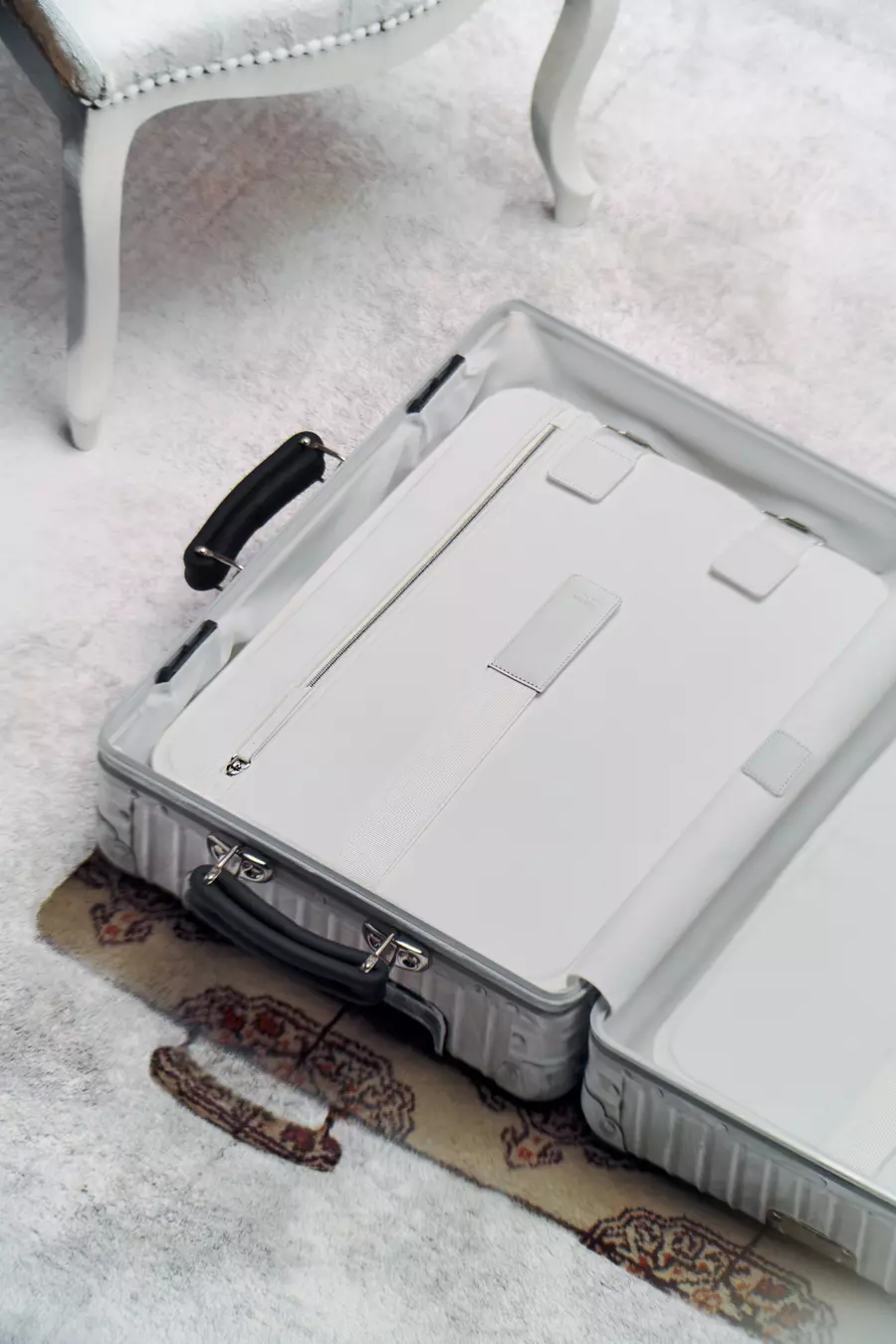
Open the Cabin and the trick gets more intimate. Its white lining shows visible stitching and overlocked edges, as though the case has been turned inside out. Four slanted stitches of white thread finish the aluminium badge. The 5AC has always played with the same reversal, letting its lining rise beyond the leather body. Here, even the suitcase has a seam it wants you to see. That is a more interesting form of luxury than pretending an object arrived fully formed.
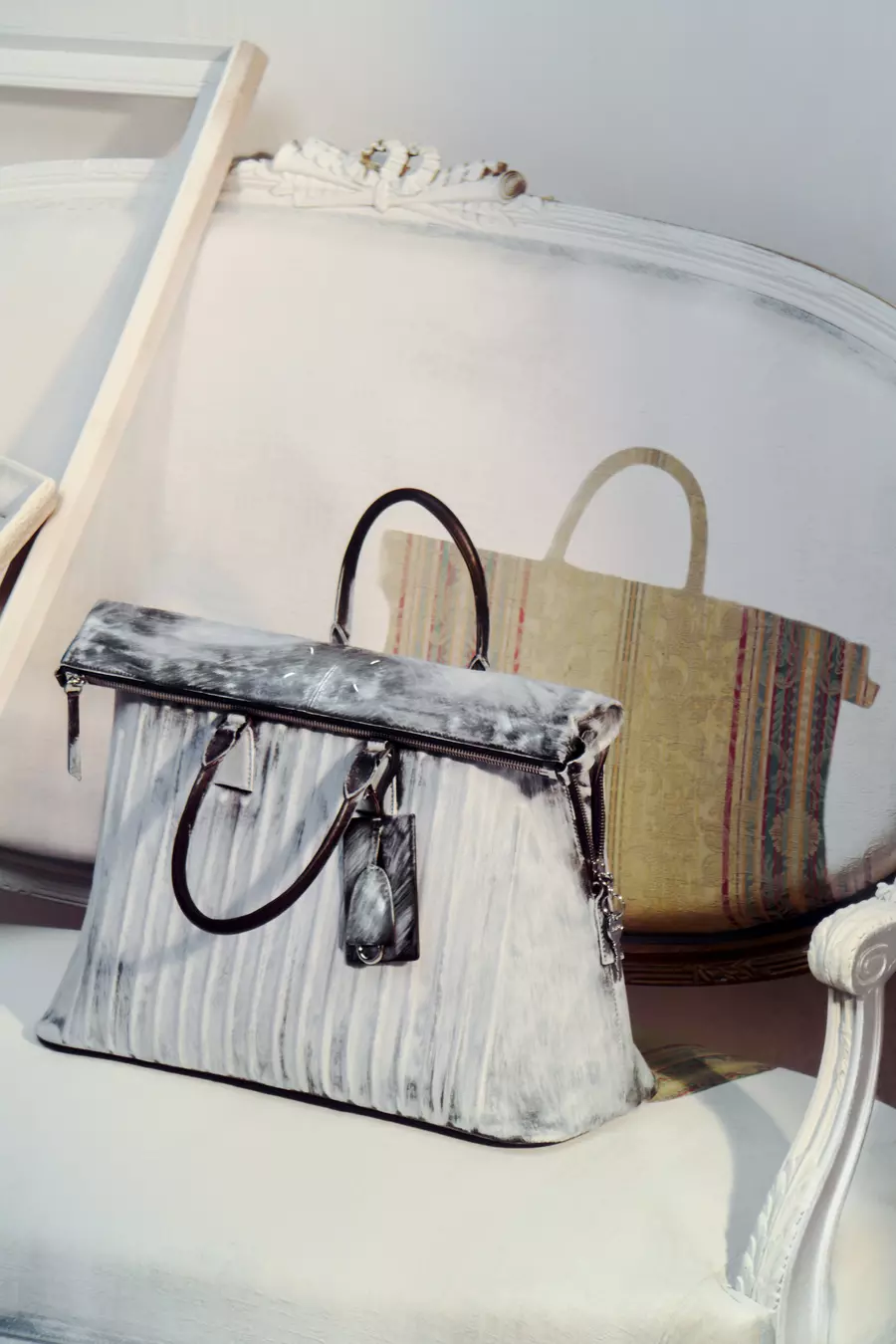
Bianchetto has a longer memory than this release. In 1988, Martin Margiela painted the furniture of his first studio white; the paint could chip, leaving time visible on the object. On these bags, the hand-applied coat gives each piece its own surface from day one. It will not stay still. RIMOWA’s polished airport language meets a house that regards deterioration as another stage of design. A scuff is not a manufacturing fault here. It is the next contributor.
Dexter Lander’s campaign pushes the idea into a Haussmannian apartment hit by a white paint sprinkler. The furniture, bag and case are coated, while their outlines remain on the wall like traces at a scene. It could have been a gimmick. Instead, the image makes the collaboration’s argument in a second: things become legible through what happens to them. The room is theatrical; the wear promised by a real journey will be less controlled.
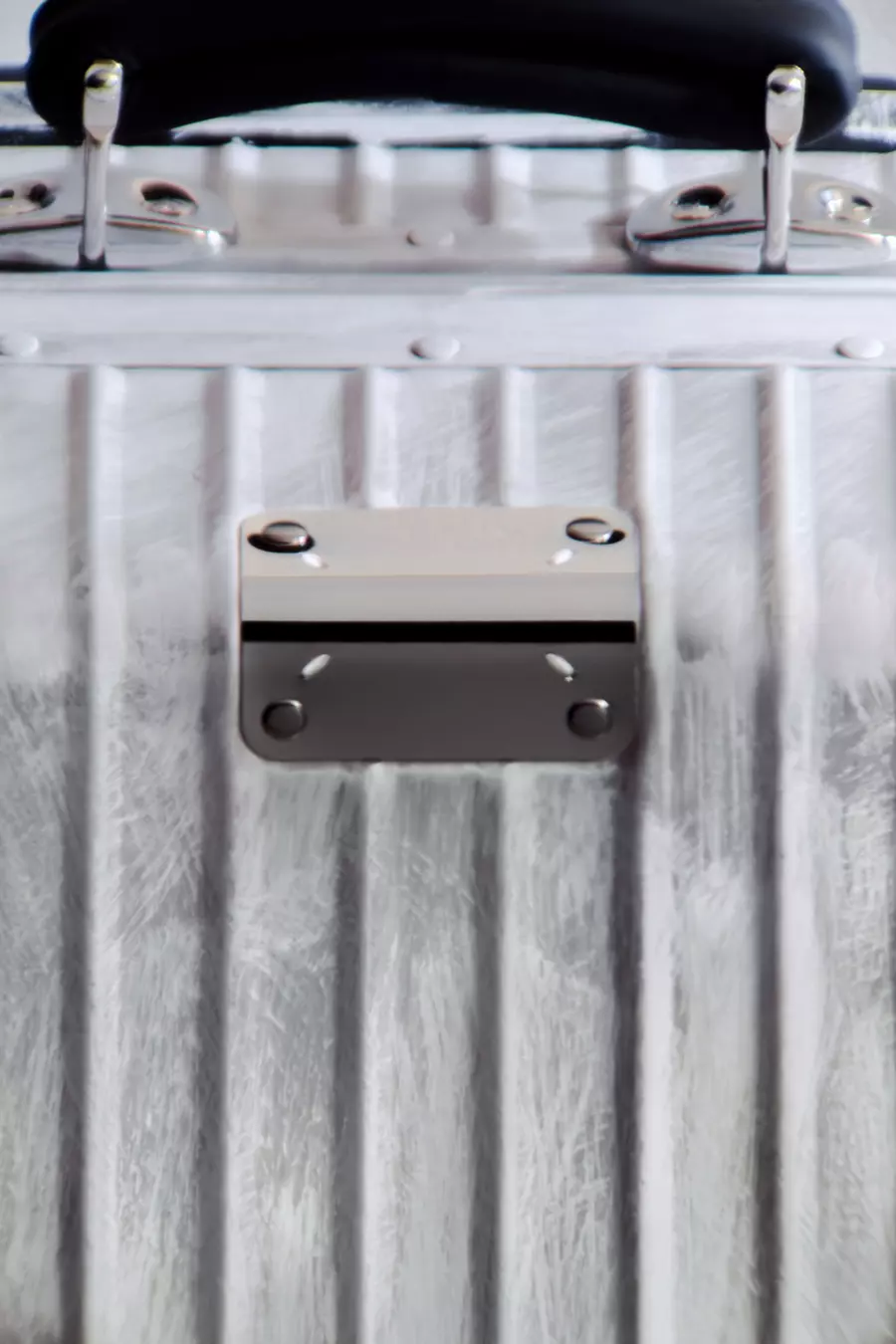
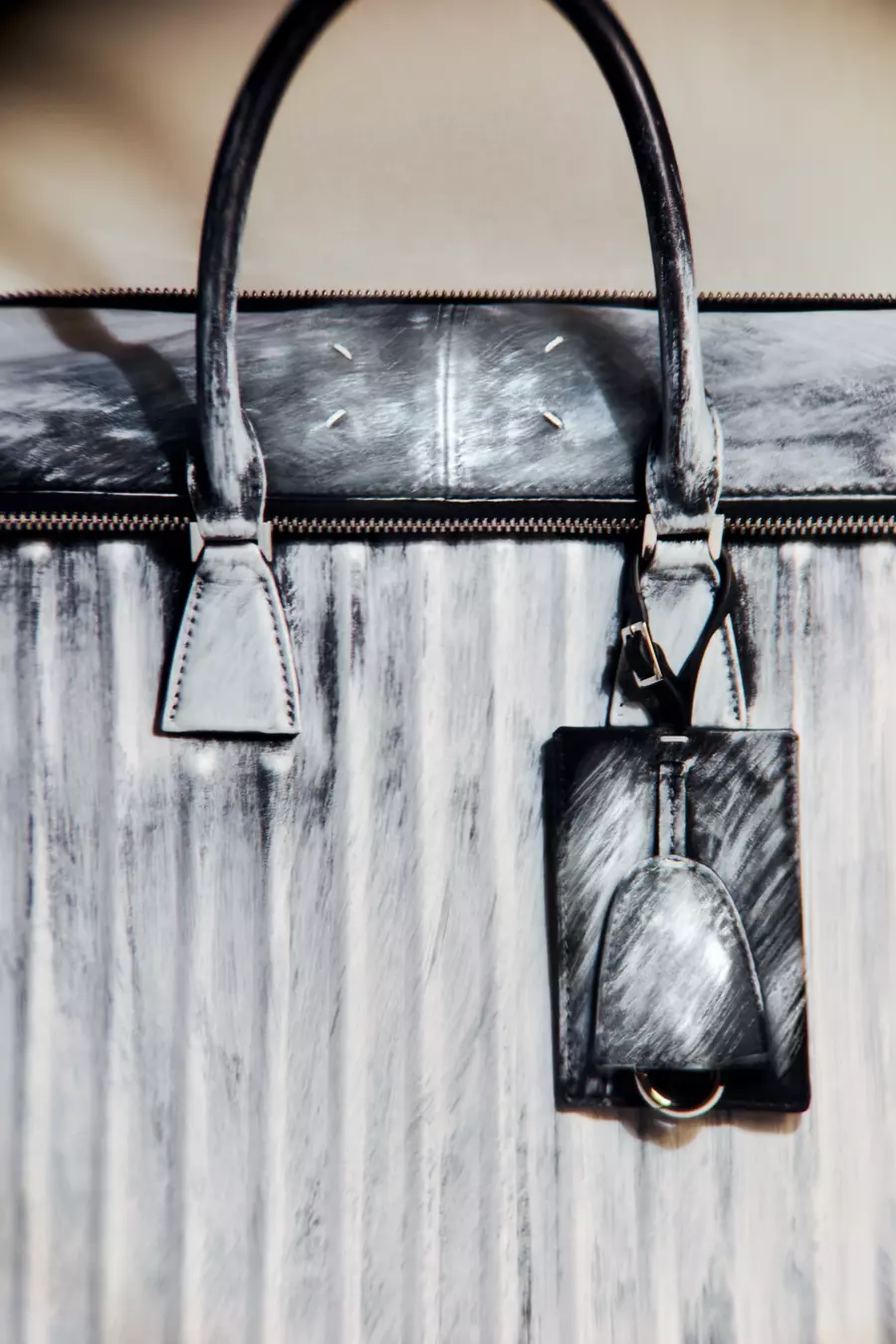
The Classic Cabin costs €3,200 and the 5AC XL €3,600 when the collection arrives on November 19 at selected stores and online. Those prices make the proposition slightly outrageous, which is why it works as fashion. Buy something painfully considered; take it somewhere unpredictable; let the pristine finish lose the argument.


