Film & TV
Sofia Wylie’s New Netflix Show Makes Catholic School a Horror Story
Wylie plays the recruit at the center of a disastrous dance-team initiation, while creator Quinn Shephard turns Catholic school’s rituals into a story of queer desire, shame and belonging.

Text

Text

Noah Cruz

Noah Cruz

Film & TV
Sofia Wylie’s New Netflix Show Makes Catholic School a Horror Story
Wylie plays the recruit at the center of a disastrous dance-team initiation, while creator Quinn Shephard turns Catholic school’s rituals into a story of queer desire, shame and belonging.

At St. Mark’s, everyone knows where a girl is supposed to stand. In the pew, in formation, beside the right friend, beneath the right boy’s arm. Sofia Wylie’s Grace Franklin wants a place on the Lions dance team. On Halloween night in 2004, an initiation meant to make her one of them goes violently wrong. Grace becomes the question hanging over the school: what happened to her, and why can the girls suddenly see things the adults cannot explain?

That is the setup of The Body, Quinn Shephard’s eight-episode Netflix series, which arrived Wednesday, November 11. The Catholic-school setting gives the horror its vocabulary. Confession, sacrifice, purity and punishment are already spoken here before anyone claims to have seen a vision. Shephard puts those words in a place where teenage girls are also being taught to synchronize their bodies and edit their desires. The supernatural enters a social system with plenty of practice at making people afraid of what they feel.
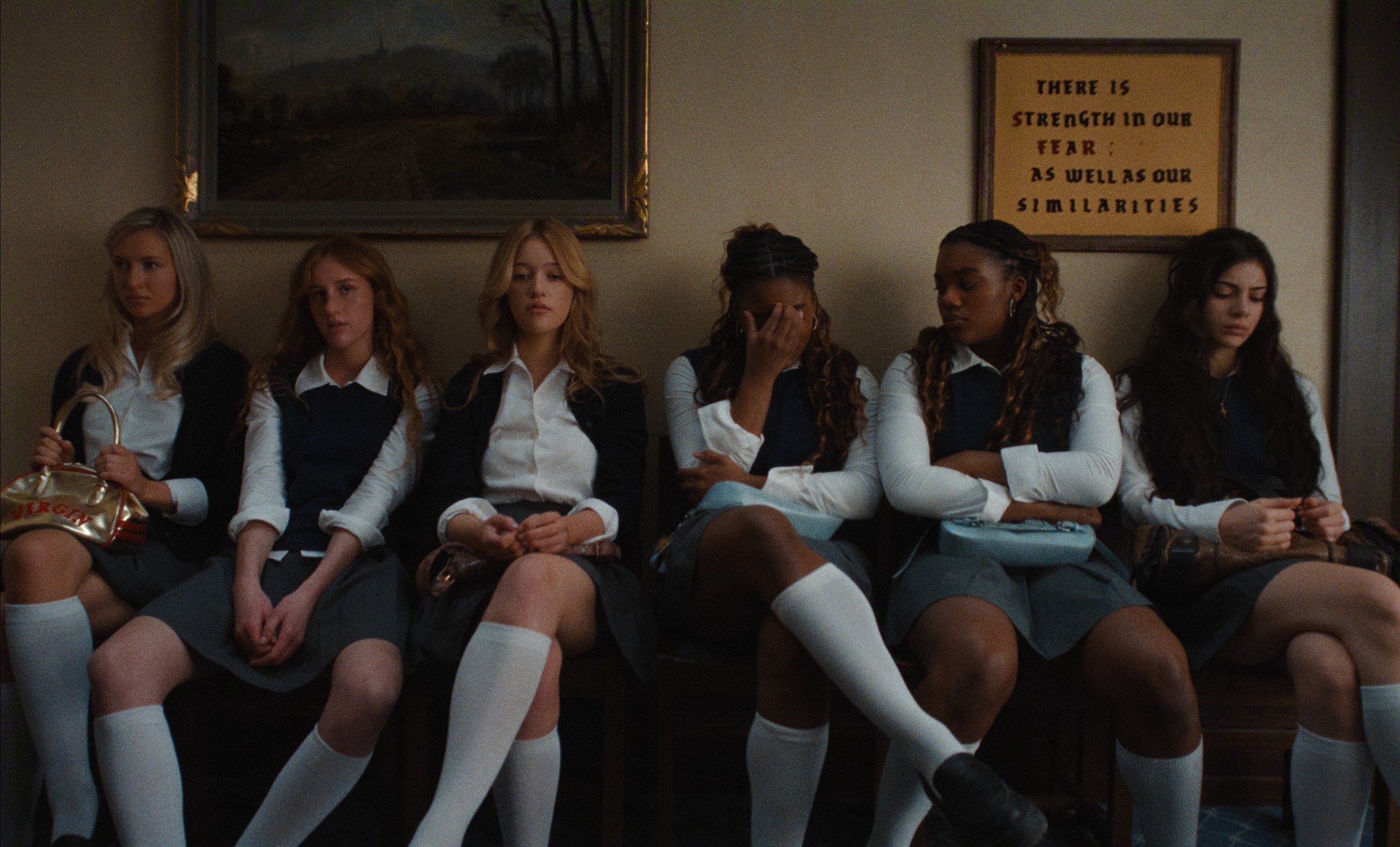
Six girls from The Body wait together in school uniforms beneath a framed message about fear
The girls of St. Mark’s / Netflix.

Wylie is an especially pointed choice for Grace. She comes from High School Musical: The Musical: The Series, a show where rehearsals offered the promise that a group could become a home. Here, the audition leads to a ritual, and belonging comes with a cost. Grace is devout, eager and familiar with the school’s rules; her decision to join the team makes the rules collide. Wylie’s history as a dancer gives the casting another charge. The body that should know exactly how to move becomes the one everybody else tries to interpret.

Shephard has said she wrote the first version of The Body the year she came out. In a Netflix interview, she described revisiting the script and discovering its comedy alongside the shame and confusion that had once felt so heavy. That shift matters. The show’s premise has the ingredients for an earnest sermon about repression. Shephard instead brings in the absurdity of a dance-team hierarchy, a disastrous party and a town ready to turn adolescent panic into doctrine. She has named Carrie, Jennifer’s Body, Mean Girls and The Crucible among her touchstones. The mix is messy on purpose: teen status can be as ritualized as church.
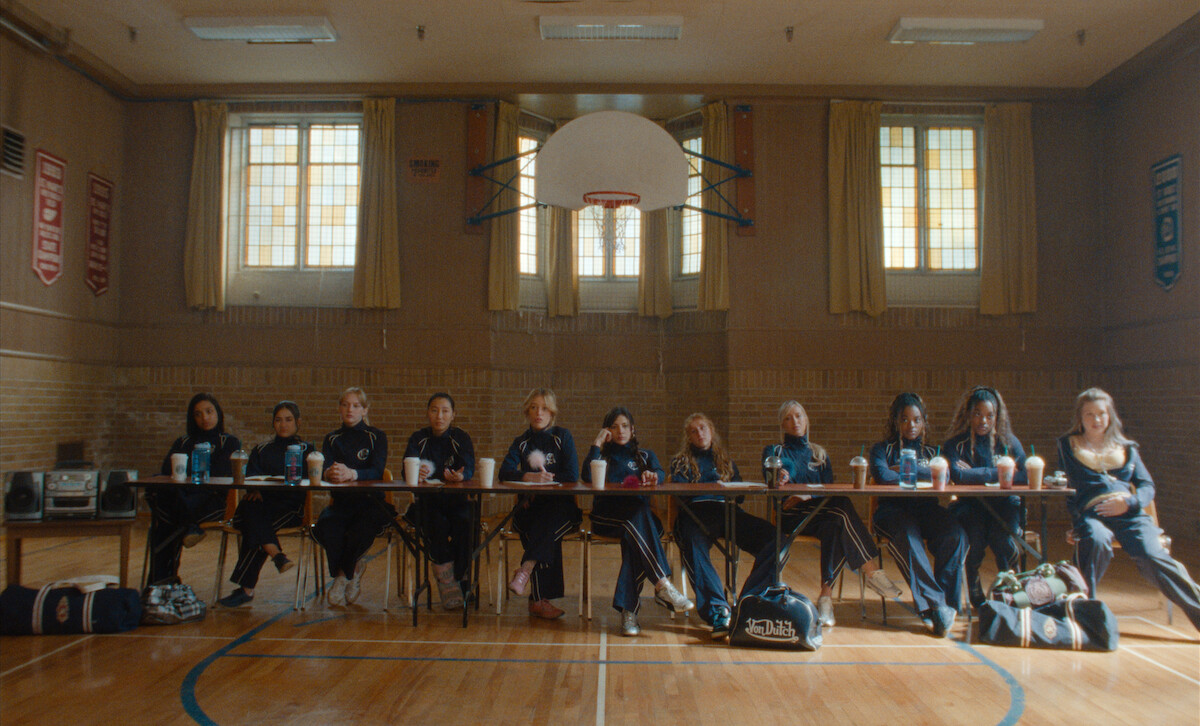
The Lions dance team sits in a long row at a table in the school gym
The Lions at St. Mark’s / Netflix.

The Lions are an excellent horror device because a dance team demands agreement before it allows individuality. Every step has to match. Every girl has to know when to smile. Captain Anya (Kristina Bogic) appears to have mastered the performance, while her feelings for her best friend Elise (Sara Boustany) threaten the version of herself the school rewards. Lisbeth (Geena Meszaros) wants admission badly enough to mistake proximity for safety. The mystery around Grace exposes what each of them is willing to do to keep her place. Their fear spreads through the town because nobody wants to be the first person to break formation.

Shephard and co-showrunner Gina Gammell have spoken about drawing from their own experiences of girlhood, group pressure and queer self-discovery. The show’s religious imagery has a sharp purpose in that context. It gives private feelings a public courtroom. Desire can be treated as evidence; a rumor can acquire the force of a verdict. The question is less whether these girls believe in the devil than who gets to decide what counts as a sin.

The Body official trailer / Netflix.

Setting the series in 2004 lets Shephard dress the panic in flip phones, uniforms and the pop-cultural language of that decade. It also keeps the emotions close. Teenagers still learn how quickly a group can make exclusion feel like a moral judgment. Grace wants to dance; Anya wants to want without being condemned; Lisbeth wants somebody to say she belongs. The visions are spectacular, but the pressure underneath them is ordinary enough to recognize.

The Body makes Catholic school frightening by showing how many rules a girl can absorb before she has the words to question them. Wylie’s Grace gives the story its haunting center, and Shephard lets the whole institution tremble around her. By the time the Lions move together, the choreography looks less like proof of unity than a test of who can survive being out of step.

Film & TV
Sofia Wylie’s New Netflix Show Makes Catholic School a Horror Story
Wylie plays the recruit at the center of a disastrous dance-team initiation, while creator Quinn Shephard turns Catholic school’s rituals into a story of queer desire, shame and belonging.

Text

Noah Cruz

At St. Mark’s, everyone knows where a girl is supposed to stand. In the pew, in formation, beside the right friend, beneath the right boy’s arm. Sofia Wylie’s Grace Franklin wants a place on the Lions dance team. On Halloween night in 2004, an initiation meant to make her one of them goes violently wrong. Grace becomes the question hanging over the school: what happened to her, and why can the girls suddenly see things the adults cannot explain?

That is the setup of The Body, Quinn Shephard’s eight-episode Netflix series, which arrived Wednesday, November 11. The Catholic-school setting gives the horror its vocabulary. Confession, sacrifice, purity and punishment are already spoken here before anyone claims to have seen a vision. Shephard puts those words in a place where teenage girls are also being taught to synchronize their bodies and edit their desires. The supernatural enters a social system with plenty of practice at making people afraid of what they feel.

Six girls from The Body wait together in school uniforms beneath a framed message about fear
The girls of St. Mark’s / Netflix.

Wylie is an especially pointed choice for Grace. She comes from High School Musical: The Musical: The Series, a show where rehearsals offered the promise that a group could become a home. Here, the audition leads to a ritual, and belonging comes with a cost. Grace is devout, eager and familiar with the school’s rules; her decision to join the team makes the rules collide. Wylie’s history as a dancer gives the casting another charge. The body that should know exactly how to move becomes the one everybody else tries to interpret.

Shephard has said she wrote the first version of The Body the year she came out. In a Netflix interview, she described revisiting the script and discovering its comedy alongside the shame and confusion that had once felt so heavy. That shift matters. The show’s premise has the ingredients for an earnest sermon about repression. Shephard instead brings in the absurdity of a dance-team hierarchy, a disastrous party and a town ready to turn adolescent panic into doctrine. She has named Carrie, Jennifer’s Body, Mean Girls and The Crucible among her touchstones. The mix is messy on purpose: teen status can be as ritualized as church.

The Lions dance team sits in a long row at a table in the school gym
The Lions at St. Mark’s / Netflix.

The Lions are an excellent horror device because a dance team demands agreement before it allows individuality. Every step has to match. Every girl has to know when to smile. Captain Anya (Kristina Bogic) appears to have mastered the performance, while her feelings for her best friend Elise (Sara Boustany) threaten the version of herself the school rewards. Lisbeth (Geena Meszaros) wants admission badly enough to mistake proximity for safety. The mystery around Grace exposes what each of them is willing to do to keep her place. Their fear spreads through the town because nobody wants to be the first person to break formation.

Shephard and co-showrunner Gina Gammell have spoken about drawing from their own experiences of girlhood, group pressure and queer self-discovery. The show’s religious imagery has a sharp purpose in that context. It gives private feelings a public courtroom. Desire can be treated as evidence; a rumor can acquire the force of a verdict. The question is less whether these girls believe in the devil than who gets to decide what counts as a sin.

The Body official trailer / Netflix.

Setting the series in 2004 lets Shephard dress the panic in flip phones, uniforms and the pop-cultural language of that decade. It also keeps the emotions close. Teenagers still learn how quickly a group can make exclusion feel like a moral judgment. Grace wants to dance; Anya wants to want without being condemned; Lisbeth wants somebody to say she belongs. The visions are spectacular, but the pressure underneath them is ordinary enough to recognize.

The Body makes Catholic school frightening by showing how many rules a girl can absorb before she has the words to question them. Wylie’s Grace gives the story its haunting center, and Shephard lets the whole institution tremble around her. By the time the Lions move together, the choreography looks less like proof of unity than a test of who can survive being out of step.

Film & TV
Film & TV
Sofia Wylie’s New Netflix Show Makes Catholic School a Horror Story
Wylie plays the recruit at the center of a disastrous dance-team initiation, while creator Quinn Shephard turns Catholic school’s rituals into a story of queer desire, shame and belonging.

Text

Text

Noah Cruz

Noah Cruz

At St. Mark’s, everyone knows where a girl is supposed to stand. In the pew, in formation, beside the right friend, beneath the right boy’s arm. Sofia Wylie’s Grace Franklin wants a place on the Lions dance team. On Halloween night in 2004, an initiation meant to make her one of them goes violently wrong. Grace becomes the question hanging over the school: what happened to her, and why can the girls suddenly see things the adults cannot explain?

That is the setup of The Body, Quinn Shephard’s eight-episode Netflix series, which arrived Wednesday, November 11. The Catholic-school setting gives the horror its vocabulary. Confession, sacrifice, purity and punishment are already spoken here before anyone claims to have seen a vision. Shephard puts those words in a place where teenage girls are also being taught to synchronize their bodies and edit their desires. The supernatural enters a social system with plenty of practice at making people afraid of what they feel.

Six girls from The Body wait together in school uniforms beneath a framed message about fear
The girls of St. Mark’s / Netflix.

Wylie is an especially pointed choice for Grace. She comes from High School Musical: The Musical: The Series, a show where rehearsals offered the promise that a group could become a home. Here, the audition leads to a ritual, and belonging comes with a cost. Grace is devout, eager and familiar with the school’s rules; her decision to join the team makes the rules collide. Wylie’s history as a dancer gives the casting another charge. The body that should know exactly how to move becomes the one everybody else tries to interpret.

Shephard has said she wrote the first version of The Body the year she came out. In a Netflix interview, she described revisiting the script and discovering its comedy alongside the shame and confusion that had once felt so heavy. That shift matters. The show’s premise has the ingredients for an earnest sermon about repression. Shephard instead brings in the absurdity of a dance-team hierarchy, a disastrous party and a town ready to turn adolescent panic into doctrine. She has named Carrie, Jennifer’s Body, Mean Girls and The Crucible among her touchstones. The mix is messy on purpose: teen status can be as ritualized as church.

The Lions dance team sits in a long row at a table in the school gym
The Lions at St. Mark’s / Netflix.

The Lions are an excellent horror device because a dance team demands agreement before it allows individuality. Every step has to match. Every girl has to know when to smile. Captain Anya (Kristina Bogic) appears to have mastered the performance, while her feelings for her best friend Elise (Sara Boustany) threaten the version of herself the school rewards. Lisbeth (Geena Meszaros) wants admission badly enough to mistake proximity for safety. The mystery around Grace exposes what each of them is willing to do to keep her place. Their fear spreads through the town because nobody wants to be the first person to break formation.

Shephard and co-showrunner Gina Gammell have spoken about drawing from their own experiences of girlhood, group pressure and queer self-discovery. The show’s religious imagery has a sharp purpose in that context. It gives private feelings a public courtroom. Desire can be treated as evidence; a rumor can acquire the force of a verdict. The question is less whether these girls believe in the devil than who gets to decide what counts as a sin.

The Body official trailer / Netflix.

Setting the series in 2004 lets Shephard dress the panic in flip phones, uniforms and the pop-cultural language of that decade. It also keeps the emotions close. Teenagers still learn how quickly a group can make exclusion feel like a moral judgment. Grace wants to dance; Anya wants to want without being condemned; Lisbeth wants somebody to say she belongs. The visions are spectacular, but the pressure underneath them is ordinary enough to recognize.

The Body makes Catholic school frightening by showing how many rules a girl can absorb before she has the words to question them. Wylie’s Grace gives the story its haunting center, and Shephard lets the whole institution tremble around her. By the time the Lions move together, the choreography looks less like proof of unity than a test of who can survive being out of step.