Fashion
Burberry Got Its Clothes Dirty and Found Its Pulse
Celia Birtwell doodled over the check, Central Cee wore Shepherd’s Bush onto the runway and Daniel Lee proved British luxury looks better with a few creases in it.

Text

Noah Cruz

Burberry has spent 170 years proving it can survive British weather. For Summer 2027, Daniel Lee asked a hotter question: could it survive somebody actually living in it?

The answer came rumpled, washed, scuffed and smiling. Trench coats puffed at the hem. Silk taffeta looked rescued from the bottom of a very glamorous suitcase. The check broke into gingham and stripes. Tiny faces, flowers and fruit climbed over jackets, skirts, shoes and bags. Then Central Cee walked out in jeans low enough to make the front row sit up straighter.

This was not heritage being demolished for content. It was heritage getting its collar loosened. Inside Chelsea College of Arts on September 21, Lee made British luxury feel less like something preserved behind glass and more like something found at 3am, still looking incredible.

Watch Burberry Summer 2027 in full.Video: Burberry

The check met a woman who knew how to misbehave

The collection’s sharpest provocation came from an 85-year-old. Celia Birtwell—the textile artist whose florals helped define late-1960s and ’70s British fashion alongside Ossie Clark—sat in the front row at the same college where she once taught. Lee had met her only in May. By September, one of fashion’s most guarded graphics was in her hands.

Birtwell did not politely place a flower beside the Burberry check. She made the grid wobble. It became a trellis, then gingham, then a stripe. Her drawn faces and unruly plants escaped onto knit vests, taffeta, leather discs, pompoms and beads. One print had waited decades to be used. Burberry gave it a runway before it could become nostalgia.

The collaboration worked because it was not a youth-brand panic move. It connected two living versions of Britishness: Birtwell’s psychedelic hand and Lee’s appetite for the slightly off. The result was joyful without turning cute, historic without getting dusty.
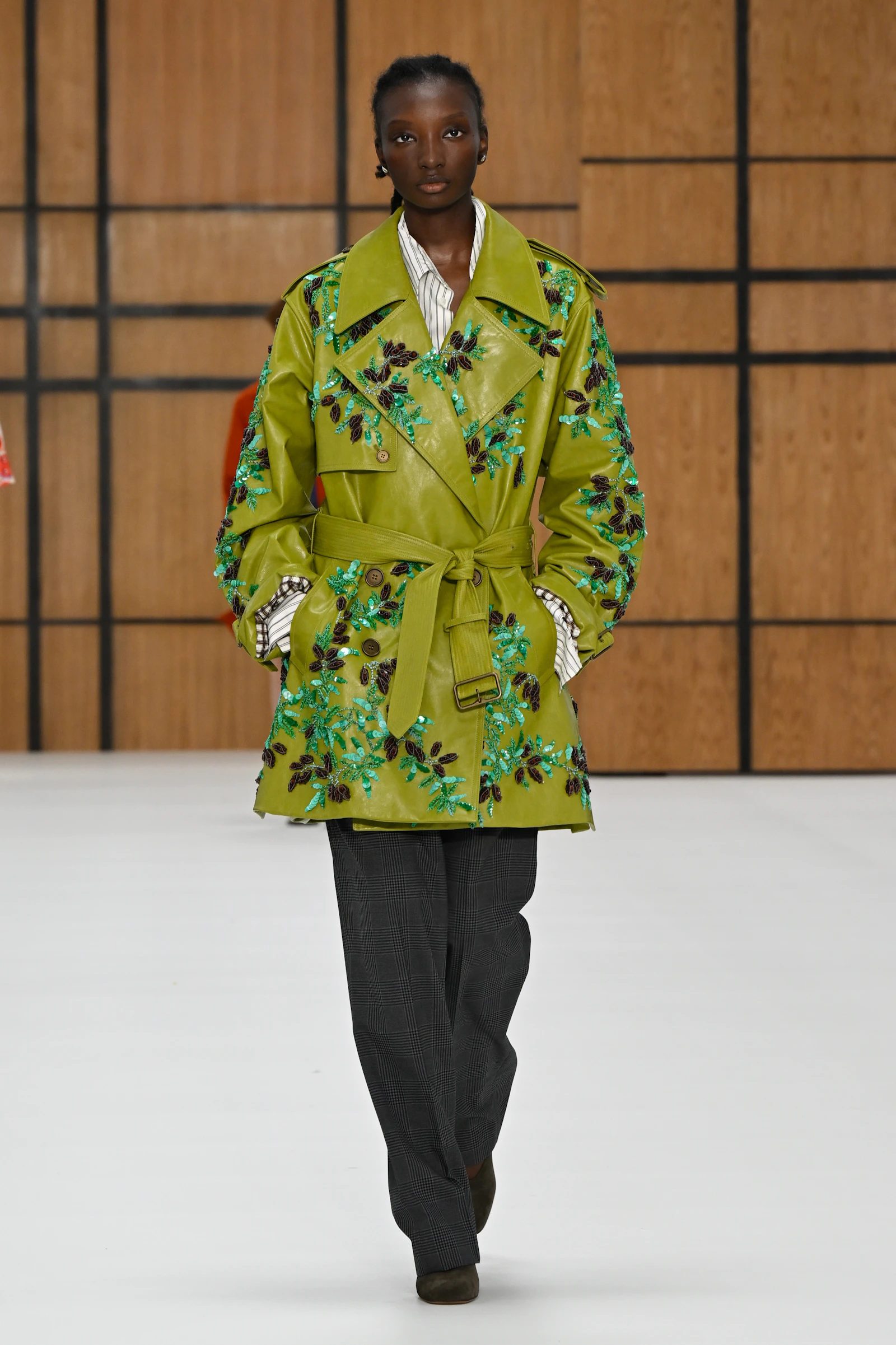
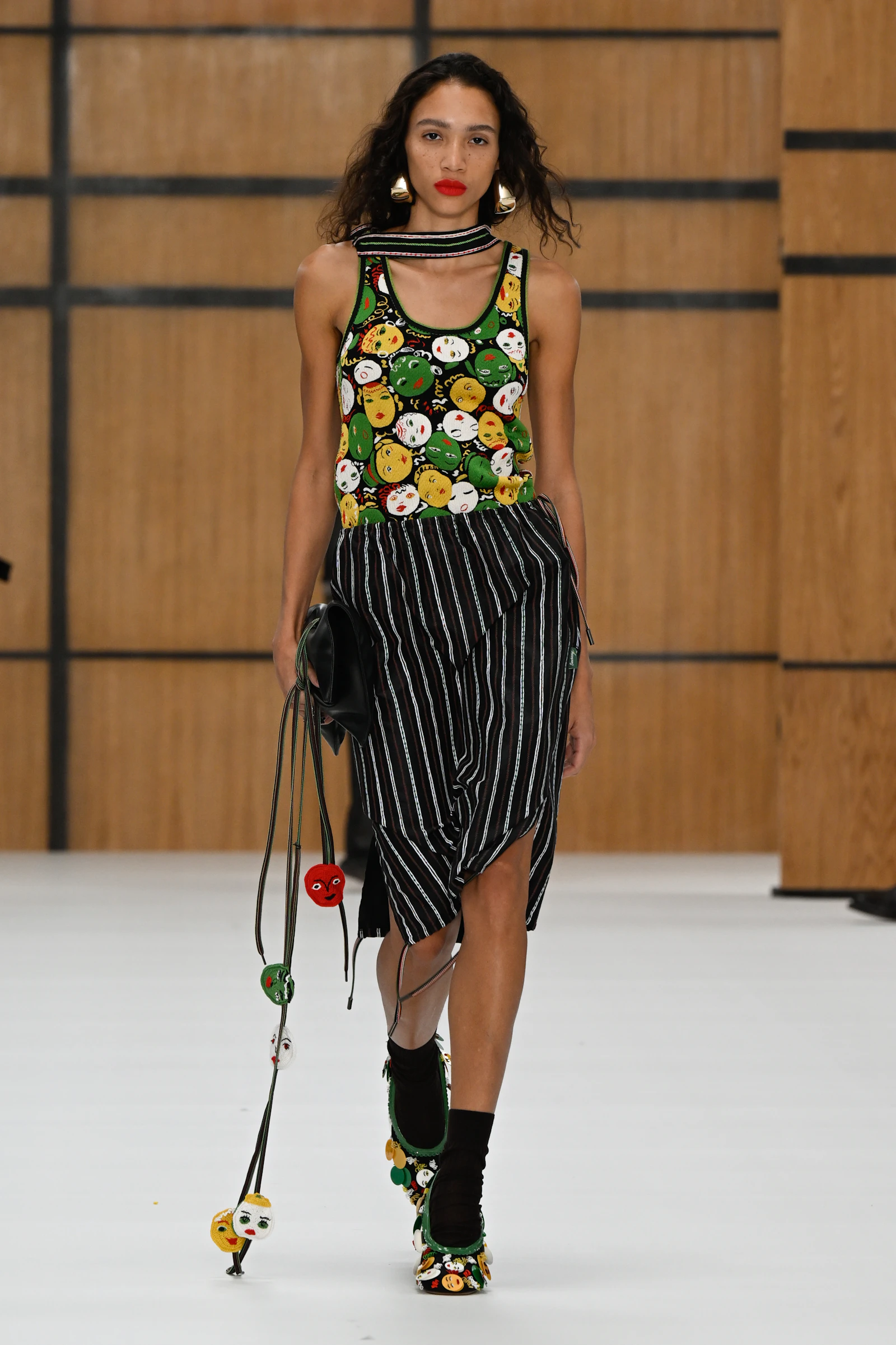
The check stopped behaving like a logo and started acting like a sketchbook.

Luxury needed a crease

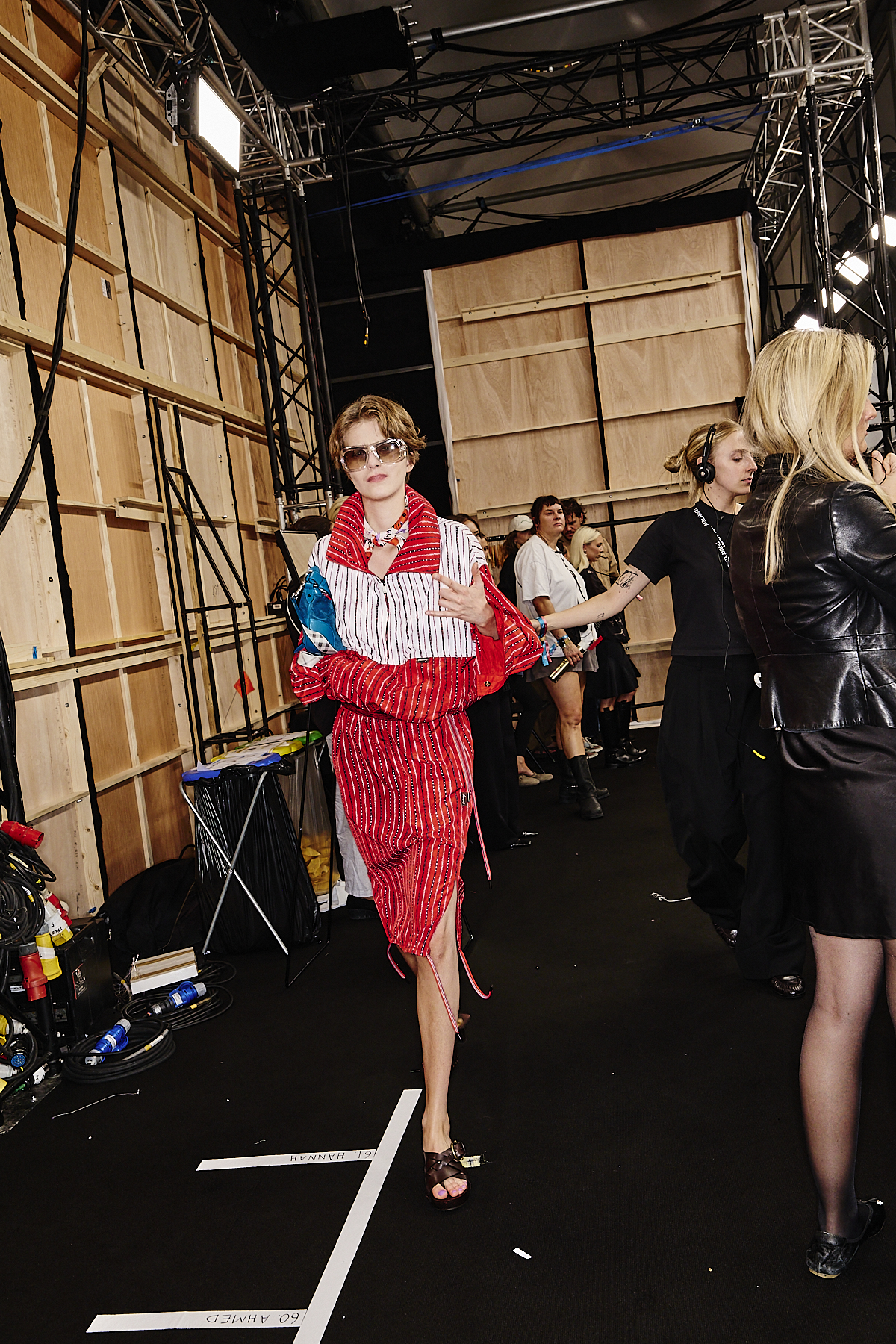
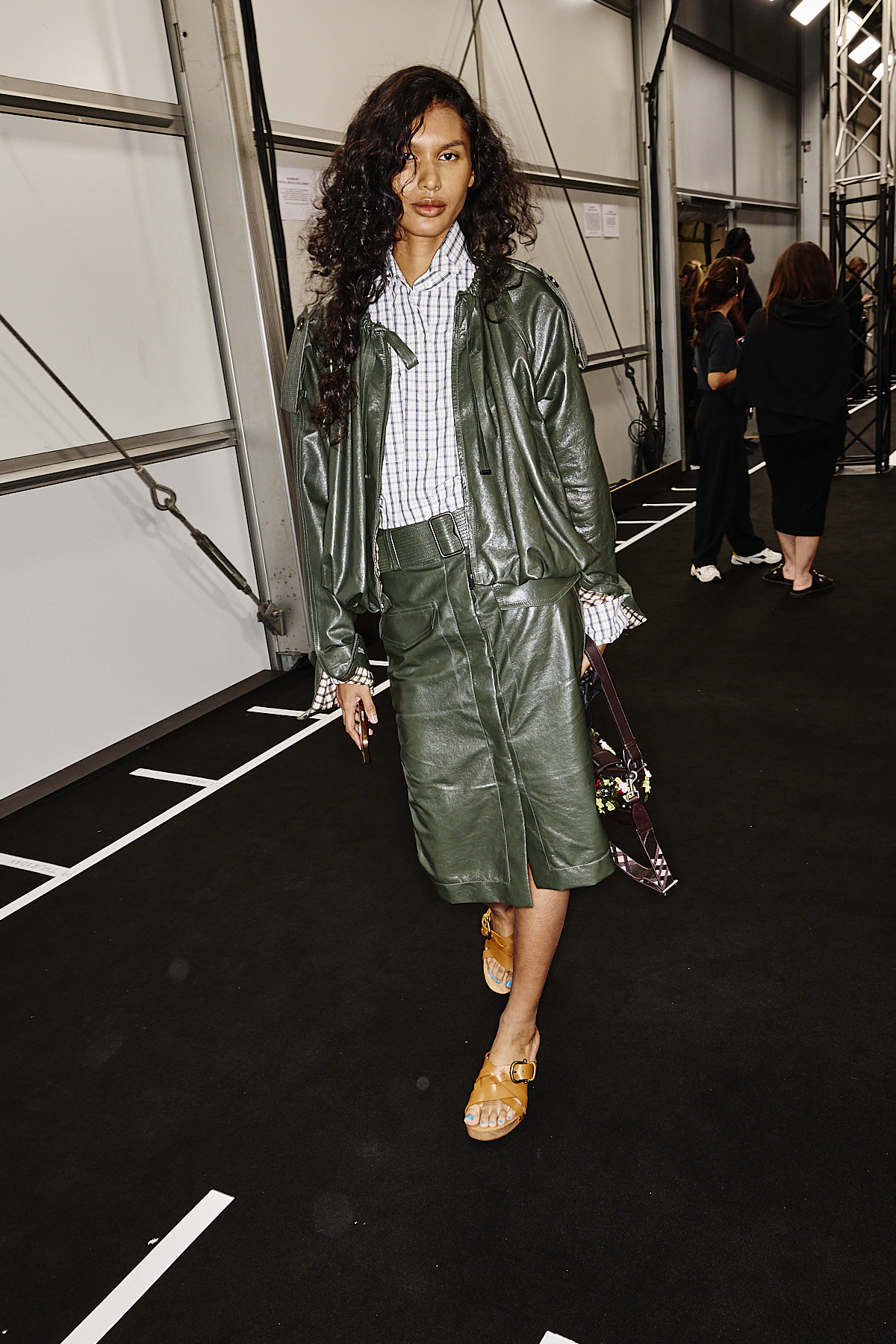
Lee described the collection as Burberry at its most soulful: a return to instinct, feeling and the evidence of a human hand. The clothes carried that evidence everywhere. Washed silk and cotton looked worn in. Taffeta held its wrinkles. Denim arrived faded. Vulcanised sneakers looked as if they had already missed the last train home.

That imperfection was not negligence styled as a concept. The surfaces were full of work: micro-floral embroidery, trompe-l’œil belts and epaulettes, hand-finished flowers and fruit, woven leather and beaded faces. The craft was intense. The attitude refused to make a ceremony out of it.

Luxury normally spends millions deleting the signs of contact. Burberry kept them. A crease became proof that a body had been there. A smudge made polish feel less corporate. Lee’s most useful idea this season was that value does not disappear when a garment looks handled. Sometimes that is when desire begins.

The trench developed a personality

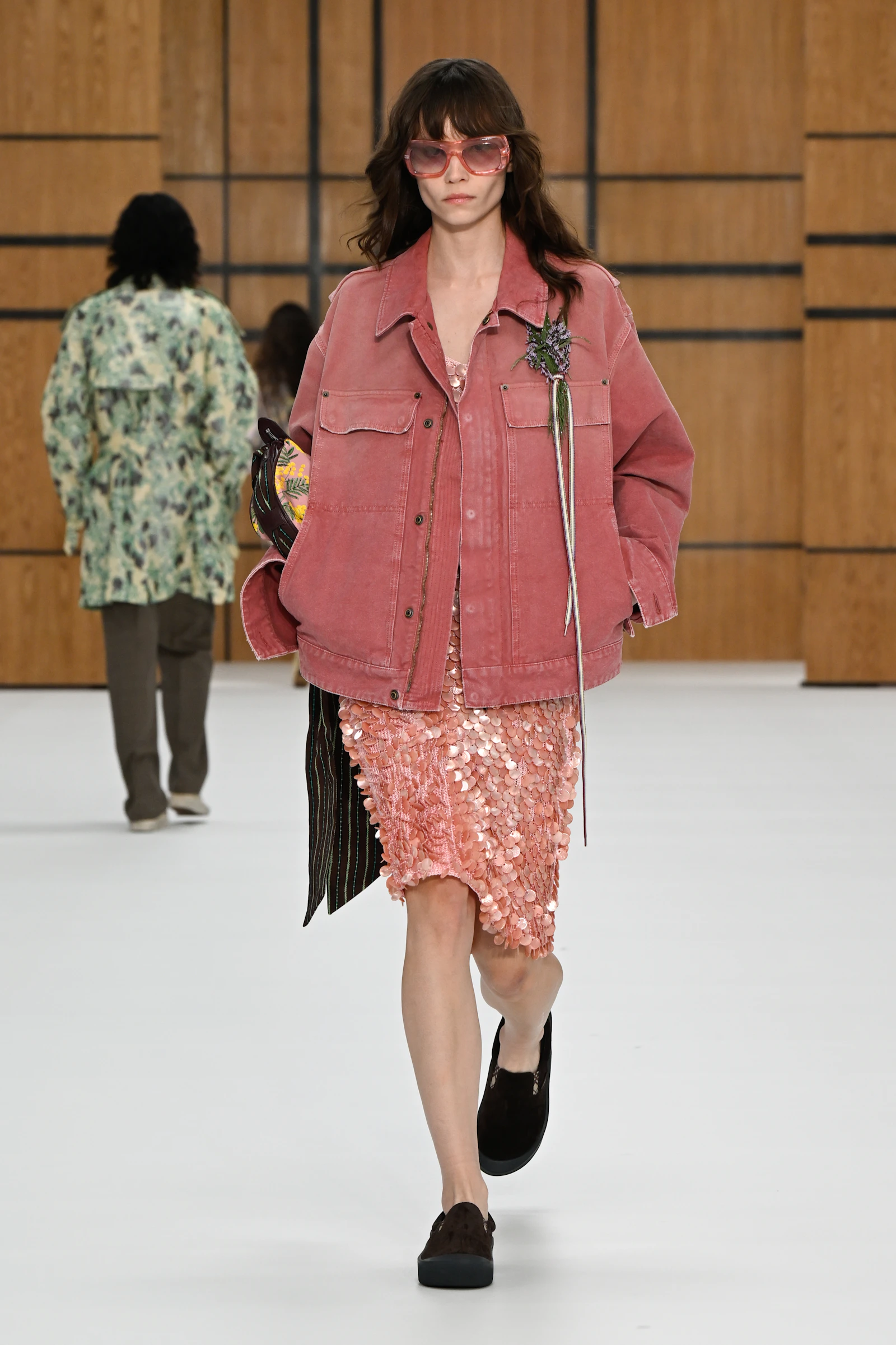
Of course there were trenches. The smart move was refusing to make them behave like monuments. They came shortened, feather-light and swollen into bubble hems; embroidered with mimosa; washed into English-rose pink; cut in silk faille and taffeta that caught air instead of simply stopping rain.

A swimming-pool blue parka interrupted the neutral palette. A sunset-orange trench carried blueberry embellishment. Grey outerwear came with a single long flower pinned like somebody had grabbed it on the way in. The house signature was still legible, but no two characters seemed trapped inside the same uniform.

The shoes understood the assignment. Seventies clogs sat under technical clothes. New climbing moccasins appeared beneath chiffon. Scuffed slip-ons met sequins. Practical and romantic stopped arguing and left together.

British luxury looked better after somebody had actually lived in it.

Central Cee wore the postcode

Then Central Cee made his runway debut. He did not arrive transformed into an anonymous Burberry man. He came hooded, sagging and unmistakably himself: black-and-blue technical outerwear, low grey denim, jewellery and the hard Shepherd’s Bush ease that cannot be faked by a styling memo.

The appearance could have been a celebrity interruption. Instead, it completed the collection’s argument. Lee said the casting was designed to heighten each person’s individuality rather than impose one uniform face. Central Cee did not model aspiration from a distance; he brought an existing way of dressing into the house and made Burberry meet it halfway.

That is a more convincing version of Britishness than another costume drama. Birtwell’s hand, Bowie across four decades on the soundtrack, a West London rapper walking his first runway, an art school full of characters: the national identity came from friction between generations, not a flag printed on a moodboard.

Central Cee making his runway debut in a blue and black hooded Burberry jacket and low grey jeans
Central Cee’s first runway walk looked like Central Cee—not a casting department’s idea of him.Jeff Spicer/Getty Images

Burberry finally loosened its collar

The white runway and stripped wooden set could have made everything clinical. Instead, Bowie, Birtwell and the deliberately unpressed surfaces put heat back into the room. Lee used control to frame instinct, then let character break the grid.

That matters because heritage houses are often told to choose between two bad performances: guard the archive until it stops breathing, or chase youth until nobody recognises the logo. Burberry found a third route. Keep the trench. Keep the check. Let another hand draw over both. Let the clothes absorb a life before the customer does.

The show was optimistic without becoming naïve, eccentric without putting on a silly hat and commercial without sanding away every difficult edge. It proved the most modern thing a luxury house can do is stop pretending perfection is the same as desirability.

Heritage survived. Better—it got fingerprints.

Fashion
Burberry Got Its Clothes Dirty and Found Its Pulse
Celia Birtwell doodled over the check, Central Cee wore Shepherd’s Bush onto the runway and Daniel Lee proved British luxury looks better with a few creases in it.

Text

Noah Cruz

Burberry has spent 170 years proving it can survive British weather. For Summer 2027, Daniel Lee asked a hotter question: could it survive somebody actually living in it?

The answer came rumpled, washed, scuffed and smiling. Trench coats puffed at the hem. Silk taffeta looked rescued from the bottom of a very glamorous suitcase. The check broke into gingham and stripes. Tiny faces, flowers and fruit climbed over jackets, skirts, shoes and bags. Then Central Cee walked out in jeans low enough to make the front row sit up straighter.

This was not heritage being demolished for content. It was heritage getting its collar loosened. Inside Chelsea College of Arts on September 21, Lee made British luxury feel less like something preserved behind glass and more like something found at 3am, still looking incredible.

Watch Burberry Summer 2027 in full.Video: Burberry

The check met a woman who knew how to misbehave

The collection’s sharpest provocation came from an 85-year-old. Celia Birtwell—the textile artist whose florals helped define late-1960s and ’70s British fashion alongside Ossie Clark—sat in the front row at the same college where she once taught. Lee had met her only in May. By September, one of fashion’s most guarded graphics was in her hands.

Birtwell did not politely place a flower beside the Burberry check. She made the grid wobble. It became a trellis, then gingham, then a stripe. Her drawn faces and unruly plants escaped onto knit vests, taffeta, leather discs, pompoms and beads. One print had waited decades to be used. Burberry gave it a runway before it could become nostalgia.

The collaboration worked because it was not a youth-brand panic move. It connected two living versions of Britishness: Birtwell’s psychedelic hand and Lee’s appetite for the slightly off. The result was joyful without turning cute, historic without getting dusty.
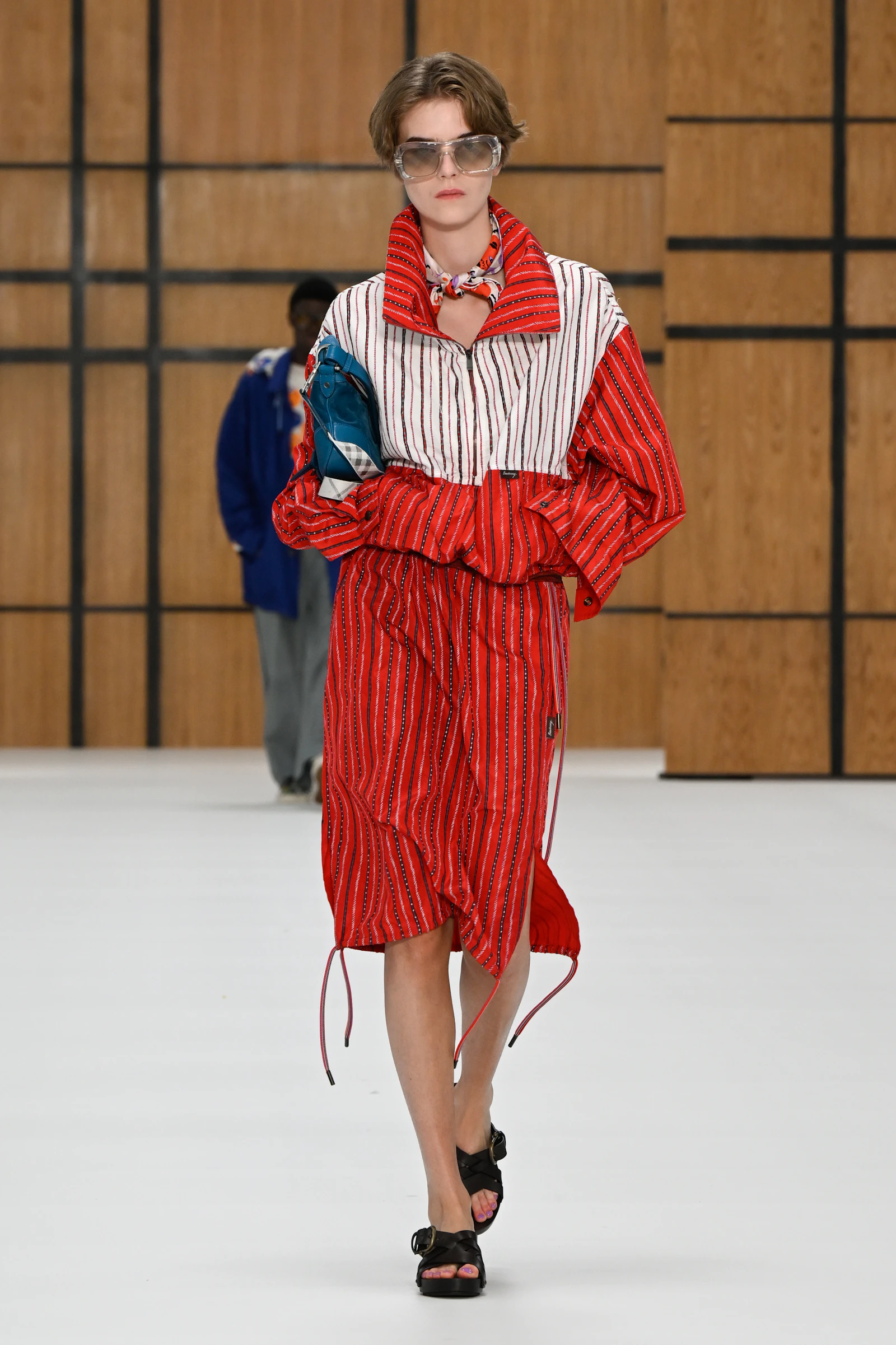
The check stopped behaving like a logo and started acting like a sketchbook.

Luxury needed a crease

Lee described the collection as Burberry at its most soulful: a return to instinct, feeling and the evidence of a human hand. The clothes carried that evidence everywhere. Washed silk and cotton looked worn in. Taffeta held its wrinkles. Denim arrived faded. Vulcanised sneakers looked as if they had already missed the last train home.

That imperfection was not negligence styled as a concept. The surfaces were full of work: micro-floral embroidery, trompe-l’œil belts and epaulettes, hand-finished flowers and fruit, woven leather and beaded faces. The craft was intense. The attitude refused to make a ceremony out of it.

Luxury normally spends millions deleting the signs of contact. Burberry kept them. A crease became proof that a body had been there. A smudge made polish feel less corporate. Lee’s most useful idea this season was that value does not disappear when a garment looks handled. Sometimes that is when desire begins.
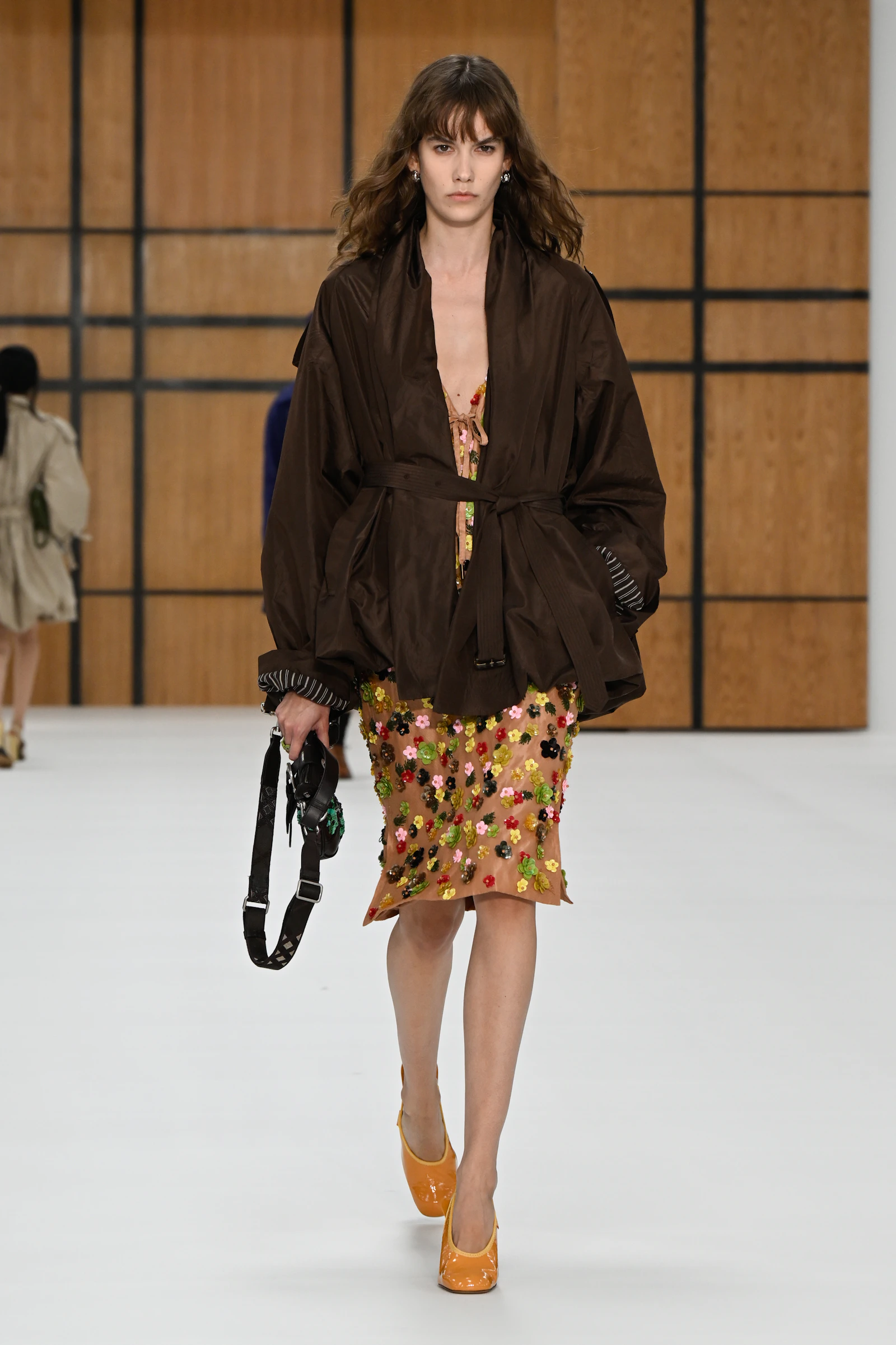
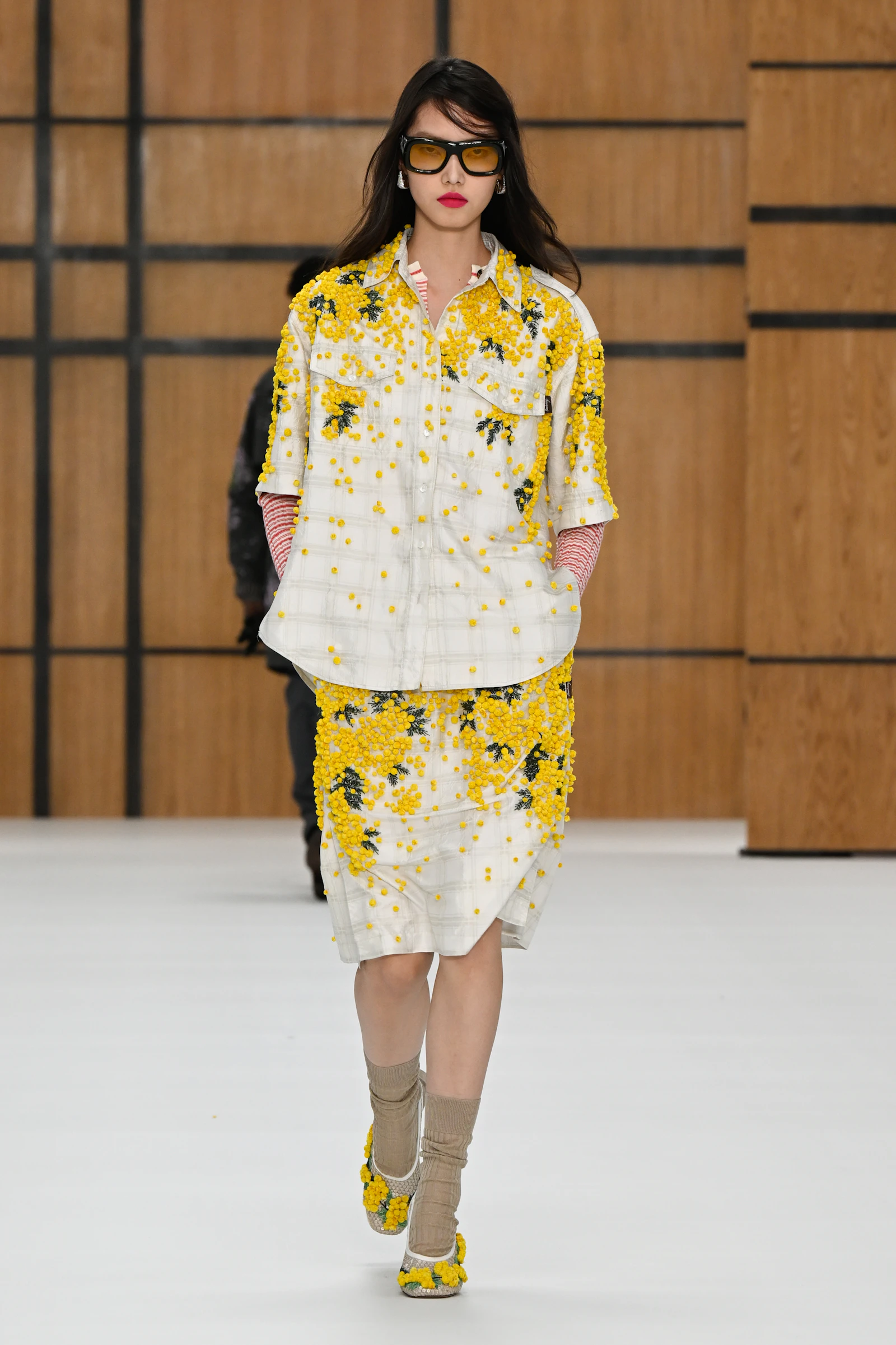
The trench developed a personality

Of course there were trenches. The smart move was refusing to make them behave like monuments. They came shortened, feather-light and swollen into bubble hems; embroidered with mimosa; washed into English-rose pink; cut in silk faille and taffeta that caught air instead of simply stopping rain.

A swimming-pool blue parka interrupted the neutral palette. A sunset-orange trench carried blueberry embellishment. Grey outerwear came with a single long flower pinned like somebody had grabbed it on the way in. The house signature was still legible, but no two characters seemed trapped inside the same uniform.

The shoes understood the assignment. Seventies clogs sat under technical clothes. New climbing moccasins appeared beneath chiffon. Scuffed slip-ons met sequins. Practical and romantic stopped arguing and left together.

British luxury looked better after somebody had actually lived in it.

Central Cee wore the postcode

Then Central Cee made his runway debut. He did not arrive transformed into an anonymous Burberry man. He came hooded, sagging and unmistakably himself: black-and-blue technical outerwear, low grey denim, jewellery and the hard Shepherd’s Bush ease that cannot be faked by a styling memo.

The appearance could have been a celebrity interruption. Instead, it completed the collection’s argument. Lee said the casting was designed to heighten each person’s individuality rather than impose one uniform face. Central Cee did not model aspiration from a distance; he brought an existing way of dressing into the house and made Burberry meet it halfway.

That is a more convincing version of Britishness than another costume drama. Birtwell’s hand, Bowie across four decades on the soundtrack, a West London rapper walking his first runway, an art school full of characters: the national identity came from friction between generations, not a flag printed on a moodboard.

Central Cee making his runway debut in a blue and black hooded Burberry jacket and low grey jeans
Central Cee’s first runway walk looked like Central Cee—not a casting department’s idea of him.Jeff Spicer/Getty Images

Burberry finally loosened its collar

The white runway and stripped wooden set could have made everything clinical. Instead, Bowie, Birtwell and the deliberately unpressed surfaces put heat back into the room. Lee used control to frame instinct, then let character break the grid.

That matters because heritage houses are often told to choose between two bad performances: guard the archive until it stops breathing, or chase youth until nobody recognises the logo. Burberry found a third route. Keep the trench. Keep the check. Let another hand draw over both. Let the clothes absorb a life before the customer does.

The show was optimistic without becoming naïve, eccentric without putting on a silly hat and commercial without sanding away every difficult edge. It proved the most modern thing a luxury house can do is stop pretending perfection is the same as desirability.

Heritage survived. Better—it got fingerprints.

Fashion
Burberry Got Its Clothes Dirty and Found Its Pulse
Celia Birtwell doodled over the check, Central Cee wore Shepherd’s Bush onto the runway and Daniel Lee proved British luxury looks better with a few creases in it.

Text

Noah Cruz

Burberry has spent 170 years proving it can survive British weather. For Summer 2027, Daniel Lee asked a hotter question: could it survive somebody actually living in it?

The answer came rumpled, washed, scuffed and smiling. Trench coats puffed at the hem. Silk taffeta looked rescued from the bottom of a very glamorous suitcase. The check broke into gingham and stripes. Tiny faces, flowers and fruit climbed over jackets, skirts, shoes and bags. Then Central Cee walked out in jeans low enough to make the front row sit up straighter.

This was not heritage being demolished for content. It was heritage getting its collar loosened. Inside Chelsea College of Arts on September 21, Lee made British luxury feel less like something preserved behind glass and more like something found at 3am, still looking incredible.

Watch Burberry Summer 2027 in full.Video: Burberry

The check met a woman who knew how to misbehave

The collection’s sharpest provocation came from an 85-year-old. Celia Birtwell—the textile artist whose florals helped define late-1960s and ’70s British fashion alongside Ossie Clark—sat in the front row at the same college where she once taught. Lee had met her only in May. By September, one of fashion’s most guarded graphics was in her hands.

Birtwell did not politely place a flower beside the Burberry check. She made the grid wobble. It became a trellis, then gingham, then a stripe. Her drawn faces and unruly plants escaped onto knit vests, taffeta, leather discs, pompoms and beads. One print had waited decades to be used. Burberry gave it a runway before it could become nostalgia.

The collaboration worked because it was not a youth-brand panic move. It connected two living versions of Britishness: Birtwell’s psychedelic hand and Lee’s appetite for the slightly off. The result was joyful without turning cute, historic without getting dusty.

The check stopped behaving like a logo and started acting like a sketchbook.

Luxury needed a crease

Lee described the collection as Burberry at its most soulful: a return to instinct, feeling and the evidence of a human hand. The clothes carried that evidence everywhere. Washed silk and cotton looked worn in. Taffeta held its wrinkles. Denim arrived faded. Vulcanised sneakers looked as if they had already missed the last train home.

That imperfection was not negligence styled as a concept. The surfaces were full of work: micro-floral embroidery, trompe-l’œil belts and epaulettes, hand-finished flowers and fruit, woven leather and beaded faces. The craft was intense. The attitude refused to make a ceremony out of it.

Luxury normally spends millions deleting the signs of contact. Burberry kept them. A crease became proof that a body had been there. A smudge made polish feel less corporate. Lee’s most useful idea this season was that value does not disappear when a garment looks handled. Sometimes that is when desire begins.
The trench developed a personality

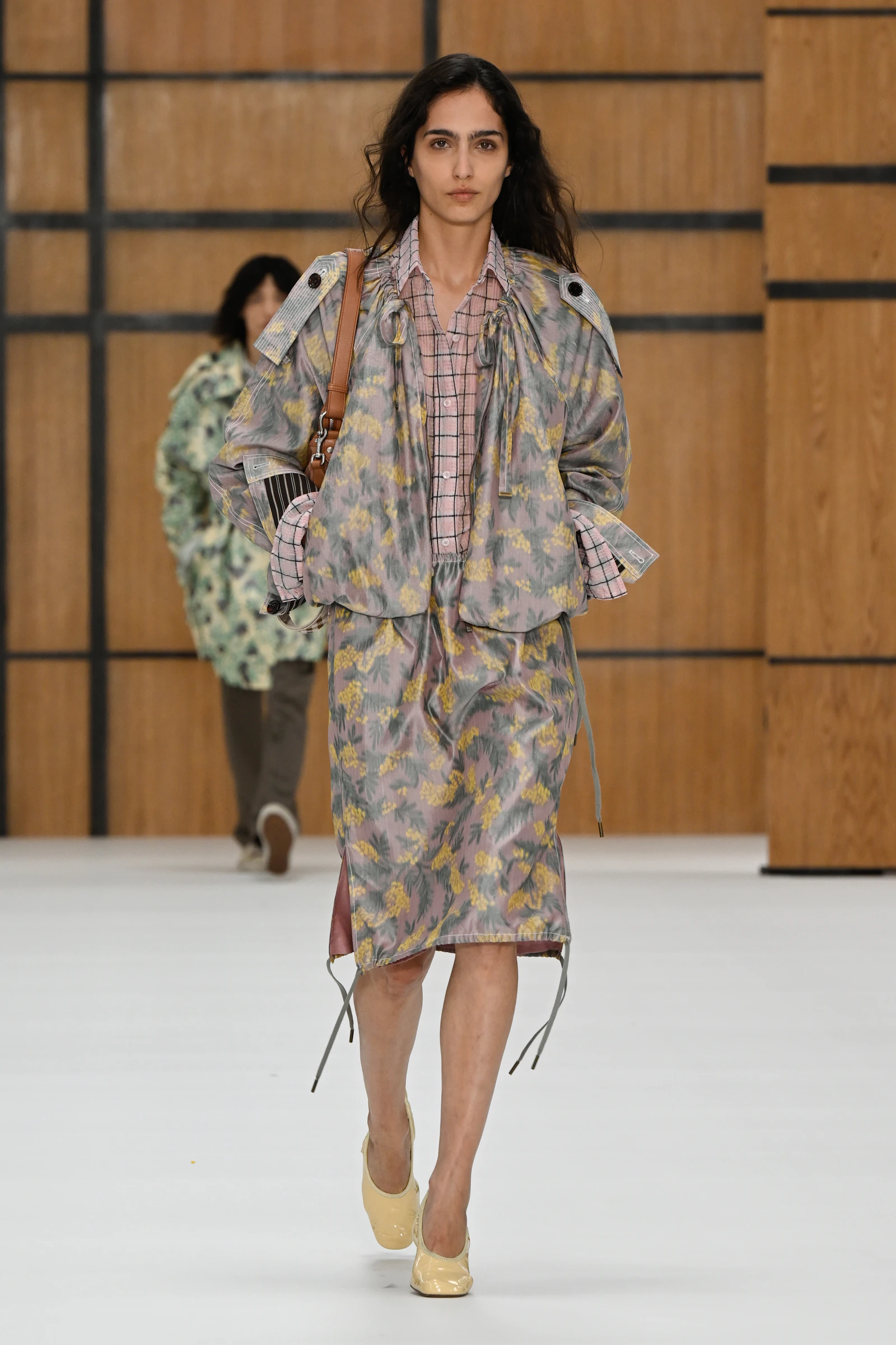
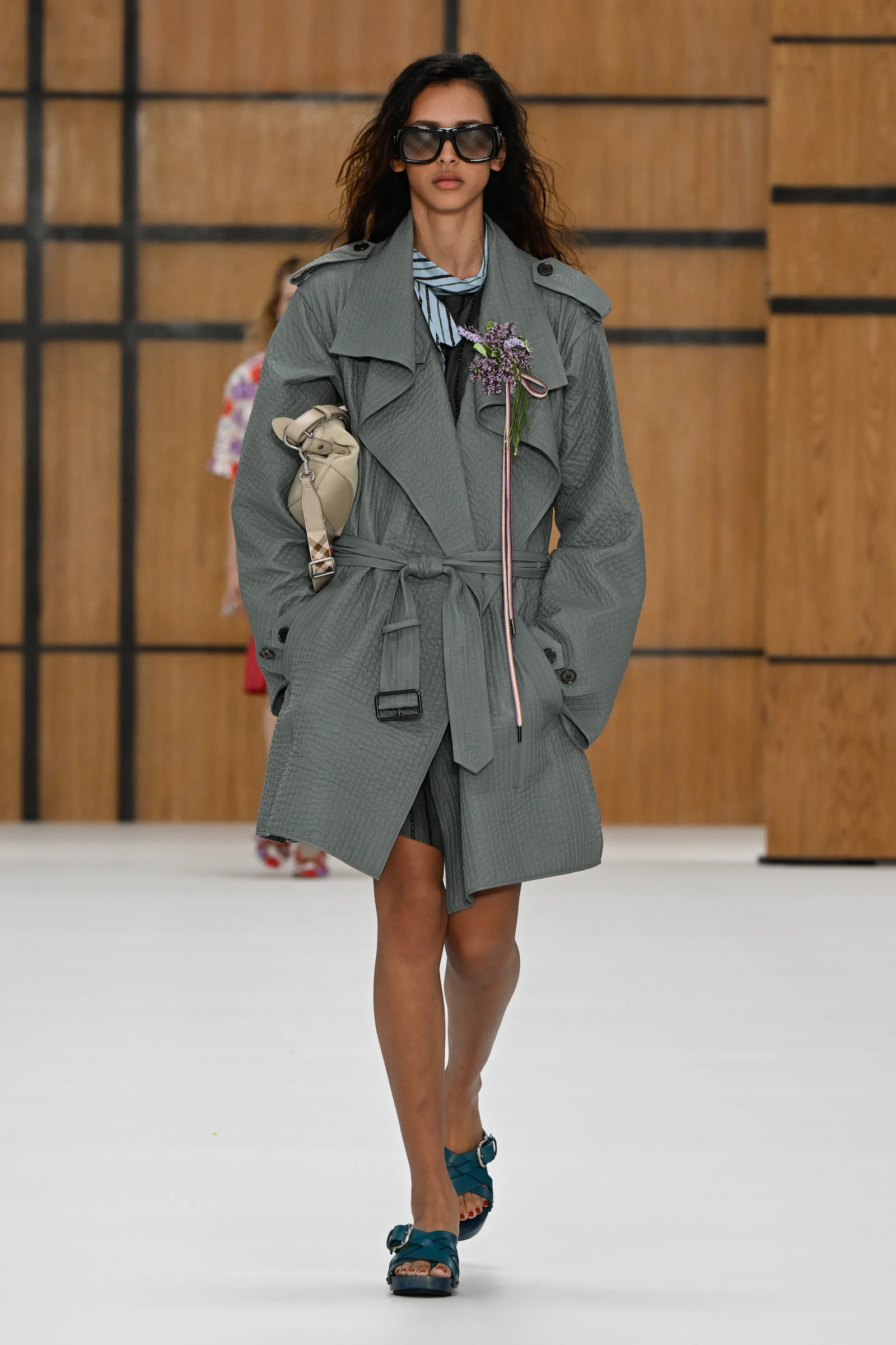
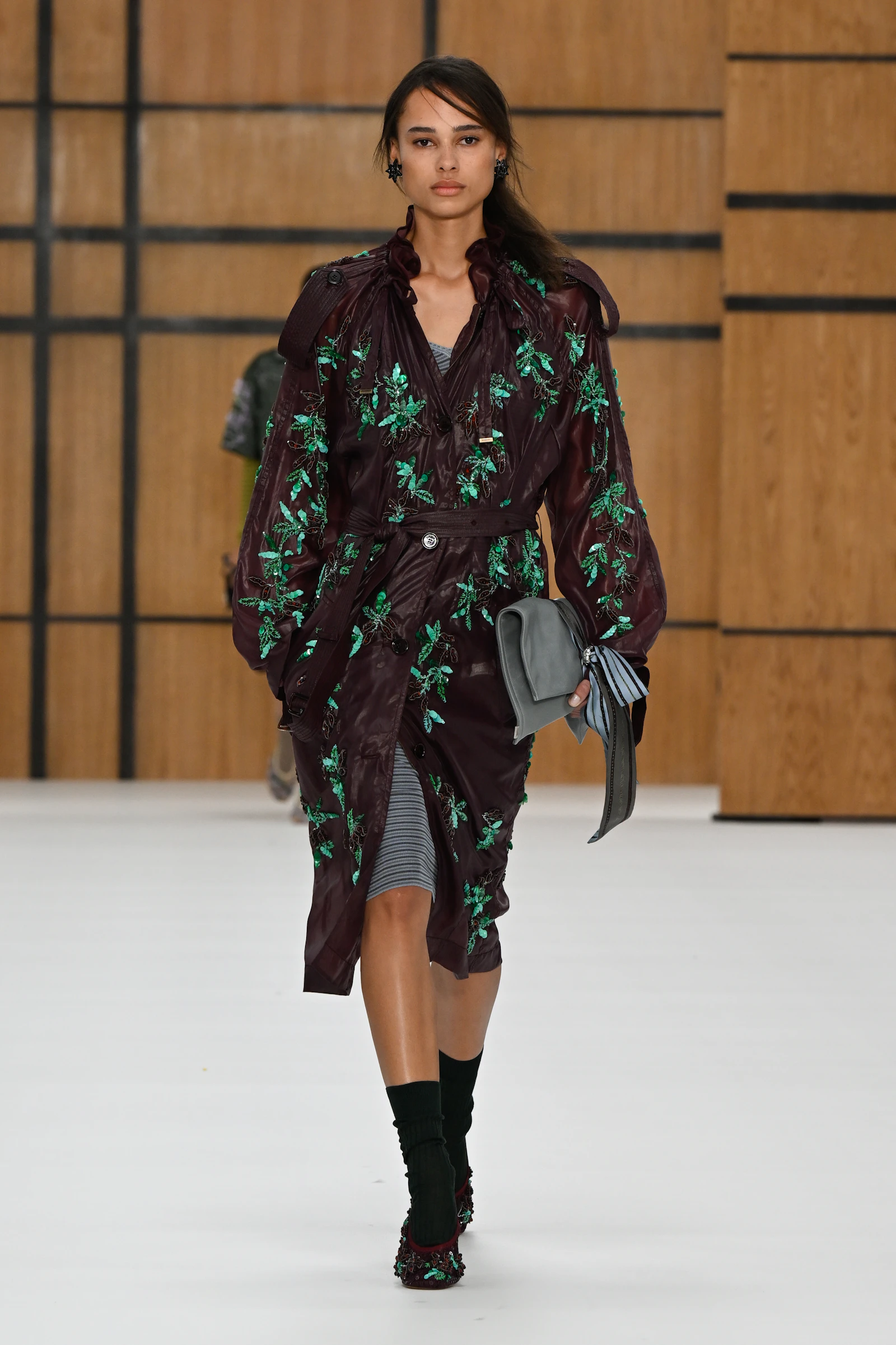
Of course there were trenches. The smart move was refusing to make them behave like monuments. They came shortened, feather-light and swollen into bubble hems; embroidered with mimosa; washed into English-rose pink; cut in silk faille and taffeta that caught air instead of simply stopping rain.

A swimming-pool blue parka interrupted the neutral palette. A sunset-orange trench carried blueberry embellishment. Grey outerwear came with a single long flower pinned like somebody had grabbed it on the way in. The house signature was still legible, but no two characters seemed trapped inside the same uniform.

The shoes understood the assignment. Seventies clogs sat under technical clothes. New climbing moccasins appeared beneath chiffon. Scuffed slip-ons met sequins. Practical and romantic stopped arguing and left together.
British luxury looked better after somebody had actually lived in it.

Central Cee wore the postcode

Then Central Cee made his runway debut. He did not arrive transformed into an anonymous Burberry man. He came hooded, sagging and unmistakably himself: black-and-blue technical outerwear, low grey denim, jewellery and the hard Shepherd’s Bush ease that cannot be faked by a styling memo.

The appearance could have been a celebrity interruption. Instead, it completed the collection’s argument. Lee said the casting was designed to heighten each person’s individuality rather than impose one uniform face. Central Cee did not model aspiration from a distance; he brought an existing way of dressing into the house and made Burberry meet it halfway.

That is a more convincing version of Britishness than another costume drama. Birtwell’s hand, Bowie across four decades on the soundtrack, a West London rapper walking his first runway, an art school full of characters: the national identity came from friction between generations, not a flag printed on a moodboard.

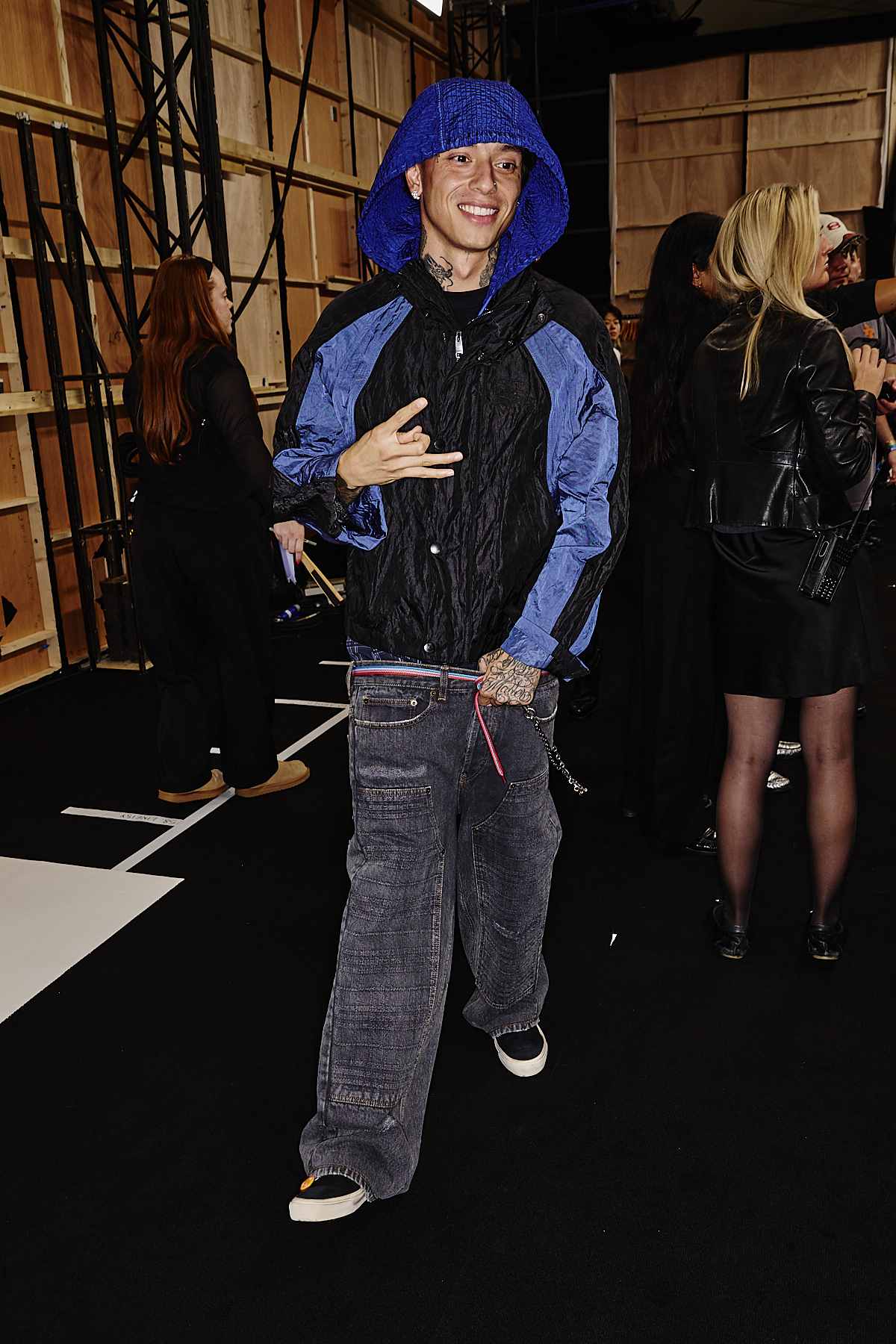
Central Cee making his runway debut in a blue and black hooded Burberry jacket and low grey jeans
Central Cee’s first runway walk looked like Central Cee—not a casting department’s idea of him.Jeff Spicer/Getty Images

Burberry finally loosened its collar

The white runway and stripped wooden set could have made everything clinical. Instead, Bowie, Birtwell and the deliberately unpressed surfaces put heat back into the room. Lee used control to frame instinct, then let character break the grid.

That matters because heritage houses are often told to choose between two bad performances: guard the archive until it stops breathing, or chase youth until nobody recognises the logo. Burberry found a third route. Keep the trench. Keep the check. Let another hand draw over both. Let the clothes absorb a life before the customer does.

The show was optimistic without becoming naïve, eccentric without putting on a silly hat and commercial without sanding away every difficult edge. It proved the most modern thing a luxury house can do is stop pretending perfection is the same as desirability.

Heritage survived. Better—it got fingerprints.

Get Frenzy straight to your inbox!
Latest