
Fashion
Burberry Is Making Britishness Feel Cool Again
For Summer 2026, Daniel Lee looks beyond heritage clichés and into the muddy, loud and brilliantly dressed world of British music culture.
Text
Noah Cruz
Burberry has spent years facing the same question: what does Britishness actually look like when you remove the clichés? The trench, the check and the London references are powerful codes, but heritage only gets a fashion house so far. For Summer 2026, Daniel Lee finds a more convincing answer by looking somewhere Burberry has always belonged — British music culture.
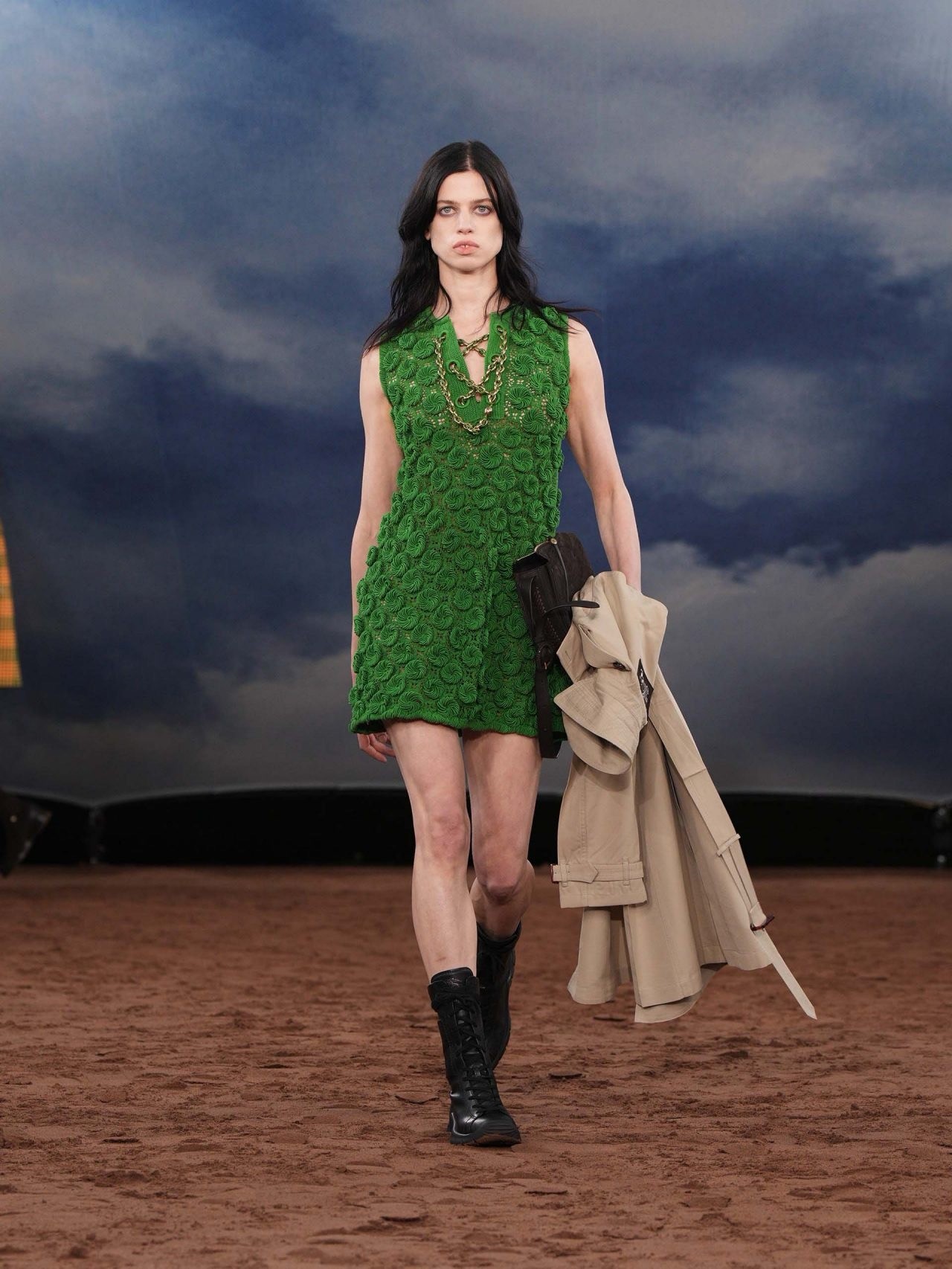
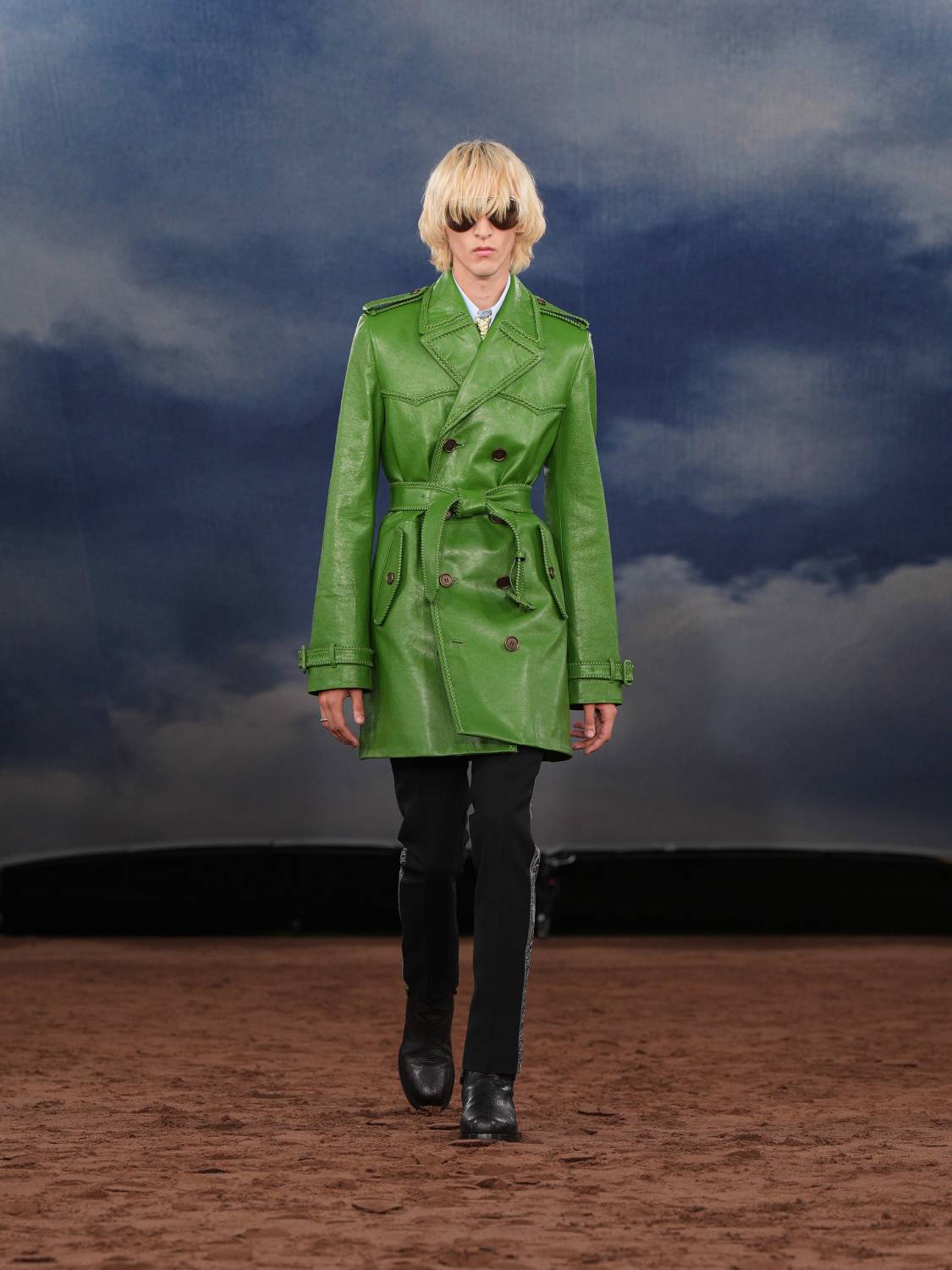
Presented at Perks Field in London, the collection takes its energy from festivals, stadiums and open-air concerts rather than some polished fantasy of the British establishment. The result feels recognisably Burberry without becoming overly respectful of its own history. Trenches are coated, perforated, cut in leather or covered in check; tailoring becomes leaner and more Mod; crochet, fringe and flashes of colour make everything feel like it was designed to actually leave the house.
THE TRENCH DOESN'T NEED TO BE SO SERIOUS
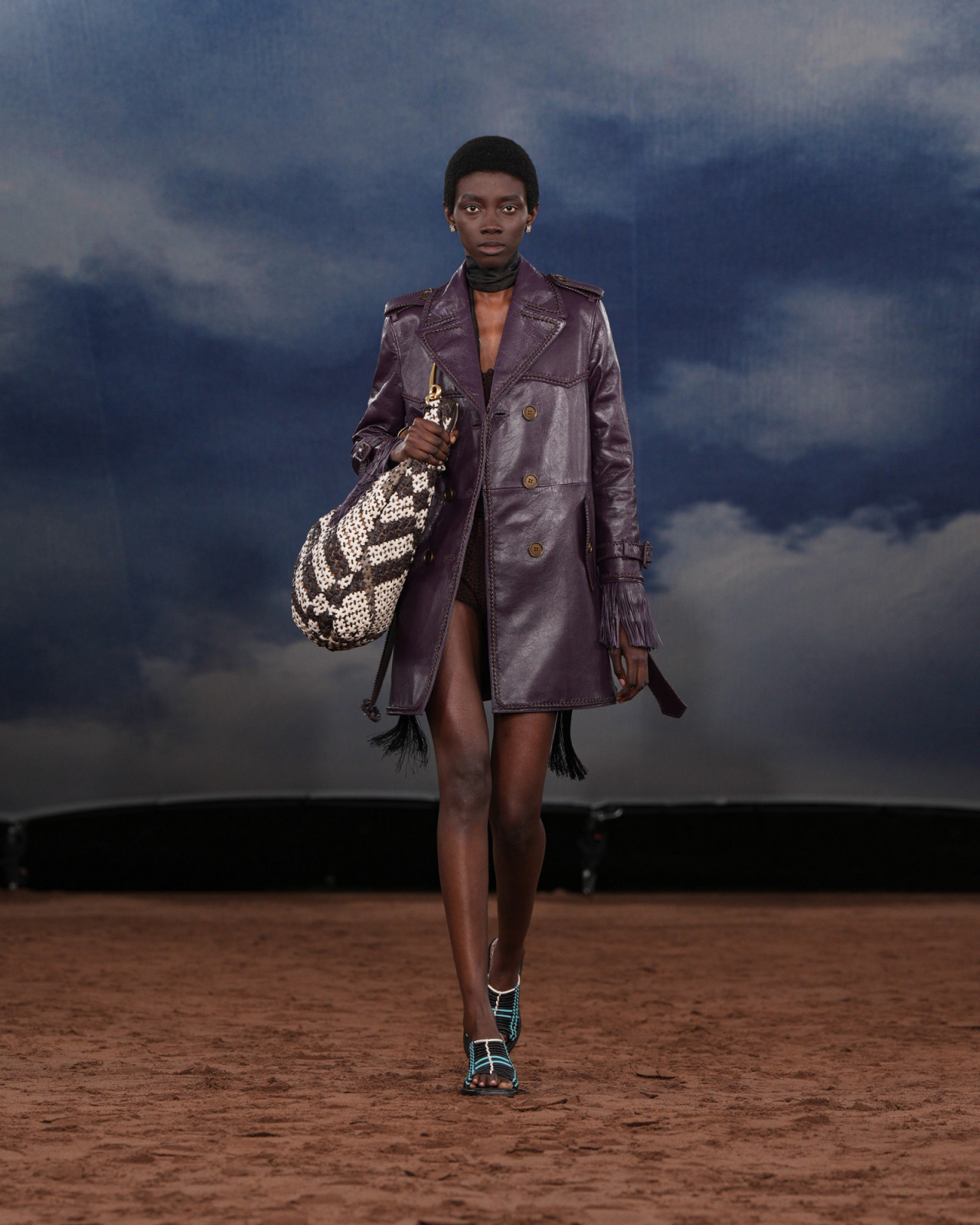
The trench remains everywhere, because pretending Burberry should move beyond its most important piece would be pointless. Lee instead treats it as material to play with. Coated denim, coloured leather, python effects, fringe and perforation push the coat away from polite heritage dressing and closer to the attitude of the people the collection is referencing.
That shift matters. The best Burberry has rarely been about looking traditionally British from head to toe; it is about the collision of things Britain produces unusually well. A severe coat over something tiny, tailoring next to festival clothes, craft beside something deliberately rough. Summer 2026 understands that contradiction better than a collection built entirely around archive worship ever could.
BRITISH STYLE WORKS BETTER WHEN IT'S A LITTLE MESSY
The music reference becomes strongest when it stops being literal. Slim three-button tailoring nods towards Mod style, while crochet dresses, skinny scarves, leather, chainmail and oversized bags bring in the kind of eclectic dressing that makes British festival crowds more interesting than another predictable rock-star costume. Even the showspace, with its earth-toned runway beneath a huge artificial summer sky, feels caught somewhere between fashion week and a field waiting for the first band to start.
Lee's point is less about dressing like a musician than recognising how music allows people to construct an identity through clothes. That gives Burberry permission to be more chaotic. Check can appear beside bright leather, delicate crochet can meet heavy outerwear and immaculate tailoring can sit next to pieces that look ready for a weekend outdoors.
THIS VERSION OF BURBERRY FEELS ALIVE
That may be the most important thing about Summer 2026. Burberry does not need to become less British to feel modern; it needs to remember that British culture has never been as neat as luxury marketing sometimes makes it look. The same country that produced the trench also produced Mod, punk, rave, Britpop and generations of festival style.
Daniel Lee is at his best when he lets those worlds collide. The check remains, the trench remains and the craftsmanship remains, but they stop feeling like obligations. They become ingredients again. Burberry's Britishness was never the problem. It just needed to feel lived in.
© 2026 Frenzy Haus. All rights reserved.


Fashion
Burberry Is Making Britishness Feel Cool Again
For Summer 2026, Daniel Lee looks beyond heritage clichés and into the muddy, loud and brilliantly dressed world of British music culture.
Text
Noah Cruz
Burberry has spent years facing the same question: what does Britishness actually look like when you remove the clichés? The trench, the check and the London references are powerful codes, but heritage only gets a fashion house so far. For Summer 2026, Daniel Lee finds a more convincing answer by looking somewhere Burberry has always belonged — British music culture.
Presented at Perks Field in London, the collection takes its energy from festivals, stadiums and open-air concerts rather than some polished fantasy of the British establishment. The result feels recognisably Burberry without becoming overly respectful of its own history. Trenches are coated, perforated, cut in leather or covered in check; tailoring becomes leaner and more Mod; crochet, fringe and flashes of colour make everything feel like it was designed to actually leave the house.
THE TRENCH DOESN'T NEED TO BE SO SERIOUS
The trench remains everywhere, because pretending Burberry should move beyond its most important piece would be pointless. Lee instead treats it as material to play with. Coated denim, coloured leather, python effects, fringe and perforation push the coat away from polite heritage dressing and closer to the attitude of the people the collection is referencing.
That shift matters. The best Burberry has rarely been about looking traditionally British from head to toe; it is about the collision of things Britain produces unusually well. A severe coat over something tiny, tailoring next to festival clothes, craft beside something deliberately rough. Summer 2026 understands that contradiction better than a collection built entirely around archive worship ever could.
BRITISH STYLE WORKS BETTER WHEN IT'S A LITTLE MESSY
The music reference becomes strongest when it stops being literal. Slim three-button tailoring nods towards Mod style, while crochet dresses, skinny scarves, leather, chainmail and oversized bags bring in the kind of eclectic dressing that makes British festival crowds more interesting than another predictable rock-star costume. Even the showspace, with its earth-toned runway beneath a huge artificial summer sky, feels caught somewhere between fashion week and a field waiting for the first band to start.
Lee's point is less about dressing like a musician than recognising how music allows people to construct an identity through clothes. That gives Burberry permission to be more chaotic. Check can appear beside bright leather, delicate crochet can meet heavy outerwear and immaculate tailoring can sit next to pieces that look ready for a weekend outdoors.
THIS VERSION OF BURBERRY FEELS ALIVE
That may be the most important thing about Summer 2026. Burberry does not need to become less British to feel modern; it needs to remember that British culture has never been as neat as luxury marketing sometimes makes it look. The same country that produced the trench also produced Mod, punk, rave, Britpop and generations of festival style.
Daniel Lee is at his best when he lets those worlds collide. The check remains, the trench remains and the craftsmanship remains, but they stop feeling like obligations. They become ingredients again. Burberry's Britishness was never the problem. It just needed to feel lived in.
© 2026 Frenzy Haus. All rights reserved.

Fashion
Burberry Is Making Britishness Feel Cool Again
For Summer 2026, Daniel Lee looks beyond heritage clichés and into the muddy, loud and brilliantly dressed world of British music culture.
Text
Noah Cruz
Burberry has spent years facing the same question: what does Britishness actually look like when you remove the clichés? The trench, the check and the London references are powerful codes, but heritage only gets a fashion house so far. For Summer 2026, Daniel Lee finds a more convincing answer by looking somewhere Burberry has always belonged — British music culture.
Presented at Perks Field in London, the collection takes its energy from festivals, stadiums and open-air concerts rather than some polished fantasy of the British establishment. The result feels recognisably Burberry without becoming overly respectful of its own history. Trenches are coated, perforated, cut in leather or covered in check; tailoring becomes leaner and more Mod; crochet, fringe and flashes of colour make everything feel like it was designed to actually leave the house.
THE TRENCH DOESN'T NEED TO BE SO SERIOUS
The trench remains everywhere, because pretending Burberry should move beyond its most important piece would be pointless. Lee instead treats it as material to play with. Coated denim, coloured leather, python effects, fringe and perforation push the coat away from polite heritage dressing and closer to the attitude of the people the collection is referencing.
That shift matters. The best Burberry has rarely been about looking traditionally British from head to toe; it is about the collision of things Britain produces unusually well. A severe coat over something tiny, tailoring next to festival clothes, craft beside something deliberately rough. Summer 2026 understands that contradiction better than a collection built entirely around archive worship ever could.
BRITISH STYLE WORKS BETTER WHEN IT'S A LITTLE MESSY
The music reference becomes strongest when it stops being literal. Slim three-button tailoring nods towards Mod style, while crochet dresses, skinny scarves, leather, chainmail and oversized bags bring in the kind of eclectic dressing that makes British festival crowds more interesting than another predictable rock-star costume. Even the showspace, with its earth-toned runway beneath a huge artificial summer sky, feels caught somewhere between fashion week and a field waiting for the first band to start.
Lee's point is less about dressing like a musician than recognising how music allows people to construct an identity through clothes. That gives Burberry permission to be more chaotic. Check can appear beside bright leather, delicate crochet can meet heavy outerwear and immaculate tailoring can sit next to pieces that look ready for a weekend outdoors.
THIS VERSION OF BURBERRY FEELS ALIVE
That may be the most important thing about Summer 2026. Burberry does not need to become less British to feel modern; it needs to remember that British culture has never been as neat as luxury marketing sometimes makes it look. The same country that produced the trench also produced Mod, punk, rave, Britpop and generations of festival style.
Daniel Lee is at his best when he lets those worlds collide. The check remains, the trench remains and the craftsmanship remains, but they stop feeling like obligations. They become ingredients again. Burberry's Britishness was never the problem. It just needed to feel lived in.
Get Frenzy straight to your inbox!
Latest

FRENZY FREQUENCY 001: Your Algorithm Has No Taste
Music

Alicia Creti Makes Losing Your Shit Sound Expensive
Music

Miu Miu Killed the Outfit and Left It in Micro-Shorts
Fashion

Hermès Put Quiet Luxury in Its Underwear
Fashion

Lacoste Just Kicked Tennis Whites Out of the Club
Fashion

The Vampire Diaries’ Deadliest Parties, Ranked
Film & TV

Vivienne Westwood Just Put Good Taste Through a Nervous Breakdown
Fashion

The FRENZY Interview: Bo Quinn Makes Beauty Misbehave
Beauty

Megan Fox Is Giving Erectile Dysfunction a Red-Hot Rebrand
Life & Culture

Tom Ford Made Voyeurism Look Expensive
Fashion
© 2026 Frenzy Haus. All rights reserved.
