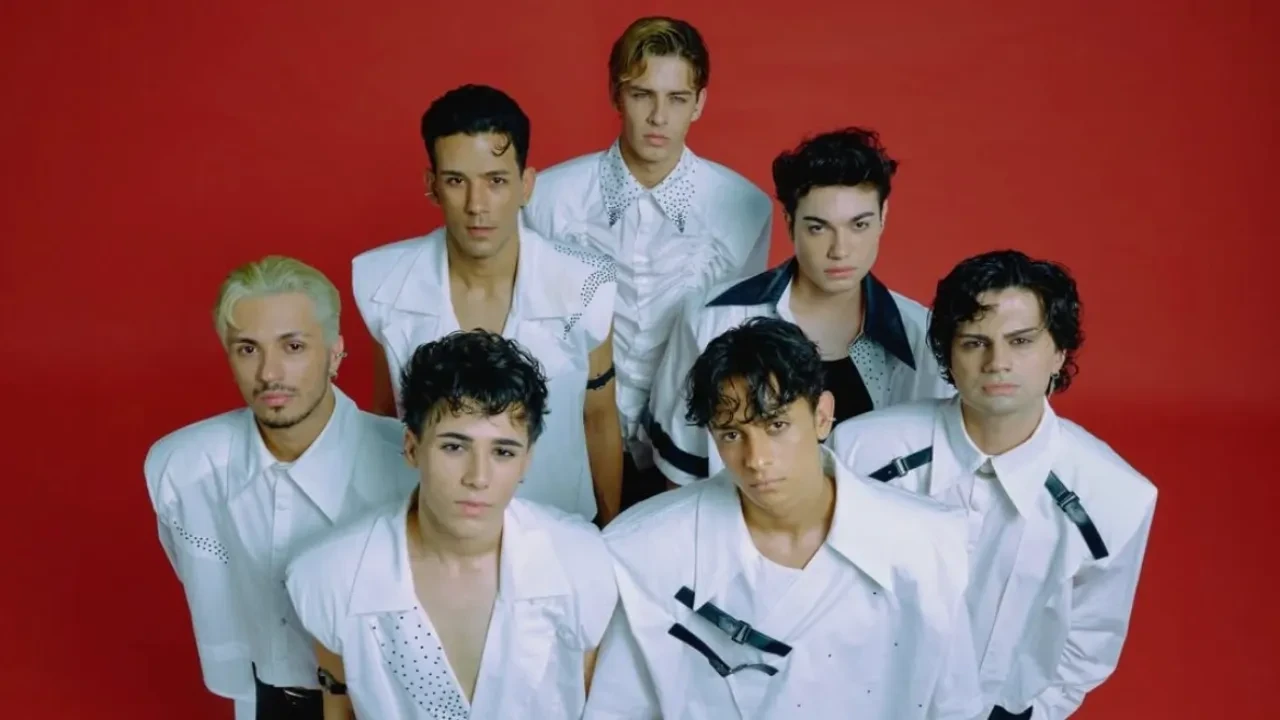
Türkiye has never lacked pop stars. What it has rarely had is the full idol machine: months of visible training, audience voting, synchronized choreography, sharply differentiated personalities and a fandom waiting before the first official song even arrives. CRUSH enters through that door. The seven-member group is being introduced as Türkiye’s answer to K-pop, but the comparison is most useful when it describes the system around them—not the nationality of the music they make.
Arda Soydoğan, Barış Yüksekkaya, Batu Cengiz, Efe Şan, Milan Önder, Miraç Fırat and Oğuzhan Çiftçi were selected through Idol House Türkiye, a performance competition inspired by South Korea’s trainee culture. Over roughly four months, its contestants were evaluated across vocals, dance, stage presence, camera awareness, discipline and group chemistry. Fifteen finalists reached the show’s July finale at Istanbul’s Maximum Uniq Açıkhava; seven left as CRUSH.
The scale already looked closer to a launch than an audition. More than 7,000 people attended the finale, while approximately 90,000 watched its livestream at the same time. By the end of July, CRUSH had released its self-titled debut single, introduced an official fandom name—CRUSHERS—and announced a first major concert for 12 September at the same open-air venue. This was not a group quietly testing the water. The audience had been built alongside it.
The K-pop comparison is obvious
CRUSH speaks the visual language of idol pop fluently. Every member is legible in a split second, every formation is designed for the camera, and every performance can be broken into the short clips, close-ups and individual edits that keep a fandom moving between releases. Idol House gave viewers time to choose favorites and watch skills develop. The debut then arrived as a payoff to a story already in progress.
That structure comes from the Korean idol industry, but importing a structure is not the same as copying an identity. “CRUSH!” is sung in Turkish, and members Barış Yüksekkaya and Milan Önder share writing credits with producer Sezer Dinç. Its sound sits inside polished contemporary Turkish pop, with R&B phrasing, rotating vocal parts and a hook built to survive both a concert and a fifteen-second edit. The choreography is precise, but the language and melodic instincts remain local.
The more revealing comparison may be with Manifest, the girl group created through Big5 Türkiye in 2025. Its rapid rise showed that Turkish listeners were ready for groups built around performance, personality and constant digital contact. CRUSH now extends that experiment into a boyband. Together, the projects suggest that the idol model is no longer simply something Turkish fans consume from abroad. It is becoming an infrastructure the local industry wants to use.
Watch “CRUSH!” above. If the player is blocked, open the official video on YouTube .
“CRUSH!” understands the assignment
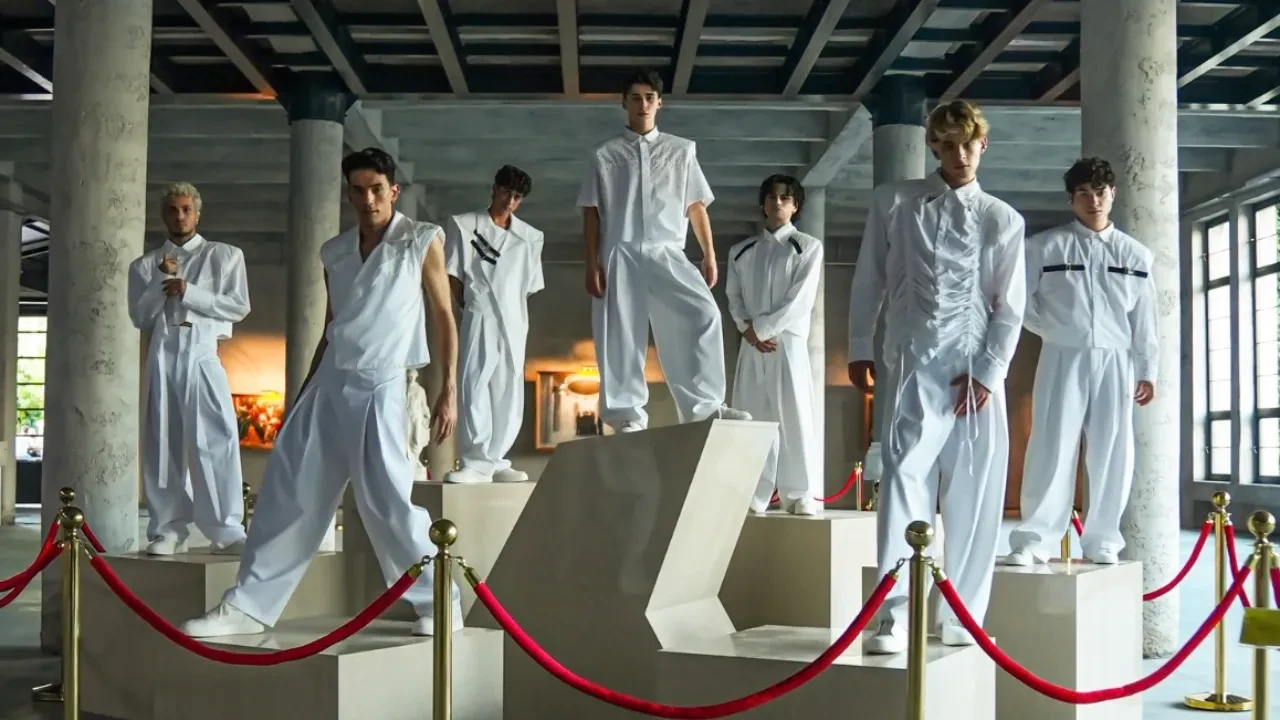
The debut video, directed by Utku Kemal with choreography by Sertan Tutar and styling by Mustafa Çolak, is less interested in narrative than impact. White rooms, sculptural staging, sharp monochrome clothes and quick changes in scale make the seven members feel like objects in a highly controlled display. The camera alternates between collective precision and individual recognition. It wants the viewer to understand the group and pick a favorite at the same time.
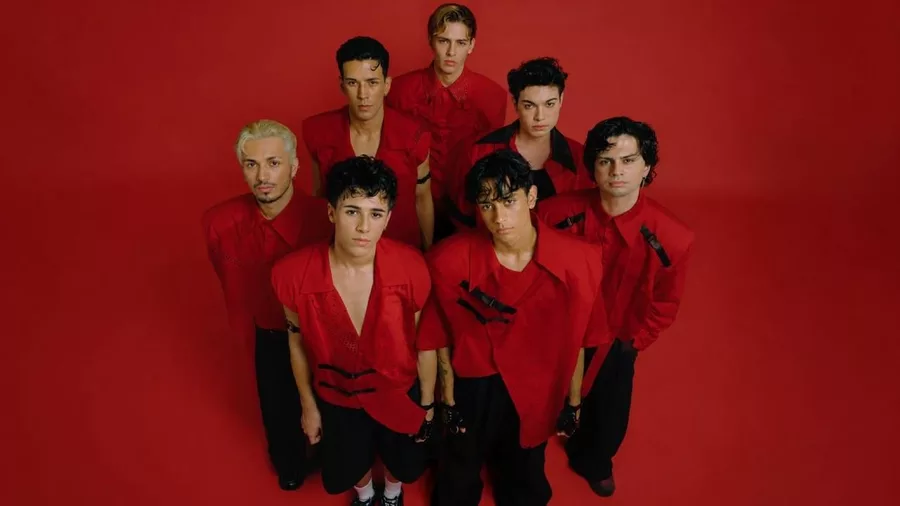
That balance is the debut’s strength, and also its open question. CRUSH currently reads as seven clearly packaged characters held together by professional choreography. A lasting group identity requires something harder: a sound, attitude or visual universe that could belong to nobody else. The debut proves that the members can execute the format. The next releases will reveal whether they can bend it.
The fandom arrived before the catalogue
CRUSHERS did not meet the group on release day. They followed rehearsals, evaluations, eliminations and the uncertainty of the final lineup. That serialized intimacy changes the meaning of a debut: listeners are not only hearing a first single, they are watching people they already know cross a threshold. Less than three weeks after release, the official “CRUSH!” video had passed 12 million YouTube views, with an unusually active comment section orbiting individual members, favorite moments and the group’s next move.
This is the real power of the idol system. It treats attention as an ongoing relationship rather than a campaign switched on around a song. Music, styling, choreography, behind-the-scenes footage and member personalities all feed the same world. For CRUSH, that world currently has more momentum than material: one official single has to carry the expectations created by months of content. The September concert will be the first serious test of whether that attachment translates beyond the screen.
What happens after the first crush
“Türkiye’s answer to K-pop” is an efficient headline, but it cannot be a long-term artistic position. If CRUSH succeeds, it will not be because the group reproduces Seoul most accurately. It will be because it makes the machinery feel native: Turkish lyrics that do not sound translated, references that belong to its audience, live performances with real chemistry and a visual identity confident enough to move beyond borrowed codes.
For now, CRUSH has the difficult first ingredients: seven watchable performers, a disciplined launch, an audience already fluent in fandom and a debut designed to move. The more exciting possibility is what comes next. Türkiye may have borrowed the idol blueprint, but CRUSH now has the chance to redraw it in its own image.