Dubstep’s most interesting movement is no longer the drop. It is the pressure travelling underneath it: bass that circles the ankles, bends the room and refuses to arrive on command. In Berlin, that motion has become the architecture of a scene.
REEF, subglow and Femme Bass Mafia do not sound identical, and that is precisely the point. One stretches bass music across Berghain’s long-form rave; another treats a Sunday dancefloor like a careful ritual; the third builds the technical confidence that decides who gets to enter the booth at all. Together, they have loosened a city often narrated as a two-party system of house and techno.
The artists moving through these spaces—Darwin, CCL, Introspekt, Beatrice M., Ema, Carré, Emilia Grima and others—are not reviving a frozen genre. They are reaching past brostep’s cartoon violence towards dubstep’s stranger source code: dub, garage, negative space, physical low end and the social intelligence of a properly tuned room.

Berlin’s binary has sprung a bass leak
Berlin has never been a one-sound city, but it has often been sold as one. Club culture is arranged around an implied hierarchy in which techno receives the largest institutions, the clearest mythology and the easiest shorthand. As Hoe_mies founder Gizem Adiyaman told The Berliner, techno still sits at the top of the city’s musical order. Bass music has learned to work through the cracks.
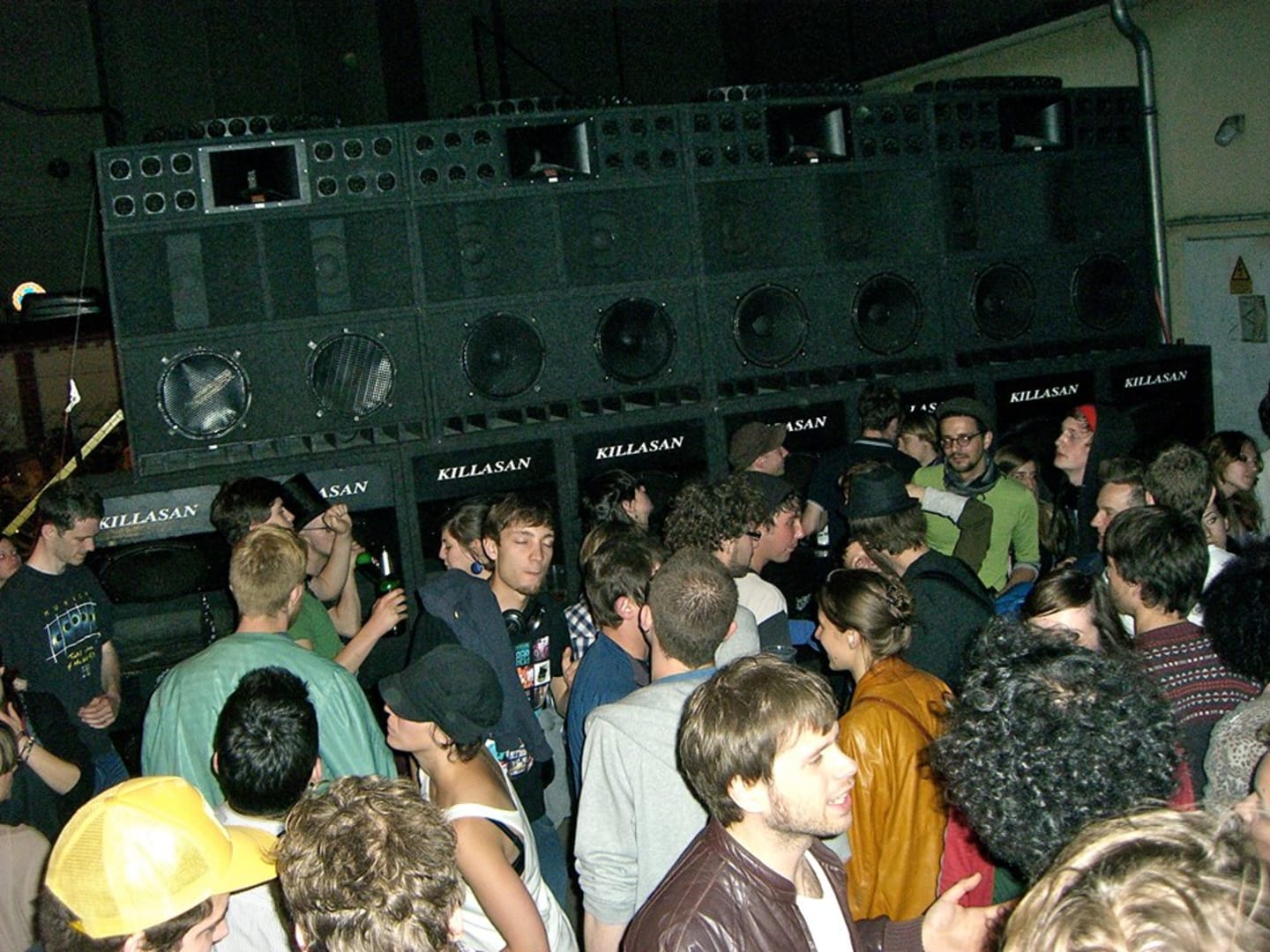
Those cracks have history. Version, SUB:STANCE, Deep Medi Musik and Wax Treatment all gave dub, dubstep and adjacent low-end forms a Berlin address before the current wave. Wax Treatment’s centre was the Killasan system: a wall of speakers assembled through collective labour and treated less like décor than an instrument. The premise, recalled in Electronic Beats’ oral history, was radically uncomplicated—bass mattered more than billing.
REEF’s achievement was to let that lineage mutate inside Berlin’s own temporal scale. Founded by Darwin in 2016, the Berghain night positioned dubstep as one region in a much wider bass ecology. A set could move through techno, jungle, halftime and soundsystem music without treating hybridity as a genre-shopping exercise. The room learned the connection through the body first.
The comeback is not in the drop.
It is in the room around it.

Pressure is learning new directions
The change is easy to misname as softness. The new deep-dubstep network does favour space, restraint and psychedelic detail over the instant hit of an EDM-sized drop. But less impact does not mean less force. In Crack Magazine’s current survey of the scene, Emilia Grima describes bass as something that wraps around the dancer rather than simply striking them. The direction is lateral.
That idea changes what counts as intensity. Introspekt’s 2025 album Moving the Center folds dubstep’s sub-bass into angular drums, garage swing and sensual tension. Beatrice M.’s “psystep” vocabulary connects dubstep’s negative space with techno’s hypnosis. Darwin’s sets can move from 85 to 170 BPM because tempo is no longer the genre’s border; atmosphere, pressure and community are doing that work.
The result is not a neat new subgenre waiting for a logo. It is closer to a shared way of listening. A sparse tune leaves room for the system to speak. A rhythm can tease rather than command. A transition can remain unresolved long enough for dancers to decide what their bodies want to do with it. The music is still heavy. It has simply stopped confusing heaviness with bluntness.

The floor changed before the genre did
Scenes are often written from the booth down, as if a new generation begins when a producer invents the correct bass patch. This one is also being written from the dancefloor up. Women, queer and nonbinary dancers are not merely appearing in greater numbers; they are changing the social reading of a sound long associated with male crowds, folded arms and reverent stillness.
At subglow, the context is composed as carefully as the set. CCL places flowers and candles near the decks, brings food into the room and enforces rules that protect listening from endless conversation. The party has also used a trans-free-entry policy inspired by São Paulo collective Mamba Negra. None of these gestures changes the frequency of a sub. They change who can surrender to it.
Care here is not a pastel filter applied to grit. CCL has been explicit that the music’s history in struggle cannot be edited out. What changes is the false assumption that safety and ferocity cancel each other. A room can be hospitable and still feel dangerous in the musical sense—unpredictable, dark, physically overwhelming and open to forms the audience does not yet know how to name.

A safer floor does not make the bass polite.
It makes more kinds of intensity possible.
Mentorship is part of the sound
A scene cannot become less predictable if the same people keep controlling its equipment. Femme Bass Mafia began in Berlin during the pandemic after founder Lilia van Beukering noticed how easily women could remain spectators while men occupied the decks. Launched with Marie Midori and LUZ1E in late 2020, the project turned that private imbalance into a practical programme.
Its mentoring now joins technical training to the social knowledge usually withheld from newcomers: how to build a set, read a room, handle promotion, settle pre-gig nerves and find a first public platform. No previous experience is required. The point is not to discover already polished talent; it is to remove the conditions that decide who gets enough private practice to look naturally confident in public.
That work matters to the records eventually played and made. Technique influences taste because fluency expands risk. Networks influence line-ups because people recommend the artists they know. A redistribution of access becomes audible slowly—in stranger bookings, less defensive genre borders and a booth no longer treated as inherited territory.

Brostep is not the whole family tree
To call this a queer rebuilding is not to claim that women and nonbinary artists have suddenly entered a culture that never contained them. Sarah Lockhart’s work with the Road label and FWD>> was foundational. Producers including the late Vaccine shaped the sound. Dubstep itself grew through Black British and Jamaican soundsystem traditions, UK garage, dub and a South London culture of experimentation.
What brostep changed was the public silhouette. By the early 2010s, the genre’s most exportable form had turned bass into spectacle: bigger drops, more aggressive branding, an arena grammar designed to land from the back row. For many listeners, that caricature replaced the family tree. The current movement is not erasing that chapter. It is refusing to let the loudest chapter own the whole name.
Berlin is useful precisely because its bass history has always been imported, translated and contaminated. At Wax Treatment, Jamaican records could meet UK dubstep on a Japanese Killasan system inside a Kreuzberg club. At REEF, the city’s techno literacy became a route into broken rhythms rather than a wall against them. Purity was never the interesting part.
The underground does not need a comeback campaign
Deep dubstep is visible enough now to be described as a movement, which means it is also close enough to be flattened into a trend. The obvious industry response would be scale: larger rooms, interchangeable “bass revival” line-ups and a visual identity that makes every local scene look like the same campaign. The people building this network are arguing for something harder—continuity without standardisation.
That may be why REEF approaching its final events does not read as the end of the idea. A healthy underground is not one immortal night. It is the knowledge that survives a room: promoters who understand sound, dancers who protect a floor, graduates who become mentors, artists who trade references across Berlin, Paris, Dublin, Madrid, London, Los Angeles and New York without needing a single headquarters.
The most radical thing this scene can preserve is not a particular wobble or tempo. It is permission: to move sideways, to remain heads-down, to be sexy without becoming obvious, to make space feel heavy and heaviness feel spacious. Dubstep does not need to return to the centre. From underneath, it can move the whole room.
The future of dubstep is not a bigger drop.
It is a wider floor.