Fashion
Fashion Never Asked for a Licence Until Kai Cenat Walked In
VIVET reached 180,000 livestream viewers and an audience trained to ask whether a streamer had earned the word designer, revealing that fashion loves outsiders most when they stay in the front row.

Text

Noah Cruz

Fashion did not object when Kai Cenat sat in the front row. It became nervous when he stood behind the label.

On September 12, the 24-year-old streamer presented the first VIVET collection during New York Fashion Week. More than 180,000 people watched the show live. At Cipriani in the Financial District, fur, washed sportswear, distressed leather and nightclub tailoring moved between two dense rows of phones. Online, the clothes were almost immediately replaced by a different object of fascination: Cenat’s right to call himself a designer.

Dazed documented the split reaction. Some viewers criticised the collection’s familiar references and uncertain point of view. Others asked whether Cenat had sewn anything, whether unseen employees had done the “real” work, and why a streamer could reach a fashion-week runway while trained designers struggle to finance a sample.

Those are not the same criticism. One judges the work. Another invents a qualification after the applicant has already entered the room. The third points toward a genuine inequality, then pins an industry-wide access problem to the most visible newcomer available.

VIVET is not beyond criticism because Cenat is new, Black, self-taught or followed by millions. It is also not disqualified by any of those facts. The collection has to be judged as clothes, and Cenat’s authorship has to be judged by the same collaborative reality fashion quietly accepts everywhere else. The useful question is not whether he received permission. It is what the word “designer” should require once permission is removed.
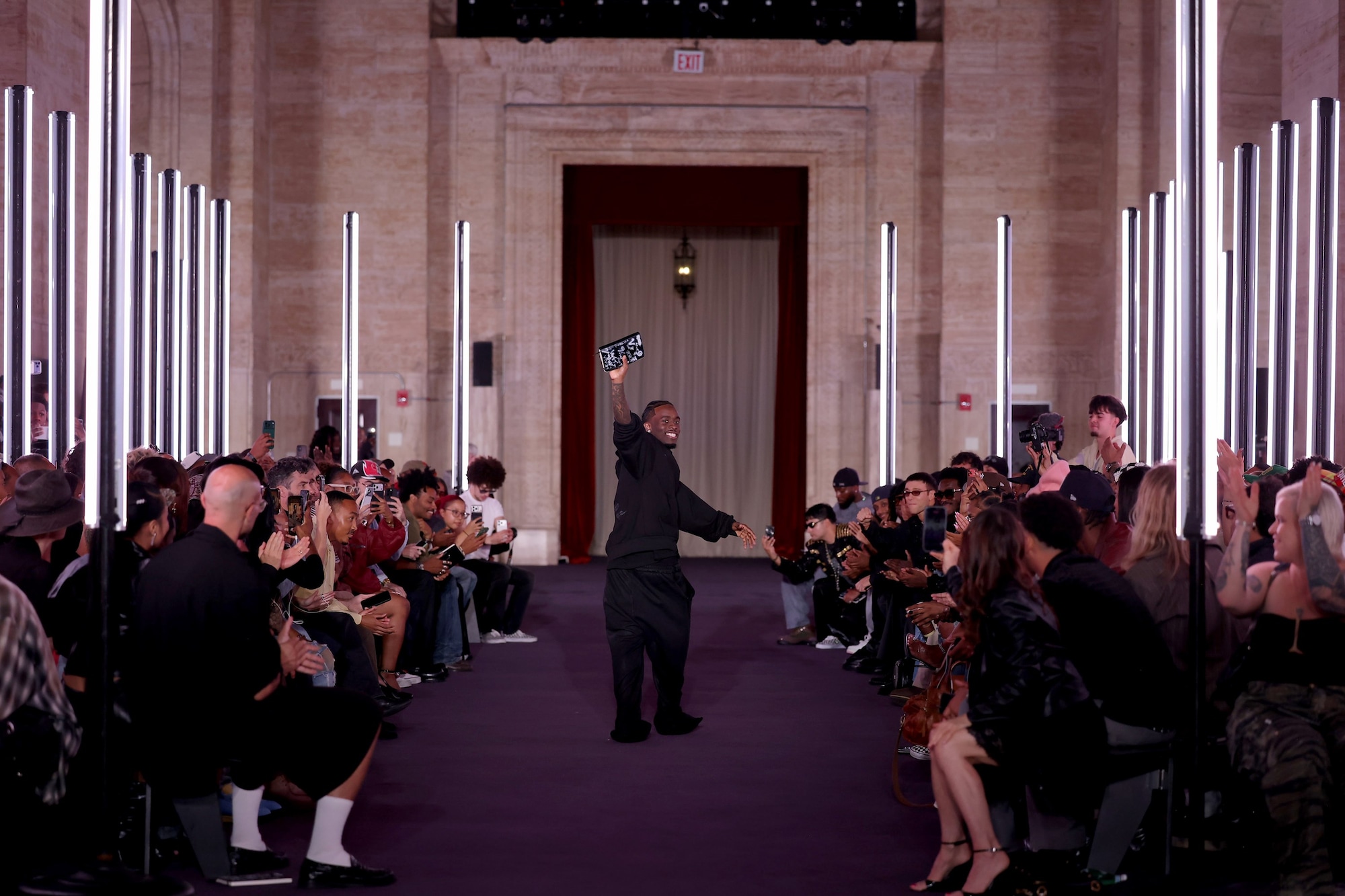
A wide view of the VIVET Spring Summer 2027 runway with a figure standing between two rows of guests
VIVET made its first runway an event for the room and the livestream at once.Thomas Concordia / Getty Images, via Dazed

The runway arrived with a comments section

A first collection normally receives the protection of smallness. A young designer can show to editors, buyers and friends, make mistakes in semi-private, then return with a clearer second attempt. Cenat arrived without that mercy. His debut had the audience of a media franchise and the expectations of an established house.

That scale distorted the verdict in both directions. Business language rushed to transform viewership into proof of creative revolution. Social media rushed to declare the collection dead on arrival. A fur coat could not simply be too referential, well cut, badly styled or interesting from one angle. It had to establish either that Cenat was fashion’s new future or that allowing him inside had corrupted the institution.

The clothes were more ordinary—and therefore more useful—than either conclusion. The palette moved through tobacco, oxblood, black, grey, white and electric blue. Oversized fur sat over bare skin. Leather trousers were narrow and glossy; hoodies looked washed and handled; satin outerwear pulled workwear shapes toward evening. The collection’s influences were visible. At moments its identity blurred into the dark, distressed, post-Yeezy menswear language already circulating across luxury and streetwear.

That is a criticism of the collection, not a border check. Early designers often reveal their references before they learn how to disturb them. The difference is that most do not have 180,000 viewers identifying every influence in real time.
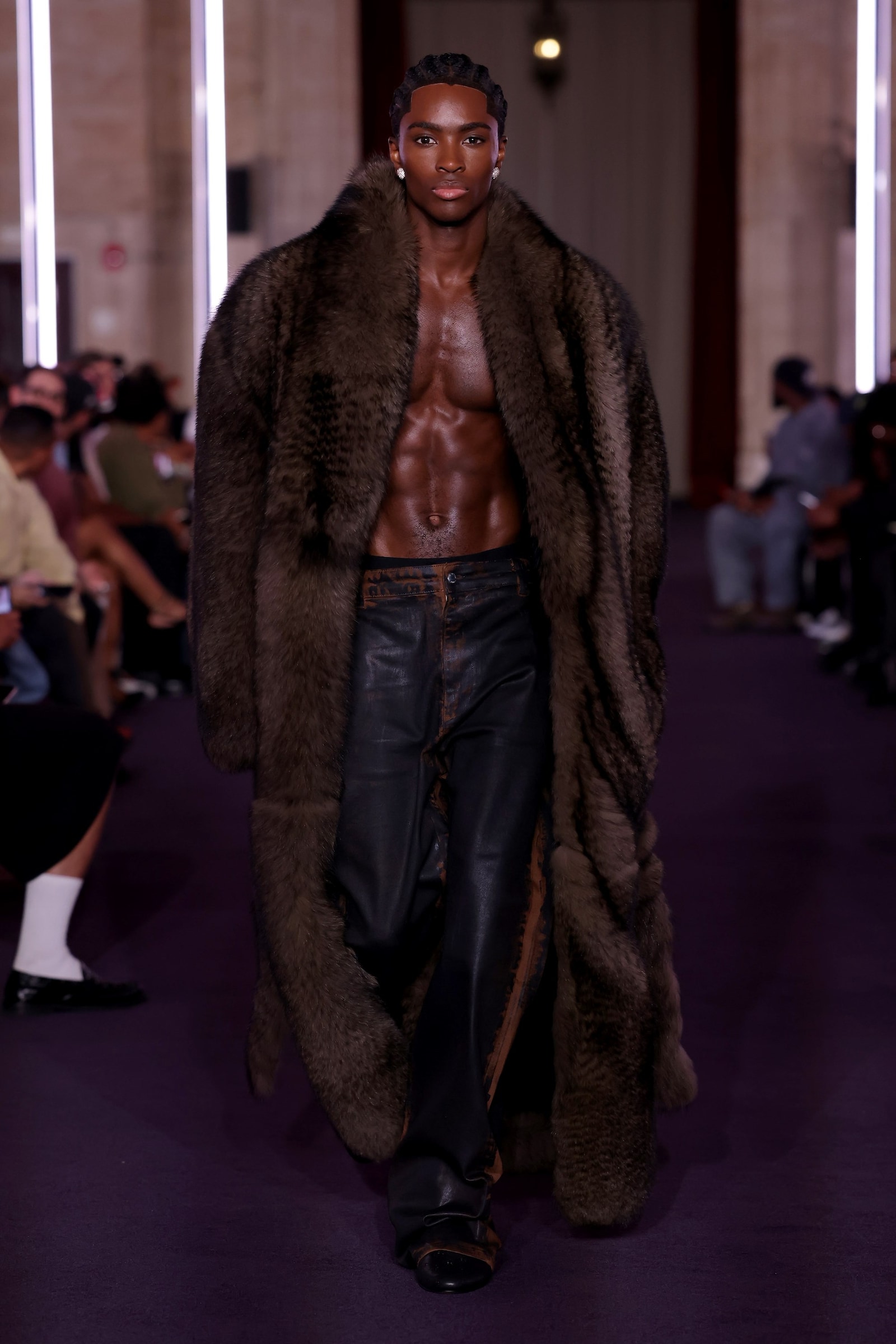
A Black male model walks the VIVET runway bare-chested beneath an oversized brown fur coat with dark leather trousers
VIVET’s strongest looks used scale before they used novelty.Thomas Concordia / Getty Images

Sewing is not a citizenship test

The most repeated challenge—did he sew it?—sounds practical and is mostly symbolic. Sewing is an essential fashion skill. It teaches weight, tension, proportion, error and what an idea asks from the body. A designer who has never touched construction can confuse an image of clothing with clothing itself.

But sewing every finished garment has never been the universal definition of a designer. The US Bureau of Labor Statistics describes the profession through a network of decisions: studying trends, developing themes, drawing or using digital tools, selecting materials, producing prototypes and overseeing production. The work moves from concept to specification to other specialised hands.

Cenat did not announce a label in the morning and rent Cipriani after lunch. Complex’s timeline records a nine-month break from streaming, study in Italy, attempts at sewing and leatherwork, a design journal made public in fragments, and a steady release of process videos. None of that automatically makes the collection good. It does make “he is only a streamer” an incomplete description of the labour he chose to show.

Fashion school offers something real: technical discipline, critique, history, vocabulary, machinery, collaborators and time in which failed experiments are allowed to remain lessons instead of products. Parsons’ current BFA, for example, runs four years and 120 credits across materiality, collection, product and systems. A degree is an education. It is not a deed granting ownership of fashion to its holder.

The industry knows this whenever a celebrity creative director succeeds. It knows it when an assistant learns inside a studio, when a tailor becomes a couturier, when somebody begins in architecture, art, styling or retail and crosses over. The route becomes controversial only when the newcomer’s original audience is considered culturally unserious.

The title of designer was never neutral. It was simply guarded by quieter doors.

The name on the label is never alone

The suspicion that junior designers, pattern cutters and makers did the real work at VIVET accidentally exposes fashion’s favourite fiction. Almost no collection credited to one famous name is made by one pair of hands.

The Metropolitan Museum of Art describes garments as products of multiple hands: textile workers, patternmakers, seamstresses and embroiderers. Inside a house, a creative director can guide research, silhouette, colour, casting and image while design teams translate that direction into hundreds of technical choices. Model makers resolve volume. Pattern cutters turn drawings into geometry. Machinists decide whether the geometry survives contact with cloth.

None of this erases authorship. It changes authorship from possession into responsibility. The person whose name receives the applause should be able to articulate the idea, make decisions, recognise expertise, credit collaborators and answer for the conditions under which the product was made.

That standard should apply to Cenat. It should also apply to every heritage house that lets a star designer bow alone while an atelier stays invisible. If the VIVET team shaped the collection, readers deserve to know who they are. If Italian specialists taught construction and manufacturers developed the samples, their work belongs to the story. “Did he do it all himself?” is the wrong test. “Can he tell us who did what?” is much better.
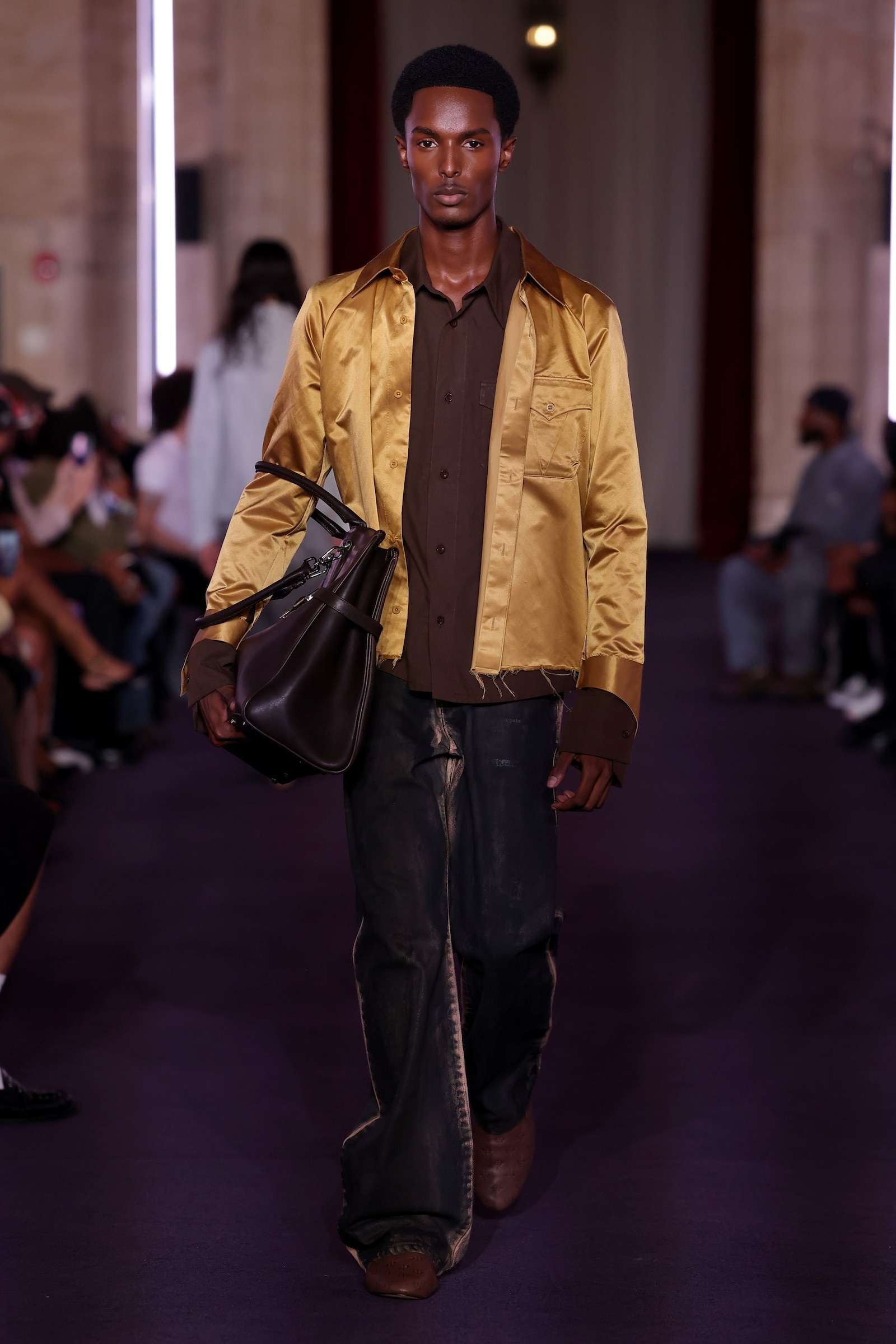
A Black male model in a gold satin jacket carries an oversized dark leather bag on the VIVET runway
A collection is an idea passing through materials, patterns, samples and specialised hands.Thomas Concordia / Getty Images

Access is the real argument

The anger from students and independent designers should not be dismissed as jealousy. They are watching somebody enter with capital, celebrity guests, a production team and an audience larger than most fashion publications can command. He did not face the same first-show conditions they do. Visibility reduced risks that crush smaller labels before the public ever sees a sleeve.

But that advantage did not begin with VIVET. Fashion has spent years inviting creators and streamers to fill front rows, amplify products and deliver younger audiences. Their reach was treated as legitimate labour when it served an established brand. The discomfort intensifies when the same person redirects that audience toward a label they own.

The double standard does not cancel material inequality. Cenat’s platform can fund mistakes, command attention and move inventory before a critical consensus forms. Most graduates leave school with skills and debt, then compete for underpaid access to studios that may never print their names. Independent designers can spend a season choosing between paying a pattern cutter and staging a presentation. Garment workers possess construction knowledge without receiving cultural authority at all.

The response should be more access, not a better lock. Affordable technical education, paid apprenticeships, transparent credits, shared equipment, small-production support and runway infrastructure would change who can build a label. Removing Cenat would not provide any of those things. It would merely return one highly visible slot to the system that produced the scarcity.
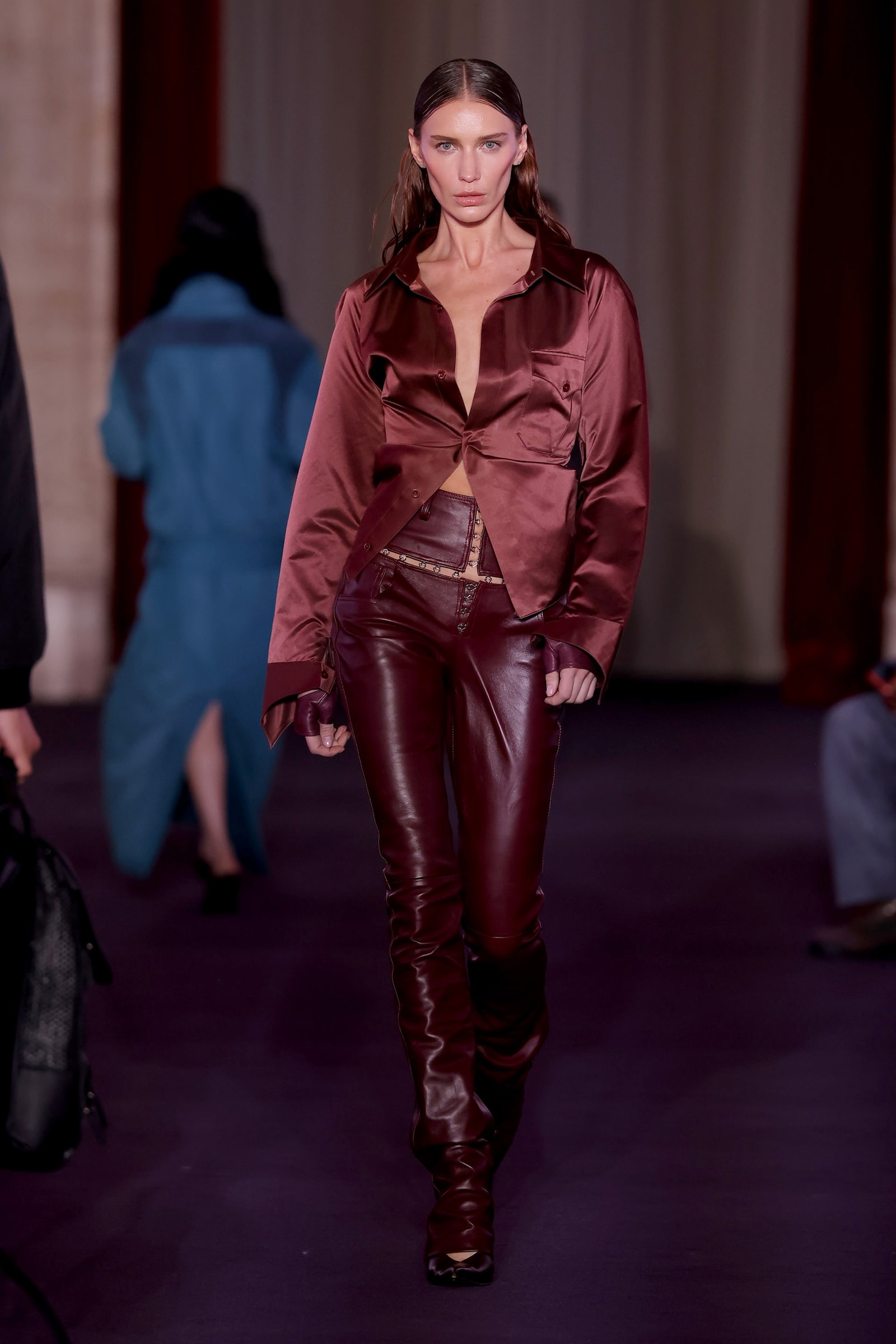
A model in an oxblood satin jacket and matching leather trousers walks the VIVET runway
Oxblood tailoring pushed VIVET beyond the dark streetwear shorthand surrounding its debut.Thomas Concordia / Getty Images

Criticism still has a job

Gatekeeping is not the same as having standards. Fashion becomes meaningless if every famous person’s product is praised as brave simply because they tried. Money can buy a runway, a campaign and expert assistance. It cannot buy an original point of view, and critics are not cruel for noticing when one has not fully arrived.

VIVET’s debut showed energy, ambition and a real appetite for material. It also leaned heavily on a visual vocabulary the audience already knew: monumental fur, abraded surfaces, narrow leather, gothic branding and luxury versions of familiar sportswear. The strongest looks felt edited rather than overloaded. The weaker ones looked like references waiting to become a language.

That assessment is more demanding than asking whether Cenat belongs. Belonging requires no discussion of cut, proportion, fabrication, price, wearability or desire. It allows the critic to reject the person and avoid the garment. Serious criticism does the opposite. It assumes the newcomer has entered the field, then pays enough attention to say what the work actually does.

It also leaves room for time. The internet treats a debut as a final examination because finality travels better than development. Everything must be an instant masterpiece, a scam or a humiliation. Fashion itself is supposed to understand seasons. A first collection should be allowed to become evidence for a second.

Visibility can buy an entrance. It cannot finish a collection.

A designer is a practice, not a passport

Cenat’s audience explains why VIVET was seen. It does not explain whether the clothes will survive beyond the event. That answer will come through repetition: how the garments fit outside a runway, how production holds up, whether the references become more personal, whether collaborators are visible, whether customers return, and whether the second collection can contradict the first.

The word “designer” should demand practice, curiosity, accountability and the ability to turn an idea into an object with other people. It should not demand the performance of having had no help. It should not be reserved for those who could afford one sanctioned route into the industry. And it should not become a free celebrity title protected from scrutiny.
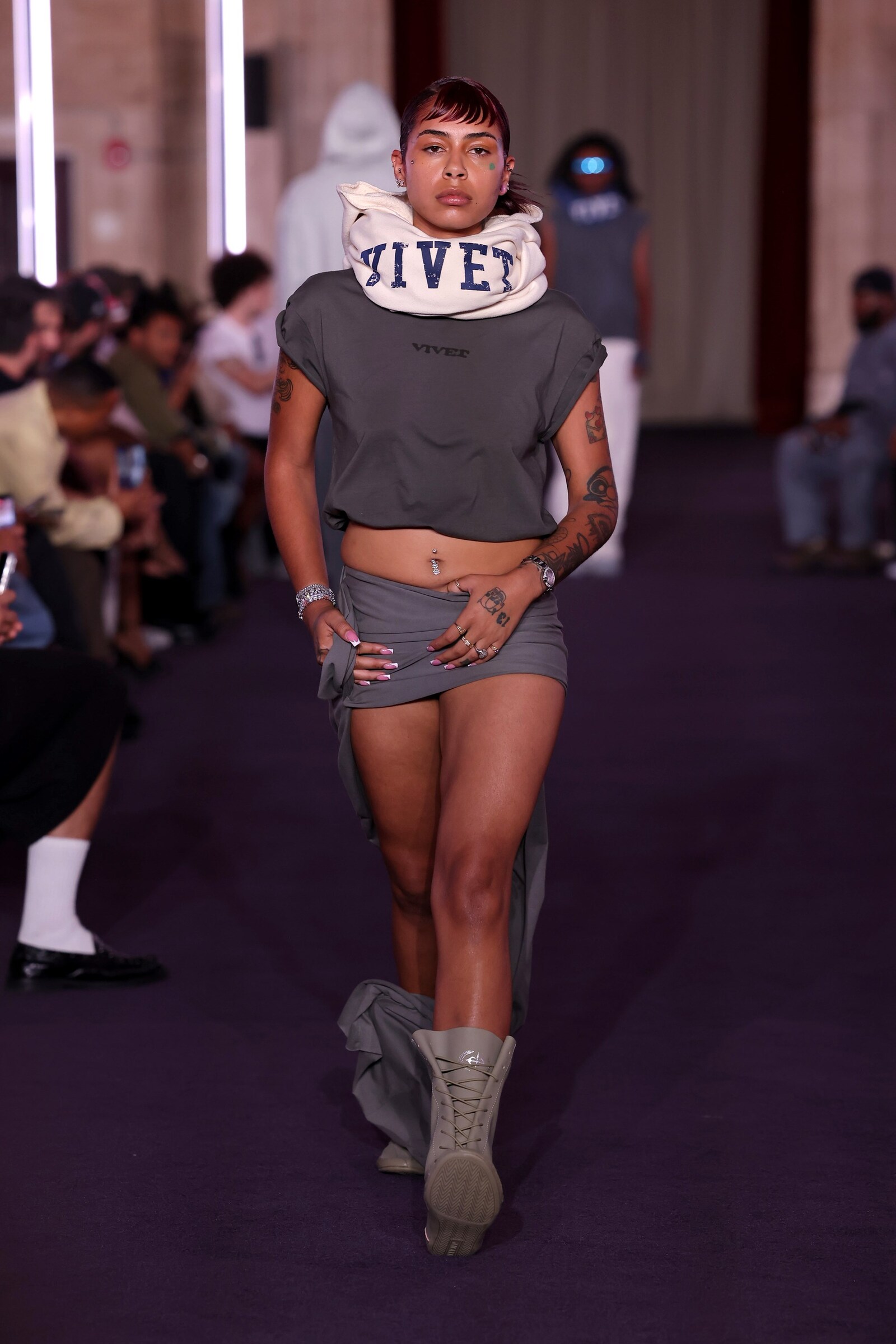
A model in a cropped charcoal VIVET top and matching shorts walks with the brand name wrapped around the neck
The logo made the claim; future collections will have to define what belongs beneath it.Thomas Concordia / Getty Images

VIVET matters because its debut forced all three possibilities into the same room: genuine effort, enormous privilege and unfinished work. Fashion prefers simpler characters. The trained outsider. The undeserving influencer. The lone genius. Cenat fits none of them cleanly.

He called himself a designer and made clothes available for judgment. Now the title has to be renewed through the work, exactly as it should be for everyone else.

Fashion
Fashion Never Asked for a Licence Until Kai Cenat Walked In
VIVET reached 180,000 livestream viewers and an audience trained to ask whether a streamer had earned the word designer, revealing that fashion loves outsiders most when they stay in the front row.

Text

Noah Cruz

Fashion did not object when Kai Cenat sat in the front row. It became nervous when he stood behind the label.

On September 12, the 24-year-old streamer presented the first VIVET collection during New York Fashion Week. More than 180,000 people watched the show live. At Cipriani in the Financial District, fur, washed sportswear, distressed leather and nightclub tailoring moved between two dense rows of phones. Online, the clothes were almost immediately replaced by a different object of fascination: Cenat’s right to call himself a designer.

Dazed documented the split reaction. Some viewers criticised the collection’s familiar references and uncertain point of view. Others asked whether Cenat had sewn anything, whether unseen employees had done the “real” work, and why a streamer could reach a fashion-week runway while trained designers struggle to finance a sample.

Those are not the same criticism. One judges the work. Another invents a qualification after the applicant has already entered the room. The third points toward a genuine inequality, then pins an industry-wide access problem to the most visible newcomer available.

VIVET is not beyond criticism because Cenat is new, Black, self-taught or followed by millions. It is also not disqualified by any of those facts. The collection has to be judged as clothes, and Cenat’s authorship has to be judged by the same collaborative reality fashion quietly accepts everywhere else. The useful question is not whether he received permission. It is what the word “designer” should require once permission is removed.

A wide view of the VIVET Spring Summer 2027 runway with a figure standing between two rows of guests
VIVET made its first runway an event for the room and the livestream at once.Thomas Concordia / Getty Images, via Dazed

The runway arrived with a comments section

A first collection normally receives the protection of smallness. A young designer can show to editors, buyers and friends, make mistakes in semi-private, then return with a clearer second attempt. Cenat arrived without that mercy. His debut had the audience of a media franchise and the expectations of an established house.

That scale distorted the verdict in both directions. Business language rushed to transform viewership into proof of creative revolution. Social media rushed to declare the collection dead on arrival. A fur coat could not simply be too referential, well cut, badly styled or interesting from one angle. It had to establish either that Cenat was fashion’s new future or that allowing him inside had corrupted the institution.

The clothes were more ordinary—and therefore more useful—than either conclusion. The palette moved through tobacco, oxblood, black, grey, white and electric blue. Oversized fur sat over bare skin. Leather trousers were narrow and glossy; hoodies looked washed and handled; satin outerwear pulled workwear shapes toward evening. The collection’s influences were visible. At moments its identity blurred into the dark, distressed, post-Yeezy menswear language already circulating across luxury and streetwear.

That is a criticism of the collection, not a border check. Early designers often reveal their references before they learn how to disturb them. The difference is that most do not have 180,000 viewers identifying every influence in real time.

A Black male model walks the VIVET runway bare-chested beneath an oversized brown fur coat with dark leather trousers
VIVET’s strongest looks used scale before they used novelty.Thomas Concordia / Getty Images

Sewing is not a citizenship test

The most repeated challenge—did he sew it?—sounds practical and is mostly symbolic. Sewing is an essential fashion skill. It teaches weight, tension, proportion, error and what an idea asks from the body. A designer who has never touched construction can confuse an image of clothing with clothing itself.

But sewing every finished garment has never been the universal definition of a designer. The US Bureau of Labor Statistics describes the profession through a network of decisions: studying trends, developing themes, drawing or using digital tools, selecting materials, producing prototypes and overseeing production. The work moves from concept to specification to other specialised hands.

Cenat did not announce a label in the morning and rent Cipriani after lunch. Complex’s timeline records a nine-month break from streaming, study in Italy, attempts at sewing and leatherwork, a design journal made public in fragments, and a steady release of process videos. None of that automatically makes the collection good. It does make “he is only a streamer” an incomplete description of the labour he chose to show.

Fashion school offers something real: technical discipline, critique, history, vocabulary, machinery, collaborators and time in which failed experiments are allowed to remain lessons instead of products. Parsons’ current BFA, for example, runs four years and 120 credits across materiality, collection, product and systems. A degree is an education. It is not a deed granting ownership of fashion to its holder.

The industry knows this whenever a celebrity creative director succeeds. It knows it when an assistant learns inside a studio, when a tailor becomes a couturier, when somebody begins in architecture, art, styling or retail and crosses over. The route becomes controversial only when the newcomer’s original audience is considered culturally unserious.

The title of designer was never neutral. It was simply guarded by quieter doors.

The name on the label is never alone

The suspicion that junior designers, pattern cutters and makers did the real work at VIVET accidentally exposes fashion’s favourite fiction. Almost no collection credited to one famous name is made by one pair of hands.

The Metropolitan Museum of Art describes garments as products of multiple hands: textile workers, patternmakers, seamstresses and embroiderers. Inside a house, a creative director can guide research, silhouette, colour, casting and image while design teams translate that direction into hundreds of technical choices. Model makers resolve volume. Pattern cutters turn drawings into geometry. Machinists decide whether the geometry survives contact with cloth.

None of this erases authorship. It changes authorship from possession into responsibility. The person whose name receives the applause should be able to articulate the idea, make decisions, recognise expertise, credit collaborators and answer for the conditions under which the product was made.

That standard should apply to Cenat. It should also apply to every heritage house that lets a star designer bow alone while an atelier stays invisible. If the VIVET team shaped the collection, readers deserve to know who they are. If Italian specialists taught construction and manufacturers developed the samples, their work belongs to the story. “Did he do it all himself?” is the wrong test. “Can he tell us who did what?” is much better.

A Black male model in a gold satin jacket carries an oversized dark leather bag on the VIVET runway
A collection is an idea passing through materials, patterns, samples and specialised hands.Thomas Concordia / Getty Images

Access is the real argument

The anger from students and independent designers should not be dismissed as jealousy. They are watching somebody enter with capital, celebrity guests, a production team and an audience larger than most fashion publications can command. He did not face the same first-show conditions they do. Visibility reduced risks that crush smaller labels before the public ever sees a sleeve.

But that advantage did not begin with VIVET. Fashion has spent years inviting creators and streamers to fill front rows, amplify products and deliver younger audiences. Their reach was treated as legitimate labour when it served an established brand. The discomfort intensifies when the same person redirects that audience toward a label they own.

The double standard does not cancel material inequality. Cenat’s platform can fund mistakes, command attention and move inventory before a critical consensus forms. Most graduates leave school with skills and debt, then compete for underpaid access to studios that may never print their names. Independent designers can spend a season choosing between paying a pattern cutter and staging a presentation. Garment workers possess construction knowledge without receiving cultural authority at all.

The response should be more access, not a better lock. Affordable technical education, paid apprenticeships, transparent credits, shared equipment, small-production support and runway infrastructure would change who can build a label. Removing Cenat would not provide any of those things. It would merely return one highly visible slot to the system that produced the scarcity.

A model in an oxblood satin jacket and matching leather trousers walks the VIVET runway
Oxblood tailoring pushed VIVET beyond the dark streetwear shorthand surrounding its debut.Thomas Concordia / Getty Images

Criticism still has a job

Gatekeeping is not the same as having standards. Fashion becomes meaningless if every famous person’s product is praised as brave simply because they tried. Money can buy a runway, a campaign and expert assistance. It cannot buy an original point of view, and critics are not cruel for noticing when one has not fully arrived.

VIVET’s debut showed energy, ambition and a real appetite for material. It also leaned heavily on a visual vocabulary the audience already knew: monumental fur, abraded surfaces, narrow leather, gothic branding and luxury versions of familiar sportswear. The strongest looks felt edited rather than overloaded. The weaker ones looked like references waiting to become a language.

That assessment is more demanding than asking whether Cenat belongs. Belonging requires no discussion of cut, proportion, fabrication, price, wearability or desire. It allows the critic to reject the person and avoid the garment. Serious criticism does the opposite. It assumes the newcomer has entered the field, then pays enough attention to say what the work actually does.

It also leaves room for time. The internet treats a debut as a final examination because finality travels better than development. Everything must be an instant masterpiece, a scam or a humiliation. Fashion itself is supposed to understand seasons. A first collection should be allowed to become evidence for a second.

Visibility can buy an entrance. It cannot finish a collection.

A designer is a practice, not a passport

Cenat’s audience explains why VIVET was seen. It does not explain whether the clothes will survive beyond the event. That answer will come through repetition: how the garments fit outside a runway, how production holds up, whether the references become more personal, whether collaborators are visible, whether customers return, and whether the second collection can contradict the first.

The word “designer” should demand practice, curiosity, accountability and the ability to turn an idea into an object with other people. It should not demand the performance of having had no help. It should not be reserved for those who could afford one sanctioned route into the industry. And it should not become a free celebrity title protected from scrutiny.

A model in a cropped charcoal VIVET top and matching shorts walks with the brand name wrapped around the neck
The logo made the claim; future collections will have to define what belongs beneath it.Thomas Concordia / Getty Images

VIVET matters because its debut forced all three possibilities into the same room: genuine effort, enormous privilege and unfinished work. Fashion prefers simpler characters. The trained outsider. The undeserving influencer. The lone genius. Cenat fits none of them cleanly.

He called himself a designer and made clothes available for judgment. Now the title has to be renewed through the work, exactly as it should be for everyone else.

Fashion
Fashion Never Asked for a Licence Until Kai Cenat Walked In
VIVET reached 180,000 livestream viewers and an audience trained to ask whether a streamer had earned the word designer, revealing that fashion loves outsiders most when they stay in the front row.

Text

Noah Cruz

Fashion did not object when Kai Cenat sat in the front row. It became nervous when he stood behind the label.

On September 12, the 24-year-old streamer presented the first VIVET collection during New York Fashion Week. More than 180,000 people watched the show live. At Cipriani in the Financial District, fur, washed sportswear, distressed leather and nightclub tailoring moved between two dense rows of phones. Online, the clothes were almost immediately replaced by a different object of fascination: Cenat’s right to call himself a designer.

Dazed documented the split reaction. Some viewers criticised the collection’s familiar references and uncertain point of view. Others asked whether Cenat had sewn anything, whether unseen employees had done the “real” work, and why a streamer could reach a fashion-week runway while trained designers struggle to finance a sample.

Those are not the same criticism. One judges the work. Another invents a qualification after the applicant has already entered the room. The third points toward a genuine inequality, then pins an industry-wide access problem to the most visible newcomer available.

VIVET is not beyond criticism because Cenat is new, Black, self-taught or followed by millions. It is also not disqualified by any of those facts. The collection has to be judged as clothes, and Cenat’s authorship has to be judged by the same collaborative reality fashion quietly accepts everywhere else. The useful question is not whether he received permission. It is what the word “designer” should require once permission is removed.

A wide view of the VIVET Spring Summer 2027 runway with a figure standing between two rows of guests
VIVET made its first runway an event for the room and the livestream at once.Thomas Concordia / Getty Images, via Dazed

The runway arrived with a comments section

A first collection normally receives the protection of smallness. A young designer can show to editors, buyers and friends, make mistakes in semi-private, then return with a clearer second attempt. Cenat arrived without that mercy. His debut had the audience of a media franchise and the expectations of an established house.

That scale distorted the verdict in both directions. Business language rushed to transform viewership into proof of creative revolution. Social media rushed to declare the collection dead on arrival. A fur coat could not simply be too referential, well cut, badly styled or interesting from one angle. It had to establish either that Cenat was fashion’s new future or that allowing him inside had corrupted the institution.

The clothes were more ordinary—and therefore more useful—than either conclusion. The palette moved through tobacco, oxblood, black, grey, white and electric blue. Oversized fur sat over bare skin. Leather trousers were narrow and glossy; hoodies looked washed and handled; satin outerwear pulled workwear shapes toward evening. The collection’s influences were visible. At moments its identity blurred into the dark, distressed, post-Yeezy menswear language already circulating across luxury and streetwear.

That is a criticism of the collection, not a border check. Early designers often reveal their references before they learn how to disturb them. The difference is that most do not have 180,000 viewers identifying every influence in real time.

A Black male model walks the VIVET runway bare-chested beneath an oversized brown fur coat with dark leather trousers
VIVET’s strongest looks used scale before they used novelty.Thomas Concordia / Getty Images

Sewing is not a citizenship test

The most repeated challenge—did he sew it?—sounds practical and is mostly symbolic. Sewing is an essential fashion skill. It teaches weight, tension, proportion, error and what an idea asks from the body. A designer who has never touched construction can confuse an image of clothing with clothing itself.

But sewing every finished garment has never been the universal definition of a designer. The US Bureau of Labor Statistics describes the profession through a network of decisions: studying trends, developing themes, drawing or using digital tools, selecting materials, producing prototypes and overseeing production. The work moves from concept to specification to other specialised hands.

Cenat did not announce a label in the morning and rent Cipriani after lunch. Complex’s timeline records a nine-month break from streaming, study in Italy, attempts at sewing and leatherwork, a design journal made public in fragments, and a steady release of process videos. None of that automatically makes the collection good. It does make “he is only a streamer” an incomplete description of the labour he chose to show.

Fashion school offers something real: technical discipline, critique, history, vocabulary, machinery, collaborators and time in which failed experiments are allowed to remain lessons instead of products. Parsons’ current BFA, for example, runs four years and 120 credits across materiality, collection, product and systems. A degree is an education. It is not a deed granting ownership of fashion to its holder.

The industry knows this whenever a celebrity creative director succeeds. It knows it when an assistant learns inside a studio, when a tailor becomes a couturier, when somebody begins in architecture, art, styling or retail and crosses over. The route becomes controversial only when the newcomer’s original audience is considered culturally unserious.

The title of designer was never neutral. It was simply guarded by quieter doors.

The name on the label is never alone

The suspicion that junior designers, pattern cutters and makers did the real work at VIVET accidentally exposes fashion’s favourite fiction. Almost no collection credited to one famous name is made by one pair of hands.

The Metropolitan Museum of Art describes garments as products of multiple hands: textile workers, patternmakers, seamstresses and embroiderers. Inside a house, a creative director can guide research, silhouette, colour, casting and image while design teams translate that direction into hundreds of technical choices. Model makers resolve volume. Pattern cutters turn drawings into geometry. Machinists decide whether the geometry survives contact with cloth.

None of this erases authorship. It changes authorship from possession into responsibility. The person whose name receives the applause should be able to articulate the idea, make decisions, recognise expertise, credit collaborators and answer for the conditions under which the product was made.

That standard should apply to Cenat. It should also apply to every heritage house that lets a star designer bow alone while an atelier stays invisible. If the VIVET team shaped the collection, readers deserve to know who they are. If Italian specialists taught construction and manufacturers developed the samples, their work belongs to the story. “Did he do it all himself?” is the wrong test. “Can he tell us who did what?” is much better.

A Black male model in a gold satin jacket carries an oversized dark leather bag on the VIVET runway
A collection is an idea passing through materials, patterns, samples and specialised hands.Thomas Concordia / Getty Images

Access is the real argument

The anger from students and independent designers should not be dismissed as jealousy. They are watching somebody enter with capital, celebrity guests, a production team and an audience larger than most fashion publications can command. He did not face the same first-show conditions they do. Visibility reduced risks that crush smaller labels before the public ever sees a sleeve.

But that advantage did not begin with VIVET. Fashion has spent years inviting creators and streamers to fill front rows, amplify products and deliver younger audiences. Their reach was treated as legitimate labour when it served an established brand. The discomfort intensifies when the same person redirects that audience toward a label they own.

The double standard does not cancel material inequality. Cenat’s platform can fund mistakes, command attention and move inventory before a critical consensus forms. Most graduates leave school with skills and debt, then compete for underpaid access to studios that may never print their names. Independent designers can spend a season choosing between paying a pattern cutter and staging a presentation. Garment workers possess construction knowledge without receiving cultural authority at all.

The response should be more access, not a better lock. Affordable technical education, paid apprenticeships, transparent credits, shared equipment, small-production support and runway infrastructure would change who can build a label. Removing Cenat would not provide any of those things. It would merely return one highly visible slot to the system that produced the scarcity.

A model in an oxblood satin jacket and matching leather trousers walks the VIVET runway
Oxblood tailoring pushed VIVET beyond the dark streetwear shorthand surrounding its debut.Thomas Concordia / Getty Images

Criticism still has a job

Gatekeeping is not the same as having standards. Fashion becomes meaningless if every famous person’s product is praised as brave simply because they tried. Money can buy a runway, a campaign and expert assistance. It cannot buy an original point of view, and critics are not cruel for noticing when one has not fully arrived.

VIVET’s debut showed energy, ambition and a real appetite for material. It also leaned heavily on a visual vocabulary the audience already knew: monumental fur, abraded surfaces, narrow leather, gothic branding and luxury versions of familiar sportswear. The strongest looks felt edited rather than overloaded. The weaker ones looked like references waiting to become a language.

That assessment is more demanding than asking whether Cenat belongs. Belonging requires no discussion of cut, proportion, fabrication, price, wearability or desire. It allows the critic to reject the person and avoid the garment. Serious criticism does the opposite. It assumes the newcomer has entered the field, then pays enough attention to say what the work actually does.

It also leaves room for time. The internet treats a debut as a final examination because finality travels better than development. Everything must be an instant masterpiece, a scam or a humiliation. Fashion itself is supposed to understand seasons. A first collection should be allowed to become evidence for a second.

Visibility can buy an entrance. It cannot finish a collection.

A designer is a practice, not a passport

Cenat’s audience explains why VIVET was seen. It does not explain whether the clothes will survive beyond the event. That answer will come through repetition: how the garments fit outside a runway, how production holds up, whether the references become more personal, whether collaborators are visible, whether customers return, and whether the second collection can contradict the first.

The word “designer” should demand practice, curiosity, accountability and the ability to turn an idea into an object with other people. It should not demand the performance of having had no help. It should not be reserved for those who could afford one sanctioned route into the industry. And it should not become a free celebrity title protected from scrutiny.

A model in a cropped charcoal VIVET top and matching shorts walks with the brand name wrapped around the neck
The logo made the claim; future collections will have to define what belongs beneath it.Thomas Concordia / Getty Images

VIVET matters because its debut forced all three possibilities into the same room: genuine effort, enormous privilege and unfinished work. Fashion prefers simpler characters. The trained outsider. The undeserving influencer. The lone genius. Cenat fits none of them cleanly.

He called himself a designer and made clothes available for judgment. Now the title has to be renewed through the work, exactly as it should be for everyone else.

Get Frenzy straight to your inbox!
Latest