Gucci built a store where nothing was for sale. That was the first power move.
Inside Milan’s Allianz MiCo, Demna constructed a full-size fantasy boutique: marble, velvet, glass cases, product on the shelves and a fake rainstorm outside the windows. Guests took their seats. Models entered like customers with dangerous credit limits. The shop became runway, theatre and personality test at once.
For Spring/Summer 2027, Demna stopped asking which version of Gucci should return. He invited all of them in, locked the doors and let them flirt. Equestrian discipline met nightclub skin. Uptown tailoring got cornered by tartan, chains and blown-up horsebits. Respectability arrived perfectly pressed and left with its collar popped.
This was called The Store Show, but the real product was transformation. Gucci was selling the delicious possibility that you could walk through one door and come out richer, stranger and much harder to ignore.
Welcome to the boutique. Please misbehave.
A luxury store is never just a room with handbags. It is choreography. The hush, the carpet, the sales associate who can clock your intentions before you reach the first display. Demna turned that social electricity into a show set. He did not hide the machinery of desire; he upholstered it.
The space previewed Gucci’s future retail language, but it also returned the house to its oldest story. Guccio Gucci learned the codes of wealth while working at London’s Savoy Hotel, watching different worlds cross in the lobby. A century later, Demna rebuilt that intersection as a boutique full of people who looked as though they had arrived from incompatible lives and decided to become each other’s moodboards.
The front row understood the assignment. Cardi B, Bianca Jagger, Shawn Mendes, Jannik Sinner, Aryna Sabalenka and COCONA of XG sat inside a shop that behaved like a film set. Nobody was there to browse quietly. Gucci has always known that luxury wants an audience. Demna simply switched on every light.


The rich kid got detention
The menswear began with the kind of Italian ease that usually comes with a surname, a boat and absolutely no visible effort: cropped trousers, no socks, polished loafers. Demna then tightened the tailoring until it hugged the body and sharpened the shoulders into pagoda points. Stonewashed fabrics made the privilege look slightly slept in.
His strongest move was refusing the old equation that power requires bulk. The suits were narrow. The jeans were slim but relaxed. Outerwear ballooned at the torso and stopped short, turning familiar jackets into compact status symbols. The silhouette looked expensive without standing at parade rest.
Then the private-school uniform lost adult supervision. Rugby shirts layered over ties. Collars flipped upward. Tartan kilts arrived with bomber jackets and stacks of jewellery. Denim hung low from belts that appeared to have raided the hardware department. It was not anti-bourgeois. It was bourgeois with the family WhatsApp muted.


The Gucci donna came armed
The women arrived first through the house’s equestrian door: body-conscious riding trousers, shirts with erect collars, knee boots balanced on needle-thin heels. Then the country-club code entered the city and got serious. Trench coats, trouser suits and pencil skirts moved with the authority of women who do not ask whether a table is available.
Casting older models in these looks was more than a gesture. It completed the fantasy. Oversized sunglasses, croc-effect bags and noisy gold jewellery need a face that looks familiar with consequence. These women did not wear wealth as an aspiration. They wore it as muscle memory.
Demna called his foundation the rebellious aristocrat, and the phrase could have collapsed into costume. Instead, it became an attitude that travelled across age, gender and dress code. The collection understood that rebellion looks hotter when it knows the rules by heart.


The logo learned body language
The horsebit kept changing scale until it stopped behaving like heritage and started behaving like punctuation. Tiny versions flashed at collars and pockets. Oversized versions buckled jackets and clung to waists. The 3X belt wrapped three horsebits around the body, dragging an archive code out of the display cabinet and straight into the thirst trap.
That appetite carried into the accessories. Structured totes hid highly organised interiors. Bamboo appeared in softer, hybrid handles. The house’s Marmont and Ophidia families returned like relatives who know they will always have a key. Demna did not pretend a Gucci show can exist without bags. He made the bag wall part of the plot.
Even the shoes joined the character study: angled loafers for the polished insider, long-tasselled slippers for the boudoir escapee, metal-tipped stilettos for the femme fatale and monogrammed stirrups on boots for anybody determined to ride directly through the dress code.


After closing, the body took over
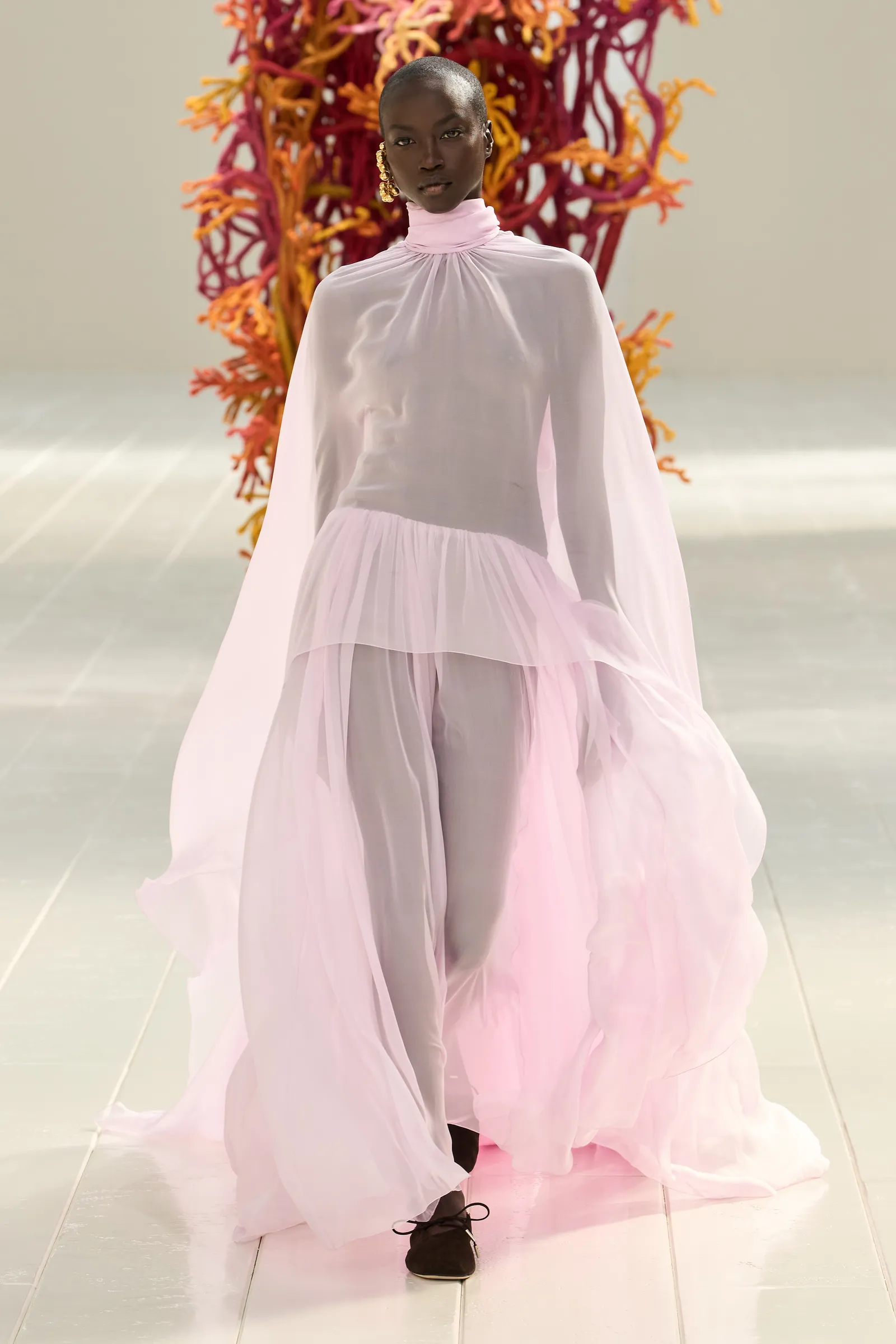
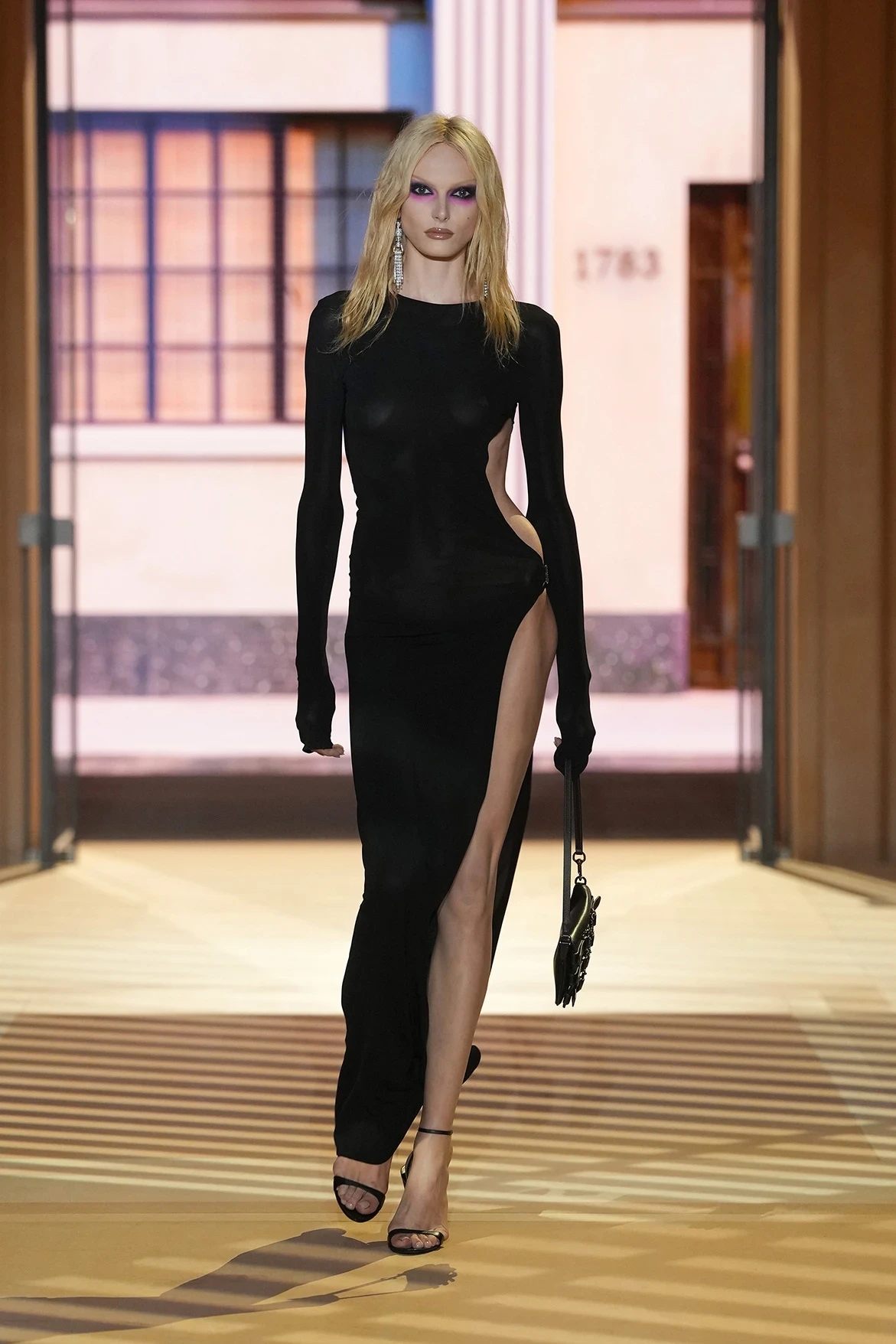
As the imaginary store moved toward night, propriety began losing buttons. Shearling outerwear swallowed delicate lingerie. Jersey dresses clung and cut away. Rosie Huntington-Whiteley, Candice Swanepoel, Alex Consani and Anok Yai turned the final stretch into a supermodel after-party with architectural foundations.
The last dress looked almost indecently simple: fabric draped over one shoulder and pulled into place by a teardrop-shaped metal weight suspended at the back. Gravity was not the enemy. It was the stylist. The construction disappeared so the body could remain the headline.
That dress contained the whole collection. Respectable at first glance. Technically obsessive underneath. One calculated detail away from trouble.
Demna’s Gucci is no longer choosing between the snob, the eccentric, the streetwear boy, the horse girl, the society woman and the person dressed for a 3 a.m. exit. It wants the entire crowd—and it wants them meeting by the handbags. The result is not one neat silhouette. It is a social ecosystem held together by appetite.
The Store Show understood the real seduction of Gucci: not owning a product, but owning the nerve to remake the room around you. The velvet rope is still there. It just looks better when somebody steps over it.