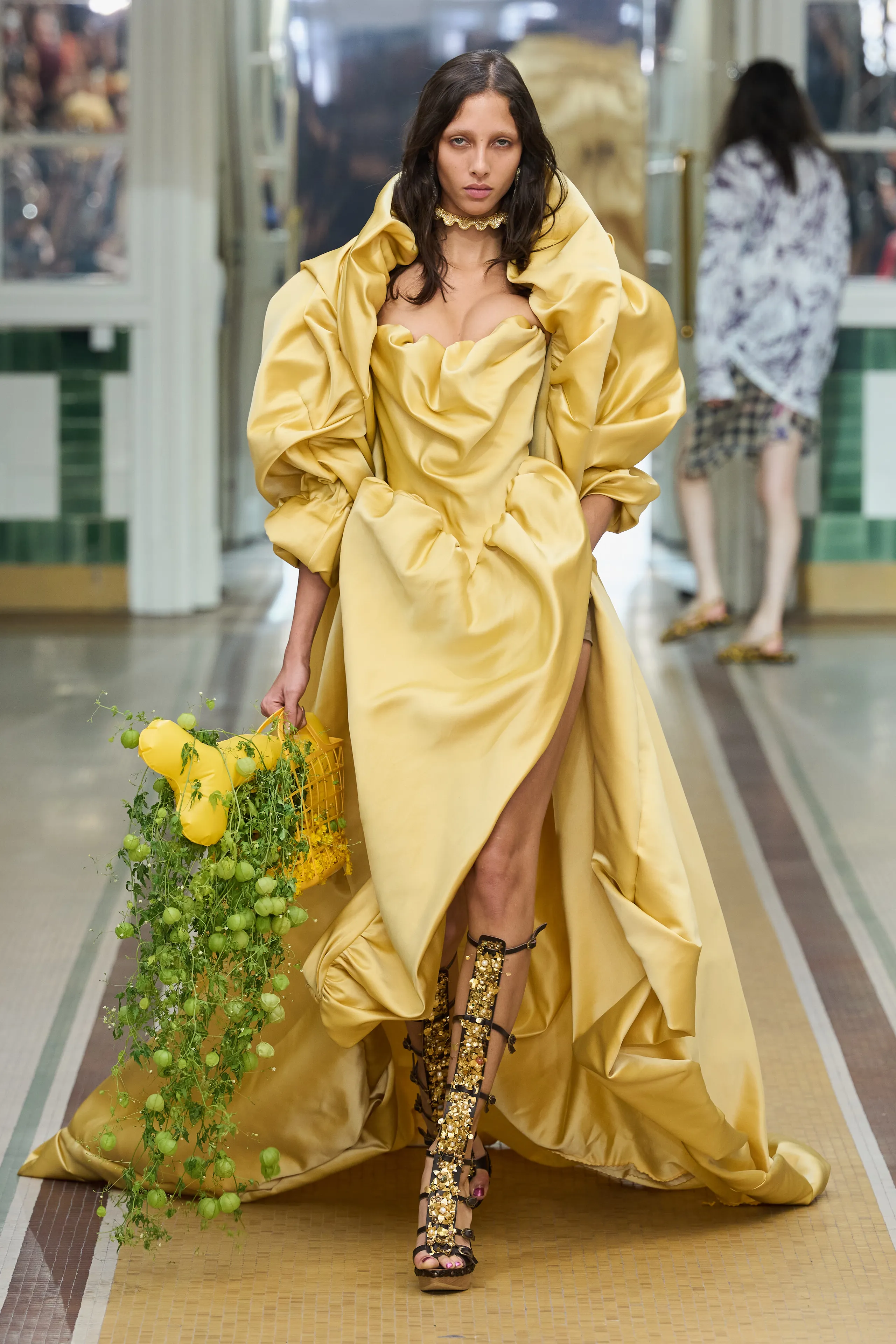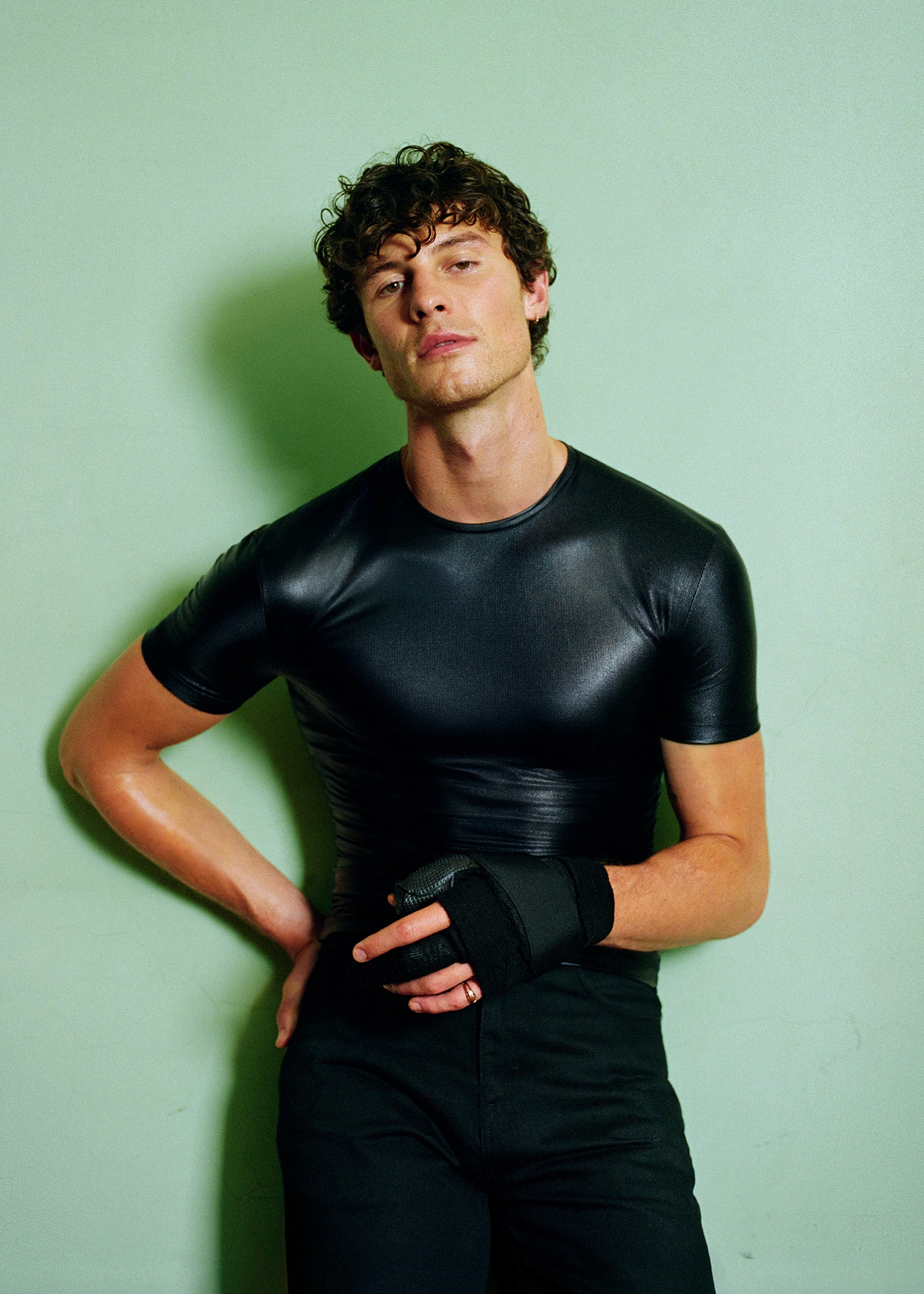
Tom Brady and EsDeeKid do not appear to belong in the same mood board. Neither do NINGNING and Rico Nasty, or Jin and Alex Consani. Add Shawn Mendes, Xiao Zhan, Lee Young Ae and Tarzzan, and the cast begins to look less like a coherent campaign than an accidental collision between several different internets.
That collision is the idea. Gucci Primavera, the campaign for Demna’s first runway collection at the house, does not ask one celebrity to carry a single global image. It builds a room large enough for people whose audiences, professions and cultural meanings barely overlap. The new Gucci is not any one of them. It is the strange atmosphere created when all of them are placed inside the same frame.
Eight publics, one house


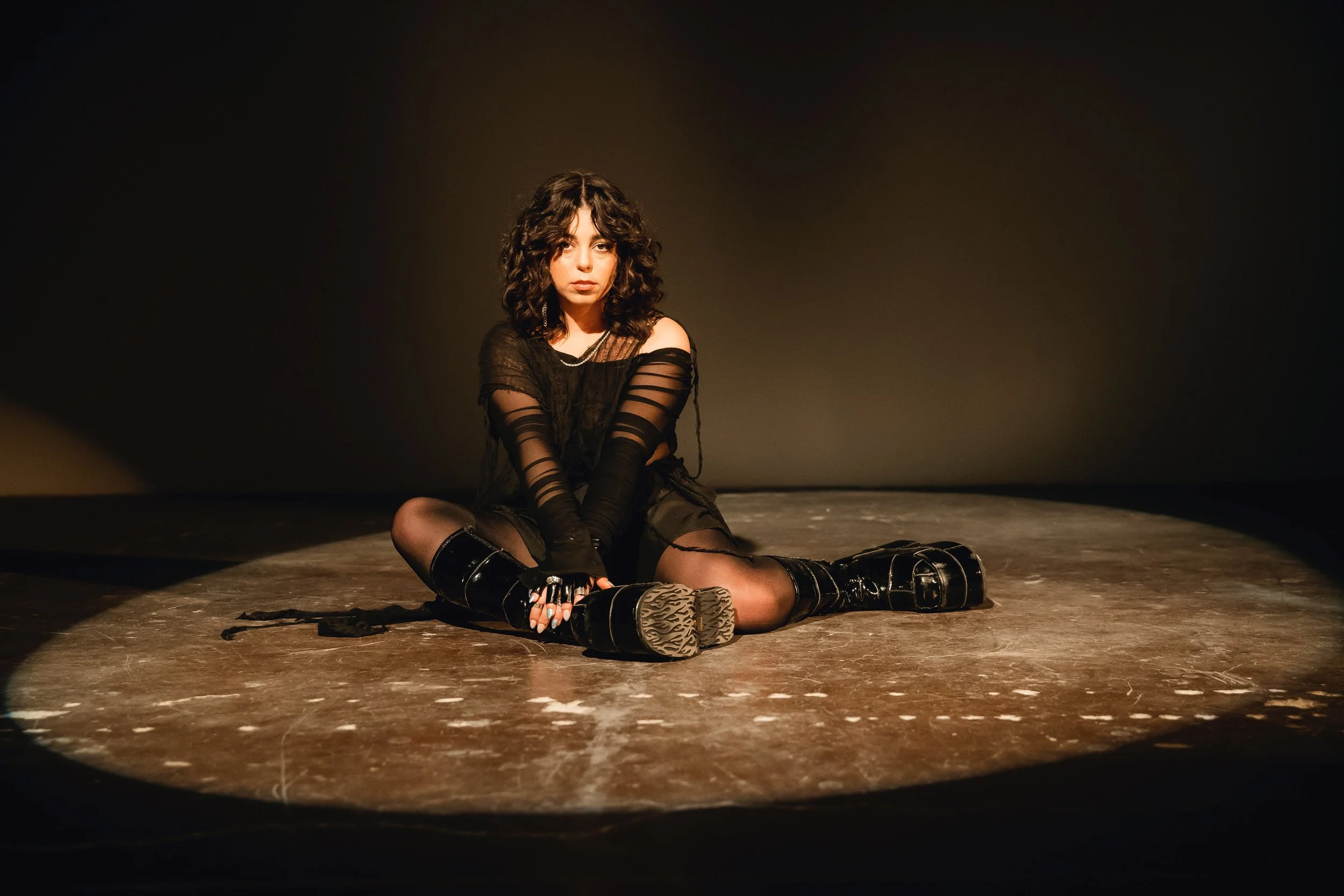
Gucci Primavera portraits. Photography: Michal Chelbin.
The mismatch is the casting
Celebrity fashion campaigns usually promise compression. One face is selected to make a complicated house instantly legible: this person is the mood, this person is the customer, this person is the fantasy. Primavera moves in the opposite direction. Its cast is designed to resist being reduced to one tribe.
Brady arrives with the polished mythology of American sport. NINGNING and Jin bring two enormous but distinct K-pop publics. Mendes carries the intimacy of global pop stardom; Rico Nasty brings abrasion and invention; EsDeeKid turns anonymity into identity. Consani is a native figure of fashion’s accelerated online present, while Xiao Zhan and Lee Young Ae extend the campaign through different generations of East Asian screen culture. Tarzzan introduces yet another performance vocabulary.
This is not diversity presented as harmony. Gucci keeps the differences visible. Nobody is asked to become a neutral luxury citizen. The campaign works because Brady still looks like Brady and EsDeeKid keeps the mask on.
A Renaissance built for the feed
Michal Chelbin photographs the ten portrait subjects separately, in rooms that seem to have survived several owners and several decades. Floral wallpaper, worn floors, heavy curtains and antique furniture give the images the compositional gravity of portrait painting. Gucci describes them as a modern Renaissance, and the phrase explains their useful contradiction: the pictures borrow authority from the past while casting people whose fame is produced by radically contemporary systems.
The interiors perform the work that a shared biography cannot. A football champion, an idol, a masked rapper and a runway model become part of one universe because the same light falls across them. The pose is slow even when the culture outside the frame is fast. Their clothes—leather, sequins, body-conscious jersey, fur and sharply handled bags—carry the family resemblance.

Kate Moss is the only one allowed to move
Kate Moss does not appear among Chelbin’s ten formal portraits. Her role is more powerful: she becomes the campaign film’s engine. In Johan Renck’s And We Shall Dance Again, Moss lip-syncs to Chris Isaak’s “Wicked Game” while a room of strangers holds itself in uneasy suspension. Eyes travel before bodies do. Then people pair off, the room loosens and the waiting area becomes a dance floor.
Moss is an ideal conductor for this transition. Her image carries an older, pre-platform form of fashion celebrity, yet it has survived every platform that followed. She does not explain the cast or introduce its members. She creates the emotional weather in which unrelated people can begin to look connected.
The film turns the campaign’s casting strategy into choreography. The portraits hold each star alone; the moving image imagines what happens when isolation breaks. Gucci’s official language is rebirth through love. The more revealing proposition is that fashion can still make strangers occupy the same physical and cultural space.
Luxury no longer has one audience
The old global celebrity was expected to travel everywhere. The contemporary star travels deeply into a particular network. Brady, NINGNING, Rico Nasty and EsDeeKid do not deliver interchangeable attention; they open different doors. Primavera treats those separate publics as architecture.
That makes the campaign look uncannily like the culture it is trying to address. A feed can move from football to K-pop, underground rap, runway clips and television drama without resolving the jump. Demna does not smooth that experience into tasteful consistency. He gives the jump a patterned room, puts leather around it and calls it Gucci.

Gucci is no longer asking one celebrity to embody the house. The collision is the house.
The awkwardness is the point
There is something deliberately strange about watching Tom Brady model severe leather in the same campaign in which EsDeeKid stands masked beside a narrow bed and NINGNING stretches across a floral room. The images do not resolve into a demographic. They resolve into a visual system.
That distinction matters for Demna’s Gucci. A house trying to define itself through one perfect representative would immediately exclude most of the culture it wants to enter. Primavera makes hospitality out of incoherence. Its identity is not a single type of person but an ability to host contradiction without making it disappear.
The campaign calls itself spring, a beginning. Its most convincing newness is not the cast’s fame or the collection’s sexiness. It is the refusal to pretend that culture still has one centre. Gucci’s strange universe holds because nobody fully belongs there—and because, for a few carefully lit minutes, the room makes that feel like freedom.