
New York in 1993 is no longer recent memory. It is production design.
Every storefront, subway advertisement, payphone, nightclub and half-abandoned pier now has to be reconstructed. The city that once appeared ordinary on film has become distant enough to require research, references and a budget. Even its disorder has to be art-directed.
Julia Fox now appears ready to enter that reconstruction. According to casting materials and recent reporting, she is writing and directing a feature film under the working title Sixth Avenue Saints. Set between Coney Island and Downtown Manhattan in 1993, the coming-of-age story follows Luan, a sensitive 12-year-old growing up inside a fractured household.
His understanding of New York changes when he meets Frankie, a fearless homeless boy who knows how to survive through instinct, humour and performance. Frankie introduces him to a city populated by queer outsiders, street hustlers, sex workers, drug users and people living beyond the protection of respectable society.
On paper, it sounds like a story about two children discovering a dangerous world. Underneath that is a more complicated question: what happens when the people a city pushed aside become the very people it later uses to build its mythology?
1993 has become a period piece
The New York of the early 1990s is now frequently presented as the last authentic version of the city: dirtier, cheaper, stranger and supposedly more alive. It is a seductive fantasy, particularly for people who arrived after luxury towers, private clubs and algorithm-approved restaurants replaced much of Downtown’s unpredictability.
But poverty was not an aesthetic. Neither were homelessness, addiction, violence or the lack of protection experienced by queer young people. To describe that New York only as raw, wild or glamorous is to convert other people’s instability into atmosphere.
This is the first challenge facing Sixth Avenue Saints. Reconstructing the city’s visual language may be relatively easy. Productions can find vintage cars, period clothes and signs with the correct typography. The more difficult task is rebuilding the social conditions that made those images possible without turning marginalisation into a costume.

The city is more than its dirt
A city is not authenticated by grime. It becomes believable through the relationships between the people occupying it: who is allowed inside, who is watched, who can disappear and who learns to move without being noticed.
The available casting description suggests that Fox understands this distinction. Frankie is not positioned simply as a symbol of damaged New York. He is funny, magnetic and capable of controlling the energy around him. His survival depends on being able to read other people faster than they can read him.
That dynamic could give the film something more interesting than nostalgia. Luan is not merely introduced to danger; he is introduced to another form of knowledge. Frankie knows how the city actually works beneath its official rules. His instability gives him an awareness the more protected characters do not possess.
The risk is that he becomes a guide rather than a complete person—the charismatic outsider whose suffering exists to transform someone else. The film’s success will depend on whether Frankie is permitted an interior life of his own.
Fox has been moving toward this for years
To audiences who met Fox through Uncut Gems, fashion campaigns or the constant circulation of her image online, directing might appear to be another sharp turn in a career built from them. It is closer to a return.
Before Uncut Gems made her globally recognisable, Fox directed the short film Fantasy Girls. The project emerged from time she spent in Reno, Nevada, meeting teenage girls and allowing their lives to shape the story rather than forcing them into a predetermined concept.
Fox has repeatedly described writing, directing and producing as her long-term ambition. Her public image may be built around transformation, but filmmaking offers a different kind of control. Instead of becoming the image, she gets to decide what the image notices.
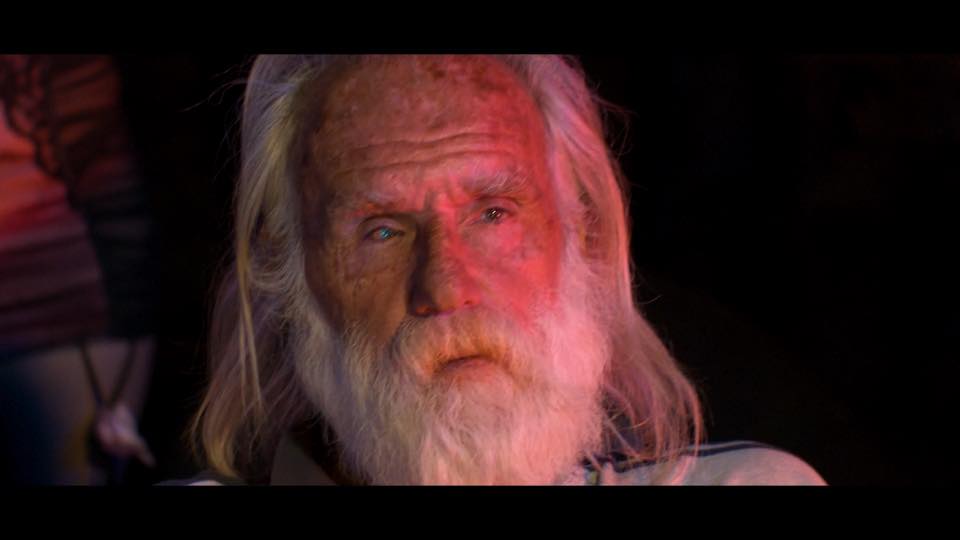
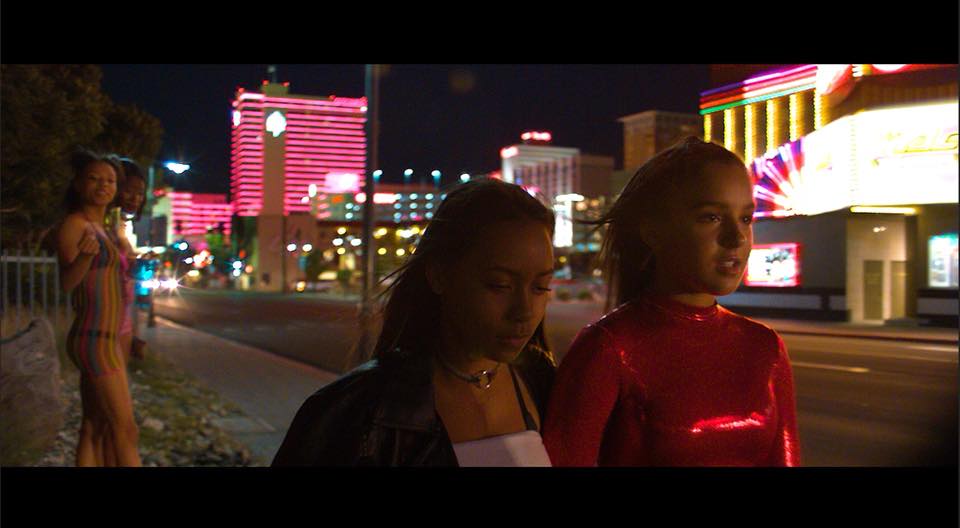
Stills from Fantasy Girls, directed by Julia Fox and photographed by Justin Phillip.
That experience matters because Sixth Avenue Saints seems to require the same sensitivity. The film is returning to communities that mainstream culture often photographs more eagerly than it listens to. Fox’s familiarity with Downtown New York gives her a personal relationship to the material, but proximity alone does not guarantee authority.
What it can provide is instinct: an understanding that outsiders rarely experience themselves as supporting characters in somebody else’s story. Their lives contain humour, vanity, boredom, desire, manipulation and pleasure alongside whatever hardship an audience expects to find.
Casting the memory
The production’s casting process is already part of its argument. Calls have sought young actors for the central roles alongside adults capable of bringing an unpolished New York presence to the screen. Some notices have specifically encouraged people without conventional acting experience.
This approach makes sense for a film attempting to reconstruct a city whose identity came from faces that would rarely make it through a modern commercial casting process. The right extra can communicate an entire social world before speaking. Clothes can be manufactured. Physical memory is harder to fake.
Yet “authentic New Yorkers” can easily become another visual category. A production cannot recover a disappeared community simply by finding people who look as though they belonged to it. Those performers need to be treated as participants in the reconstruction rather than pieces of local texture.
The distinction is small on a call sheet and enormous on screen.
Who gets to survive the reconstruction?
Much of pre-gentrification New York is now remembered through photographs, independent films, club flyers and stories repeated by the people who managed to remain. Others were priced out, displaced, incarcerated, lost to illness or allowed to vanish without leaving an organised archive behind.
A film such as Sixth Avenue Saints cannot recover that world exactly. No film can. What it can do is decide whose disappearance counts as a loss.
That makes Fox’s reported debut more than another celebrity move behind the camera. Its subject sits directly inside the conflict that has always shaped her public persona: the conversion of outsider experience into fashion, entertainment and cultural capital.
Fox knows how quickly something once dismissed as trash can be reintroduced as an object of desire. She has built an entire visual language from that reversal. With Sixth Avenue Saints, she now has the opportunity to ask what happens to the people who cannot be archived as easily as a dress, a photograph or a downtown legend.
If the film works, it will not present 1993 as a lost paradise. It will remember the city as a place where freedom and danger often occupied the same block, especially for children who received neither privacy nor protection.
New York cannot be rebuilt exactly as it was. Cinema can, however, refuse to clean up the memory.