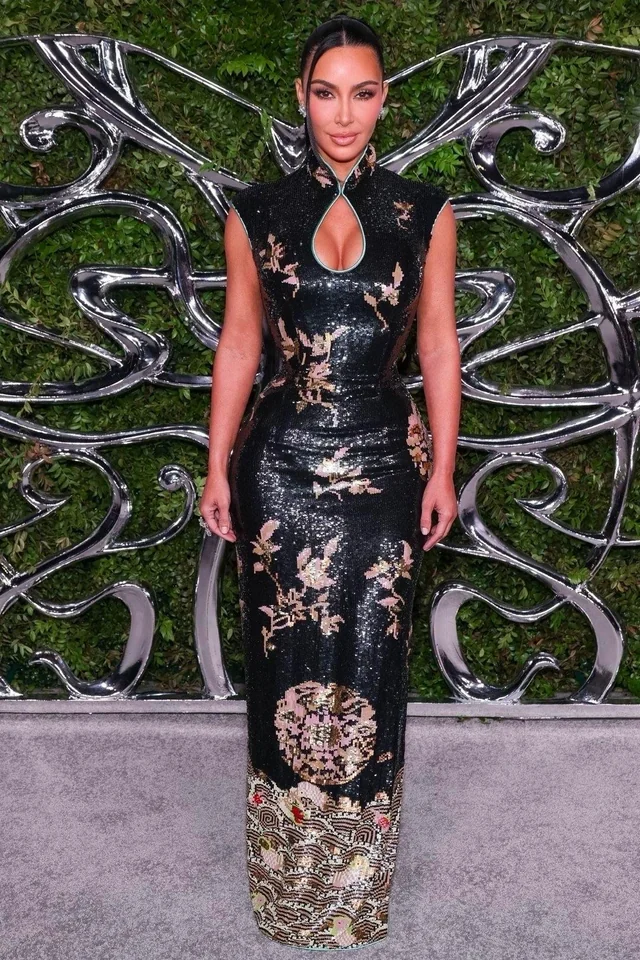
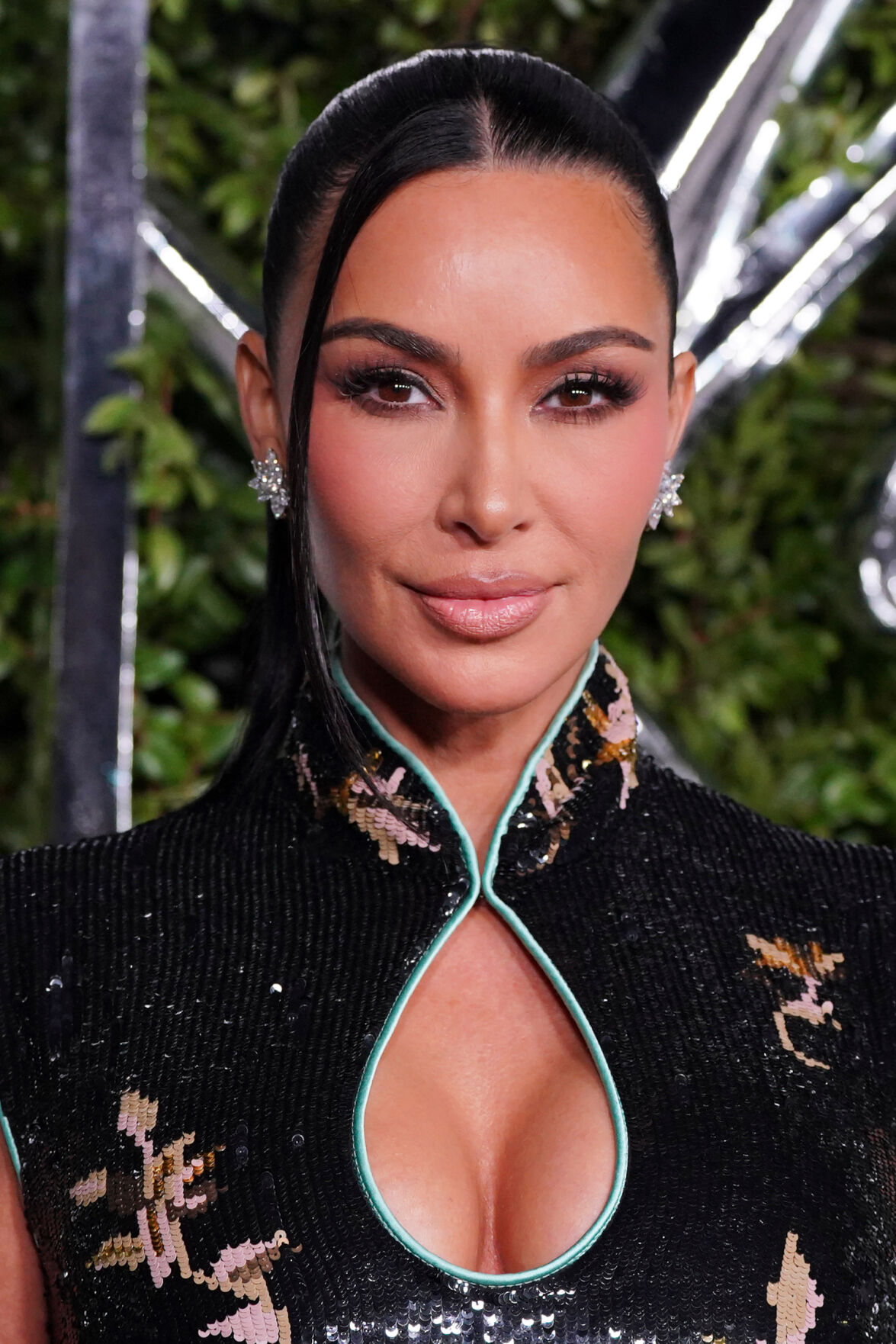
Law Roach did not announce a makeover. He posted two words: “New client.” The client was Kim Kardashian, arriving at the opening-night celebration for the Lucas Museum of Narrative Art in Los Angeles in black sequins, a severe neckline and enough décolletage to keep the silhouette unmistakably hers.
The dress was not new. Roach pulled it from Yves Saint Laurent’s autumn/winter 2004 collection, designed during Tom Ford’s final year at the house. Kardashian wore it with Oscar Heyman earrings, a Zydo ring and the kind of unbothered precision that makes an archive piece look less borrowed than repossessed. The look also served as confirmation: Roach was no longer admiring the machine from outside. He had entered it.
That makes this more interesting than a good dress on a famous body. Kardashian already has access, visibility and a silhouette recognised at thumbnail size. Roach’s job is not to introduce her to fashion. It is to find a fresh plot for someone whose image has been watched, copied, sold and over-explained for nearly two decades.
The first move was not reinvention
Roach’s opening choice was smart because it did not pretend Kim needed saving from Kim. The body-conscious black gown, exposed skin and diamond punctuation all sit inside her existing language. The shift is in the reference. Instead of dressing her as a walking forecast, he placed her inside fashion history.
That is where Roach is most dangerous. He calls himself an image architect because he does not approach a carpet as a clothing delivery. He builds the surrounding fiction: the archive pull, the hair, the pace of the reveal, the reason the look should exist now. In Vogue, he described the work as finding who a client already is and elevating that person rather than replacing them. The YSL dress follows that rule exactly. Kim remained legible. The taste level moved.
It is a subtle correction to the celebrity archive race, which too often treats an old gown like a trophy. Roach understands that a pull needs chemistry. The point is not that the garment survived 22 years. The point is that it looks as if it had been waiting for this body, this flashbulb and this particular moment in Kardashian’s image cycle.
Kim Kardashian does not need a stylist to make her visible. She needs one who can make visibility feel new again.
The assignment is bigger than a dress
For Kardashian, clothes have never been decoration. They have marked partnerships, relationships, businesses and changes in cultural rank. A look can become an ad, a meme, a product test and a historical claim before she has left the car. That makes her an unusually powerful client and an unusually difficult one. Every move reaches millions; almost none arrives without baggage.
Roach’s method is built for that pressure. In a TIME interview, he said image architecture begins with research: finding out who someone is, or who they want to become. That distinction matters here. Kardashian does not need the fantasy of becoming someone else. She needs room to become less predictable without acting embarrassed by the image that made her famous.
The partnership also lands differently because Roach made scarcity part of his own story. After announcing his retirement from celebrity styling in 2023, he continued working selectively rather than returning to the old churn. A new client is therefore not just another name on a crowded roster. It reads as a choice—and Kim understands the value of being chosen almost as well as Roach does.

This cannot become Zendaya cosplay
The lazy expectation will be that Roach gives Kardashian the Zendaya treatment: deeper archives, louder concepts, viral reveals, perhaps a little method dressing when the calendar demands it. But copying the surface of his most famous collaboration would miss why it works. Roach and Zendaya built a language around range. Kim’s image has been built around instant recognition.
The better possibility is friction. Kim brings control, glamour and the ability to turn a look into mass culture by morning. Roach brings historical fluency, narrative timing and a willingness to let fashion get strange. Neither needs the other for access. Both have something harder to offer: a new context.
One gown is not yet an era. It is a pilot episode, and a deliberately disciplined one. The silhouette said Kim. The archive said Law. The smartest thing about the result was that neither voice disappeared.
The new client is not starting over. She has hired a new narrator.