Outer Banks arrived in April 2020, when leaving the house had become its own kind of fantasy. It offered saltwater, sunburn, a half-working boat and a group of friends who behaved as if every locked door had been placed there specifically for them to break through.
Six years later, the fantasy is closing. The fifth and final season lands on Netflix on 20 August, bringing John B, Sarah, Kiara, Pope and Cleo back for ten last episodes. They are older, one friend is missing and the endless summer has acquired consequences. Yet the basic promise remains unchanged: when the world has already decided where you belong, take your friends and leave by water.
This article discusses the ending of Outer Banks Season 4.
The fantasy was never really the treasure
There has always been gold somewhere in Outer Banks: beneath a house, inside a shipwreck, behind a centuries-old clue or across an international border. The mythology became increasingly ridiculous because it had to. Every season needed a larger object for the Pogues to chase and another reason to wake up in a different country with armed men behind them.
But the treasure was only a machine for moving the group. The real fantasy was social. The Pogues had very little individually, so they treated friendship as shared property. A house, a van, a boat and eventually an entire business became communal because everyone showed up. Against them were the Kooks, whose money offered protection but never the same intimacy. Subtlety would have looked strange beside the treasure maps and motorcycle chases.
What mattered was that the division could be seen before it was explained. Clean linen and waterfront estates belonged to one side; cut-off shorts, wet hair and the Twinkie belonged to the other. Outer Banks understood that a teen series first becomes a world through clothes, objects and places. Plot makes people continue watching. An image makes them want to live there.
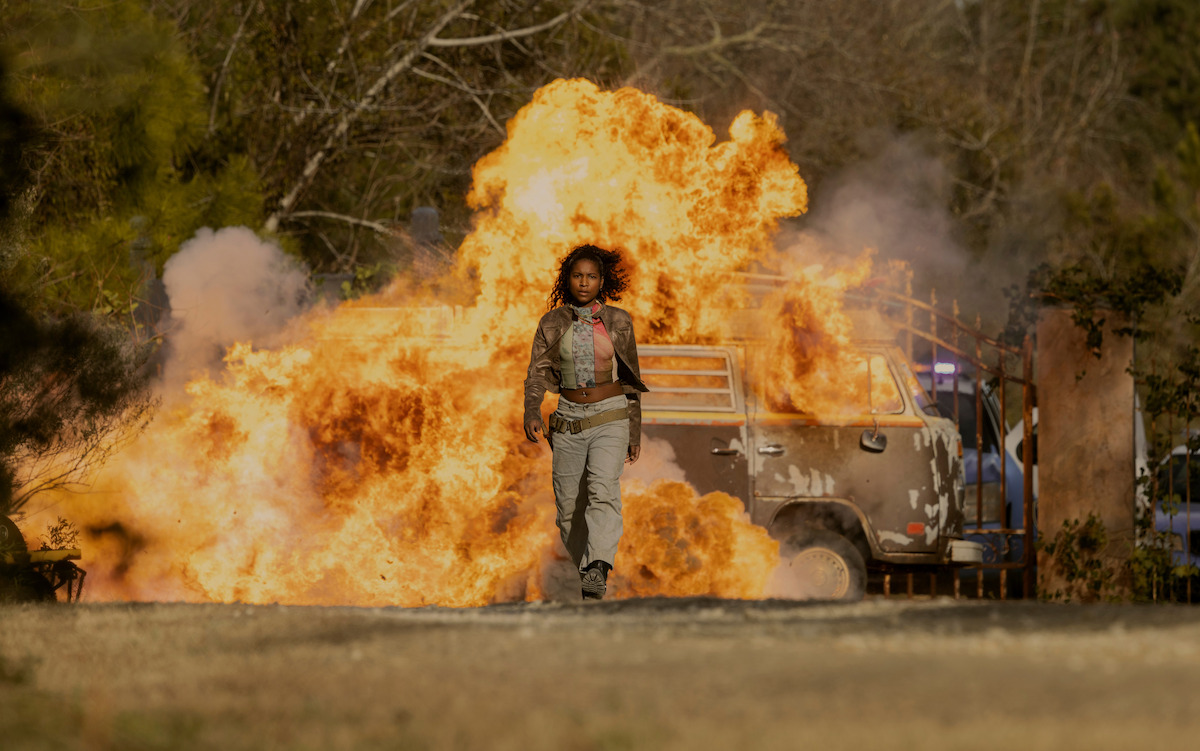
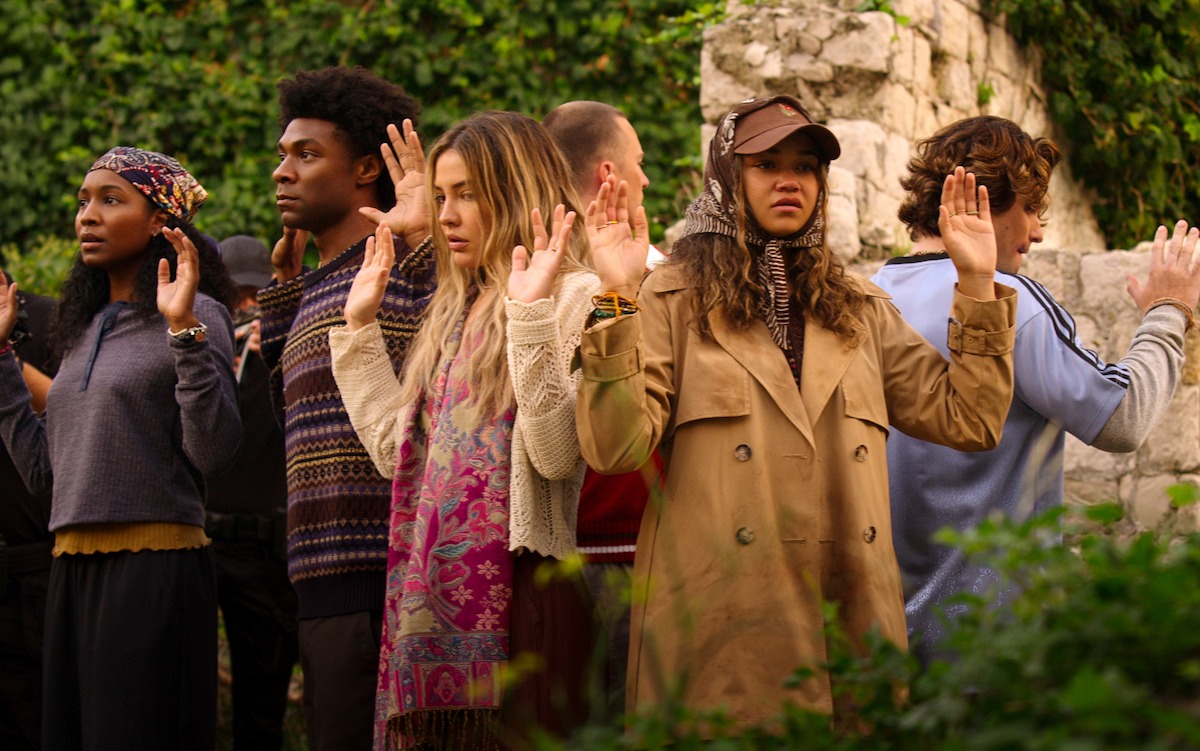
The last season still speaks fluent Pogue: improvised plans, impossible odds and property damage. Images: Jackson Lee Davis/Netflix.
Outer Banks understood the power of a group picture
The show’s most convincing special effect was never a storm or an explosion. It was the sight of the cast occupying the same frame. Chase Stokes, Madelyn Cline, Madison Bailey, Jonathan Daviss and Rudy Pankow made the original group feel physically connected: leaning across one another, sharing food, shouting over engines and turning every quiet scene into the suggestion of an inside joke.
Carlacia Grant’s Cleo eventually entered that rhythm, while Drew Starkey’s Rafe remained its unstable opposite—close enough to affect the group, never relaxed enough to disappear inside it. The ensemble created a chemistry streaming repeatedly tries to manufacture but rarely sustains. They had developed the posture of people who expected to escape together.
Netflix says the first four seasons generated nearly 200 million views and appeared on its English-language television Top 10 twenty-five times. The scale is important, but the afterlife is more revealing. The bandanas, layered necklaces, faded shirts, beach houses and sunset group shots escaped the episodes and became a reusable summer mood. Outer Banks was not watched only as narrative. It was saved as atmosphere.

The final season begins with somebody missing
Season 5 begins after JJ’s death in Morocco, with the surviving Pogues at what the trailer calls “rock bottom.” Chandler Groff is still free, the Blue Crown is gone and the group no longer has a home waiting for them. Their final search mixes treasure with revenge, while an uneasy alliance with Rafe pushes a former Kook closer to the space JJ has left behind.
That absence changes the geometry of the show. JJ was its most reckless expression of Pogue logic: loyal before sensible, moving before thinking and able to turn self-destruction into a group activity. The final season does not need to replace him. It needs to let the empty space remain visible. For once, adventure cannot function as an escape from grief because grief is the reason they are moving.

Netflix does not make teen shows like this anymore
Netflix has not stopped making shows about young people, but few grow into this particular size: five seasons, location-driven action, a stable ensemble and enough freedom to move from romance to class conflict to a centuries-old curse. Outer Banks was a soap, an adventure serial and a summer campaign at once.
Its young cast also had time to become stars without immediately becoming larger than the series. Cline moved into studio films, Starkey into prestige cinema and the others into fashion, music and new screen roles, yet the group could still return to the same battered visual language. The show preserved the feeling that fame happened outside the frame. Inside it, they were still broke and looking for a boat.
One last ride has to end somewhere
The creators have said the original idea began with a photograph of teenagers on a beach during a power outage. From that single image, they imagined a five-season story and have known the final frame from the beginning. That makes the ending feel less like a cancellation than the completion of a picture.
The final treasure may matter. Groff may be punished. The Pogues may recover the freedom they have spent six years trying to buy. But the show’s real ending will be decided by something smaller: whether its surviving characters can still occupy one frame without pretending nothing has changed.
Outer Banks became Netflix’s last great teen fantasy because it made friendship look like a place. Season 5 now has to show us what happens when summer ends and the people inside that place finally have to grow up.