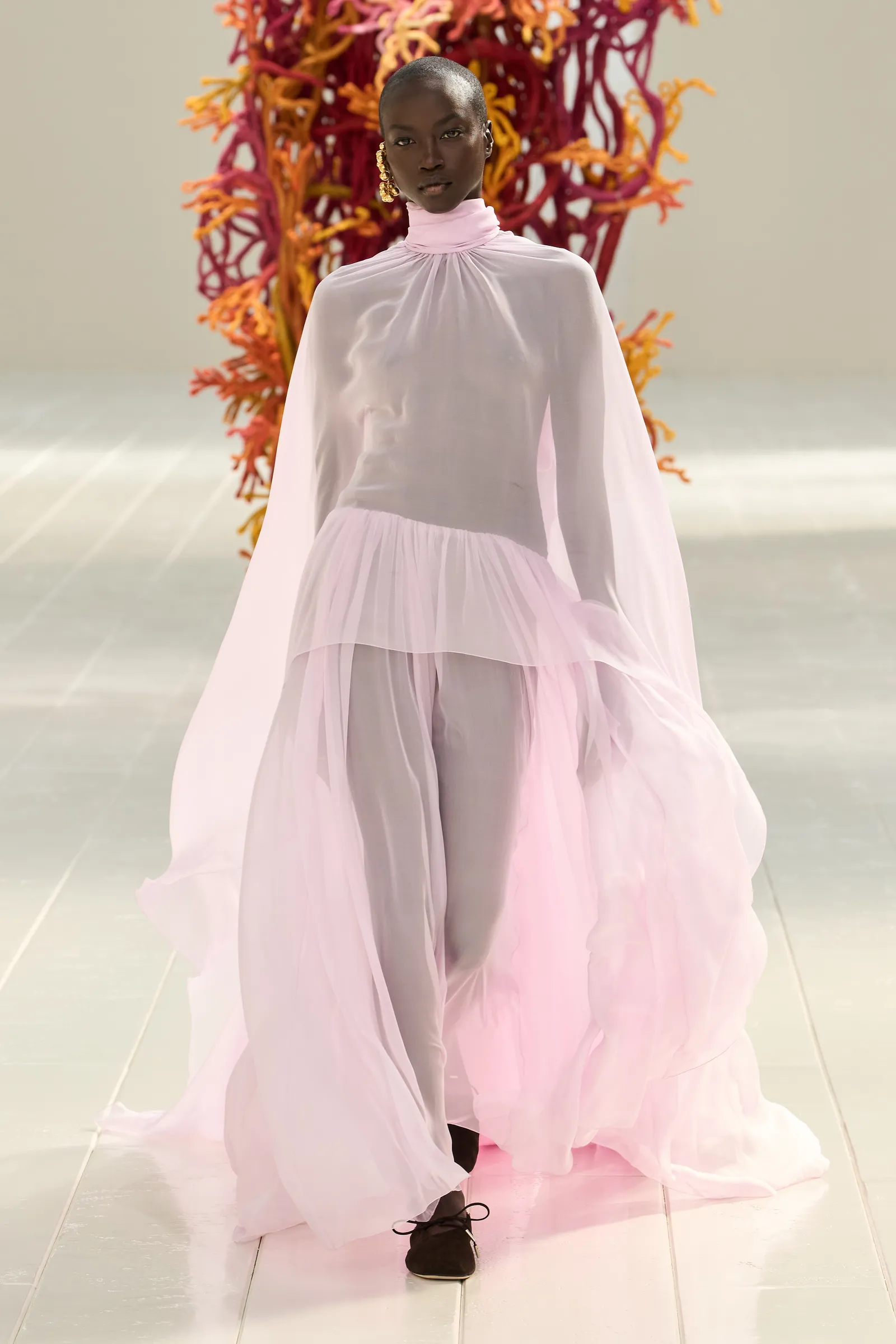
New York dropped its waistlines until the clothes had nowhere left to go. At the Spring 2027 shows, trousers hovered under the sacrum, skirts framed the top of the ass and one tiny strip of skin suddenly carried the entire outfit.
Call it a butt crack if you want. The designers called it construction.
Across Emily Dawn Long, Eckhaus Latta, The Society Archive and Kate Walz, the body’s most policed wardrobe malfunction became a precision cut-out. This was not the return of low-rise. Low-rise merely lowers the waistband. These clothes turned the crack into the point.
The ass got promoted
Emily Dawn Long named the move before anybody else could flatten it into a microtrend: “southern cleavage.” Her New York debut rerouted the familiar reveal through backs cut low enough to expose the upper buttocks. The phrase is dirty, funny and completely accurate.
The collection arrived through a short film instead of a standard runway. That gave the reveal timing. A body turns. Fabric slips from view. The outfit delivers its punchline after it has already walked past. Fashionista reported that the show notes described cleavage as relocated to the hip and lower back. Long did not design around the body. She changed where the eye expects sex to happen.
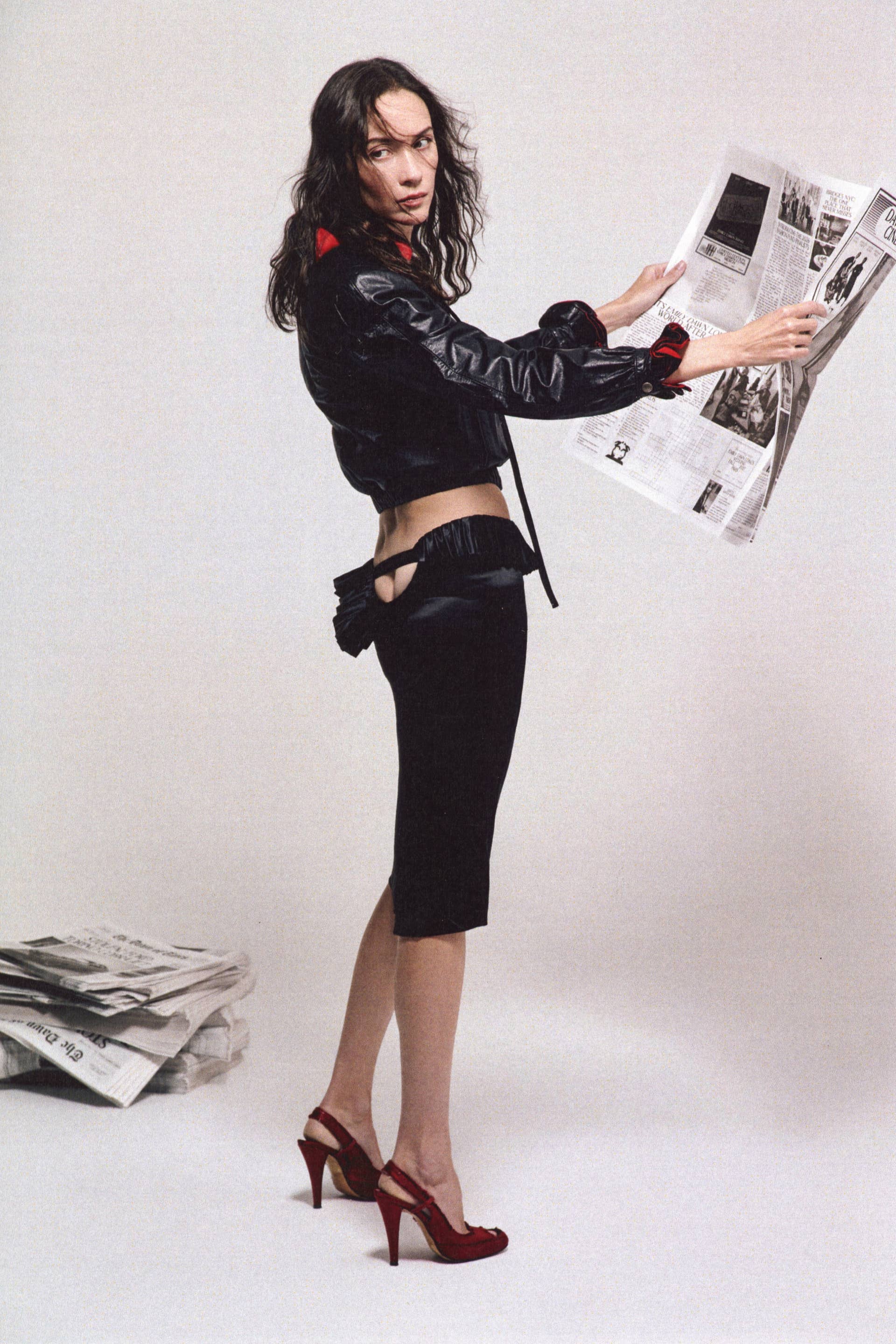
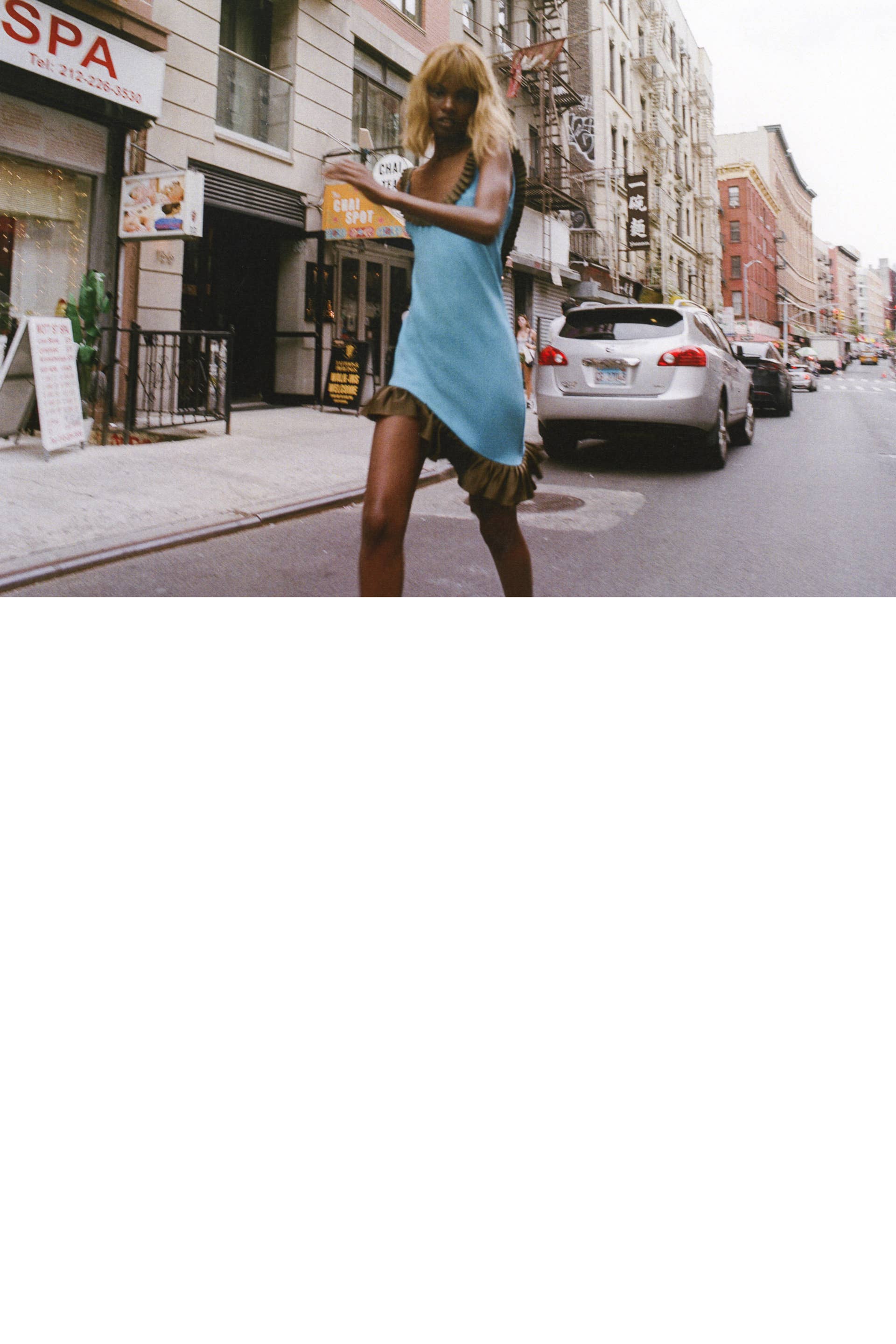
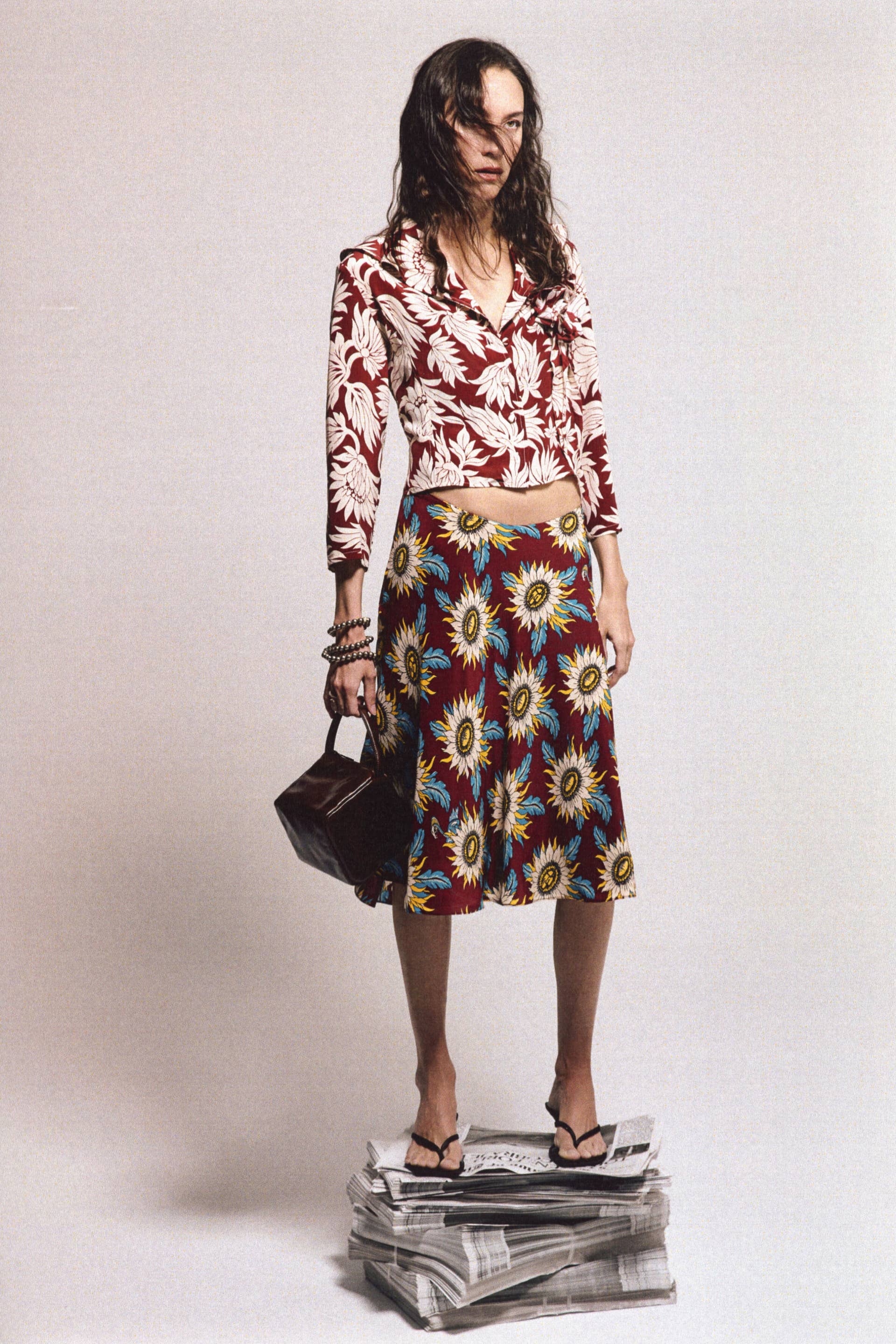
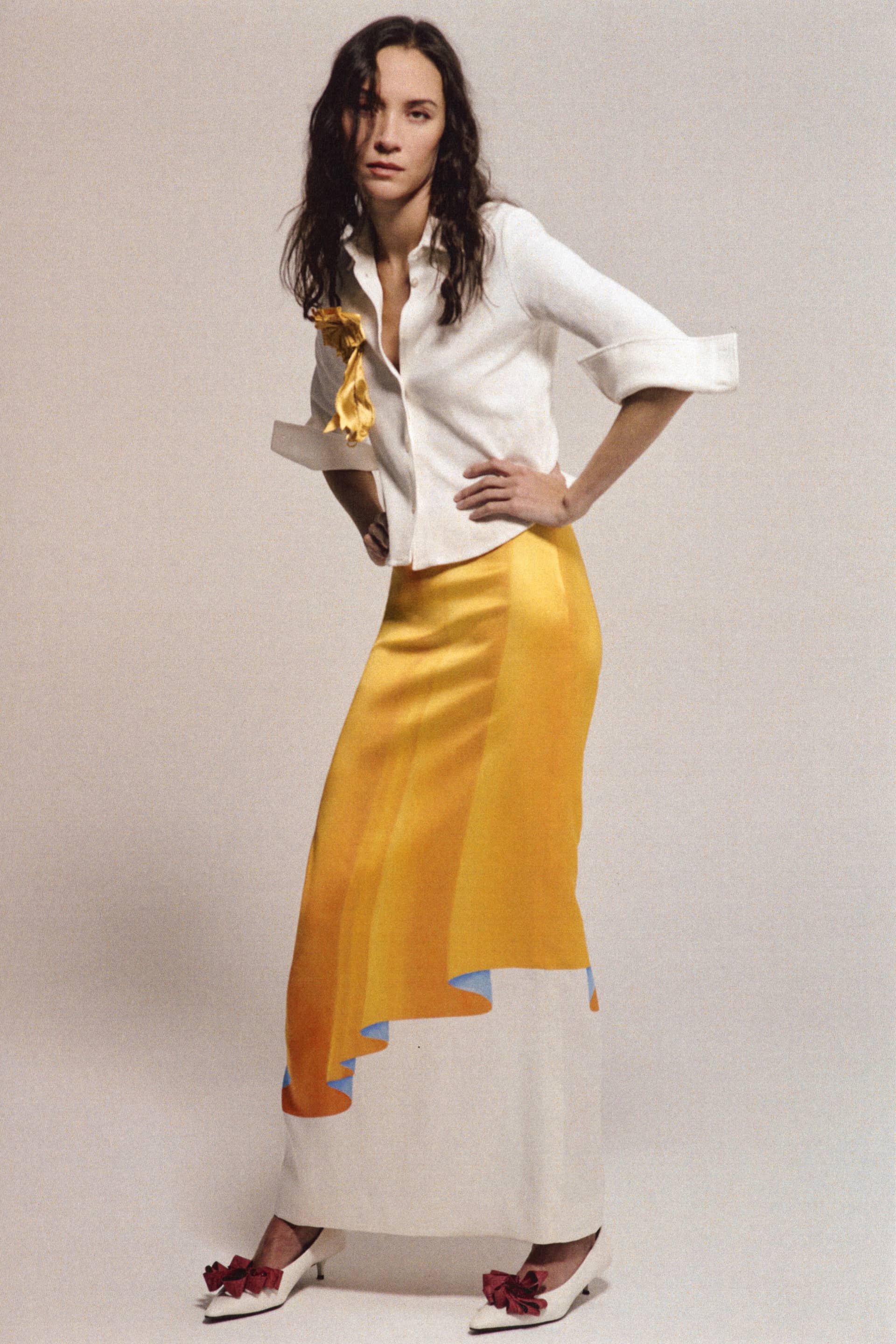
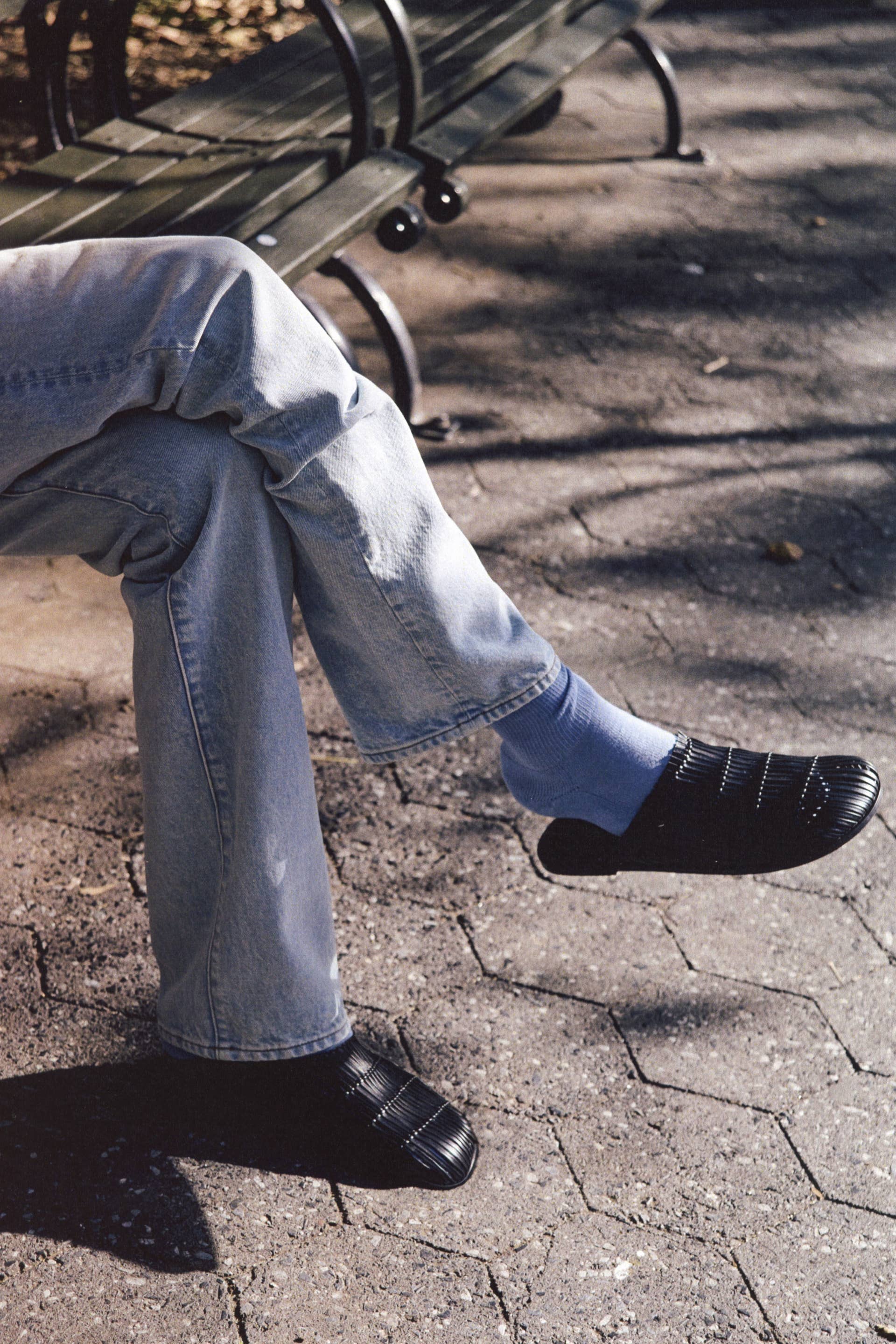
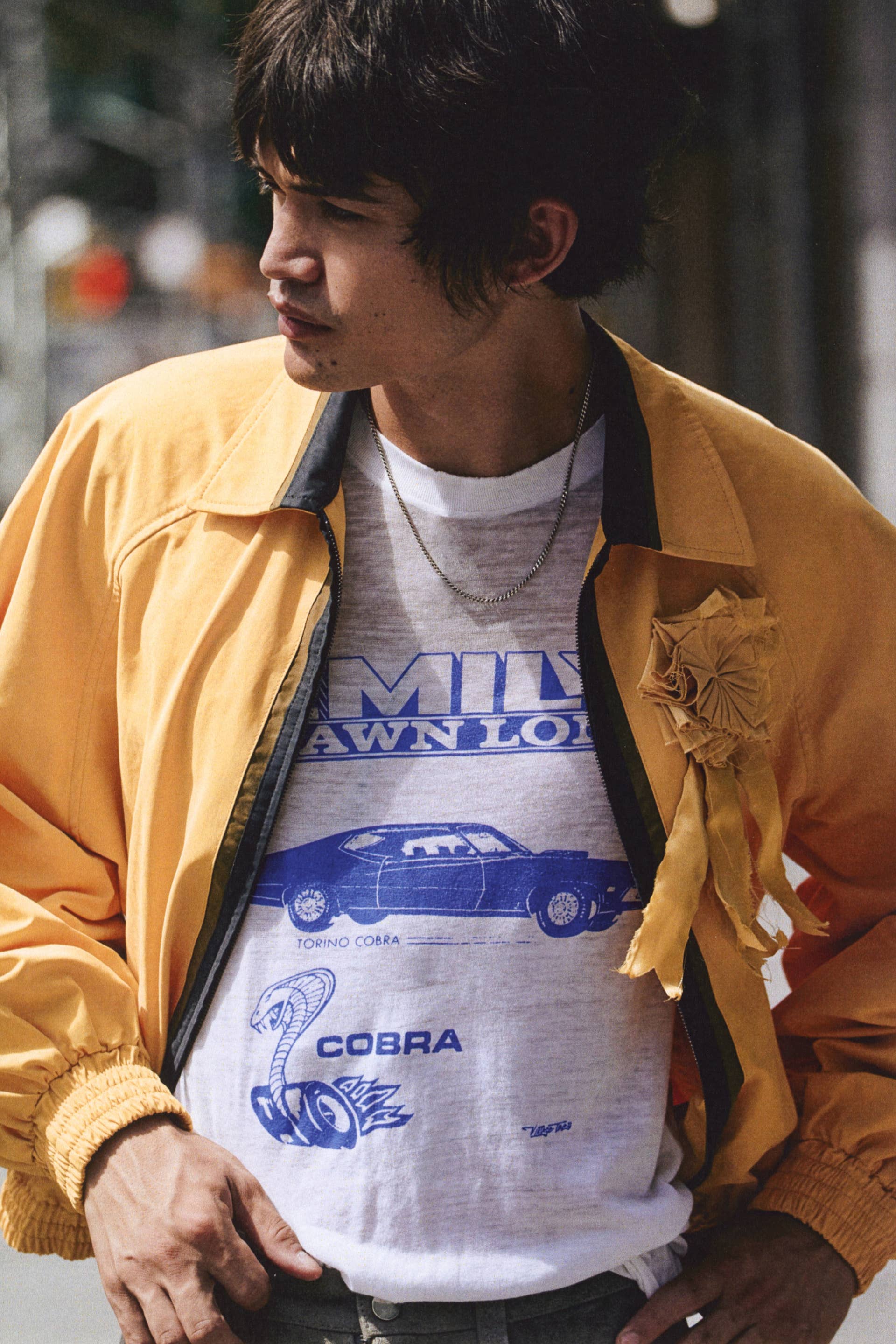
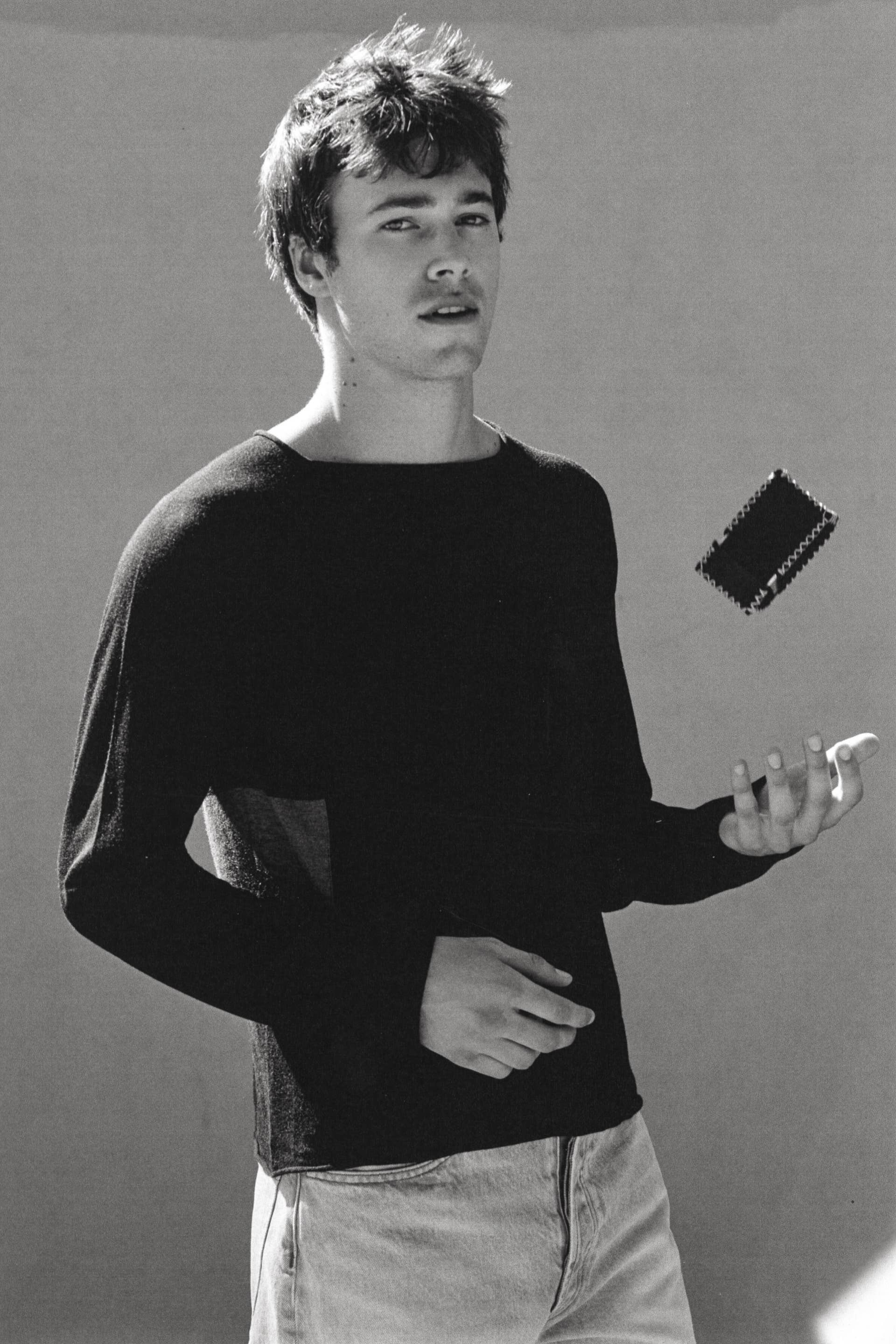
The Crack of Dawn, Spring 2027. Images courtesy of Emily Dawn Long.
A wardrobe malfunction with a pattern cutter
The 2000s treated low-rise dressing like a dare between denim and gravity. This version is more controlled. Waistbands dip exactly where the spine ends. Seams point inward. Negative space is measured. The body is not what the garment forgot to cover. It completes the pattern.
That is what makes the exposure feel sharper. A top can be opaque. A trouser can be heavy. Almost everything remains covered except the centimetres fashion normally treats as an emergency. The more deliberate the clothes become, the naughtier that small gap looks.
The butt crack is not an accident anymore. It is the neckline.
Not just for girls in tiny jeans
The reveal moved across genders. Eckhaus Latta sent hip-grazing trousers through a room filled with friends, musicians and downtown regulars. The Society Archive put its surf-damaged fantasy on men whose shorts looked one bad decision away from the floor. The exposed back became less feminine, less delicate and more like attitude.
That makes “Y2K is back” feel too lazy. Tom Ford’s Spring 1997 Gucci G-strings and Diesel’s belt-line stunts are in the family tree, but nostalgia is only the excuse. The interesting part is how easily the look moves between a polished gown, slouchy menswear and denim engineered to appear irresponsible.
The feed needs a second angle
The front of the body has been optimized into boredom. Corsets, underboob and cut-outs are now product categories. The lower back still contains a little social danger. To see it, the wearer has to turn away from the camera at the exact moment the outfit asks to be documented.
That delay is the seduction. Front-facing exposure announces itself. Back-facing exposure is discovered. It produces the rare runway image that cannot be understood in a single glance.


From left: The Society Archive, photograph by Kenyon Parks; Eckhaus Latta, photograph by Gorunway; Emily Dawn Long, courtesy of the designer.
The body becomes the fastening
Walz’s work makes the central tension impossible to miss: cover almost everything, then expose the one zone people are trained to hide. Skin becomes punctuation. The garment stops where the sentence gets good.
There is serious engineering inside that apparent carelessness. Clothes designed to look seconds from collapse need hidden support, exact proportions and fabric that holds where the eye expects it to slide. The crack may be visible. The construction cannot be.
That is why the look feels larger than the amount of skin involved. It turns embarrassment into authorship and makes the wearer complicit in every stare. New York did not just lower the waist. It moved fashion’s gaze below it—and made looking away feel prudish.