Life & Culture
The VMAs Left the Bathroom Door Open
Madonna brought the club, Charli xcx brought the stall, LISA moved pop’s centre to Bangkok and television remembered that good manners have no business in a great pop show.

Text

Noah Cruz

An awards show can count. The VMAs was built to combust. On Sunday night, it remembered the difference. Madonna opened with “It’s mother,” Charli xcx surfaced from a bathroom stall, LISA dropped Bangkok into the middle of Los Angeles and the most polished room in pop spent two hours with its lipstick deliberately outside the lines.

The Moon Person is a trophy for making images, not behaving well. That distinction has always been the show’s only useful rule. Pop does not need another immaculate room where famous people applaud on cue; it needs a live camera, an unstable hierarchy and enough nerve for a performance to leave the stage looking slightly rearranged. The 2026 VMAs had all three.

Its best moments refused the neat logic of a recap. Madonna’s seven wins mattered less than the bathroom she built. Taylor Swift’s record mattered less than the fact that creative control had become part of her silhouette. LISA’s set did not “represent” Thailand for an American audience; it made America look like one stop on a much larger circuit. Nirvana did not arrive as heritage décor. RAYE did not sing like an item in a running order. Everyone brought a private world and pushed until the venue had to contain it.

This is what a real pop spectacle does: it turns proximity into trouble. Generations touch. Genres leak. Couture brushes against a toilet cubicle. The artist who was supposed to receive flowers takes the keys instead. By the end, the VMAs had become less a ceremony than a two-hour dressing room with the door jammed open. Exactly as it should be.

Mother, brat, bathroom

Madonna did not pass a torch. She left Charli the club keys and the code to the bathroom. Her first VMAs performance in 23 years opened with Sabrina Carpenter on “Bring Your Love,” then slipped into “Danceteria Afterhours,” where Charli appeared from behind a stall door. The casting did not announce a lineage. It staged one: three versions of pop femininity occupying the same set without asking which one was supposed to replace the other.

The bathroom was the right room for it. Public life treats it as an interruption; nightlife knows it is headquarters. It is where strangers lend eyeliner, dresses are rebuilt with safety pins and a face can be retired and relaunched before the next song. Nobody behaves like a finished product under a bathroom light. The mirror is too cruel, the queue is too intimate and the door never locks properly.

Making that room the centre of the show turned the usual celebrity image inside out. The VMAs did not present transformation as a polished reveal. It showed the mess around it: the cubicle, the mirror, the women moving in and out of one another’s eras. Madonna was not a monument admiring her influence. She was still manufacturing it in public.

Seven awards followed, including Artist of the Year. Fine. The sharper achievement was refusing the flattering role usually offered to a woman with four decades of history: arrive, receive tribute, bless the younger girls, disappear. Madonna arrived as active material. Charli did not look like her replacement; she looked contaminated in the best possible way. Pop history became something you could catch.

Bangkok was the centre

LISA’s “SaWaDiKa” performance arrived with Thai lettering, a red tuk-tuk and choreography cut hard enough to change the room’s coordinates. There was no explanatory preamble and no diplomatic packaging. Bangkok was not a reference placed inside an American spectacle. For the length of the song, Los Angeles was the visiting city.

That reversal matters because “global pop” is still too often used as polite industry language for success arriving from somewhere the old centres did not expect. LISA made the term look obsolete. Her scale is not a crossover story; it is the story. The audience already lives across languages, time zones and platforms. The stage finally looked like it knew.

The performance also refused the anonymous gloss that can make international superstardom feel like a luxury campaign with a chorus. Its details were specific, loud and unserious enough to be alive. A tuk-tuk had no interest in becoming tasteful scenery. Thai script did not wait to be translated into mood. The set carried its own street logic, then let the cameras orbit it.

Pop’s map has not expanded. It has lost its centre, which is much more exciting. LISA did not ask the VMAs for a seat at the table. She brought an entirely different table, parked it onstage and made everyone else look over.

Control looked expensive

Taylor Swift received the inaugural Artist Director Honor and became the most-awarded artist in VMA history with 33 wins. The numbers are enormous; the idea behind them is better. Pop has always liked women to appear fully formed while keeping the machinery that made them politely out of frame. Swift has spent years dragging that machinery forward: directing, editing, owning, timing, casting and turning the business of the image into part of the image itself.

Her Tamara Ralph look made control visible without making it dull. The dress had the posture of a final decision. It did not suggest a singer waiting to be adorned; it suggested the person who had already approved the set, chosen the lens and moved the release date. In a culture still addicted to the fantasy that female success simply happens to beautiful women, competence can be scandalous styling.

Video of the Year for “The Fate of Ophelia,” Direction for “Opalite” and the premiere of “Patient Zero,” featuring Colin Farrell and Dakota Johnson, completed the picture. Singing is now one department inside the Taylor Swift project. The auteur is no longer hiding behind the pop star. They arrived wearing the same dress.

Taylor Swift at the 2026 MTV VMAs
Taylor Swift at the 2026 MTV VMAs. Photo: Getty Images
LISA at the 2026 MTV VMAs
LISA at the 2026 MTV VMAs. Photo: Getty Images

The stage had no dress code

RAYE arrived in fur, shed it for red lace and sang barefoot among violins. It was old glamour with its shoes kicked off: precise, physical and far too hungry to become tasteful. Her voice does not decorate a song. It puts the song on trial, finds it guilty and kisses it on the way out.

Sienna Spiro performed “Great Expectation” in a metal mini that looked transmitted from a nightclub three years in the future. Yung Lean and GENER8ION brought a school-uniform choir to “STORM II,” turning internet melancholy into a secular hymn. Shaboozey built a saloon and let it burn. Each set had its own nervous system. None behaved like an advert waiting for a cutdown.

That difference is the entire point of live pop. The feed can distribute an image endlessly, but it cannot give it weight. A choir changes the air. Violins take up physical space. Fire changes the temperature. Bare feet make the floor real. The screen becomes interesting again when the body on it appears capable of disobeying the edit.

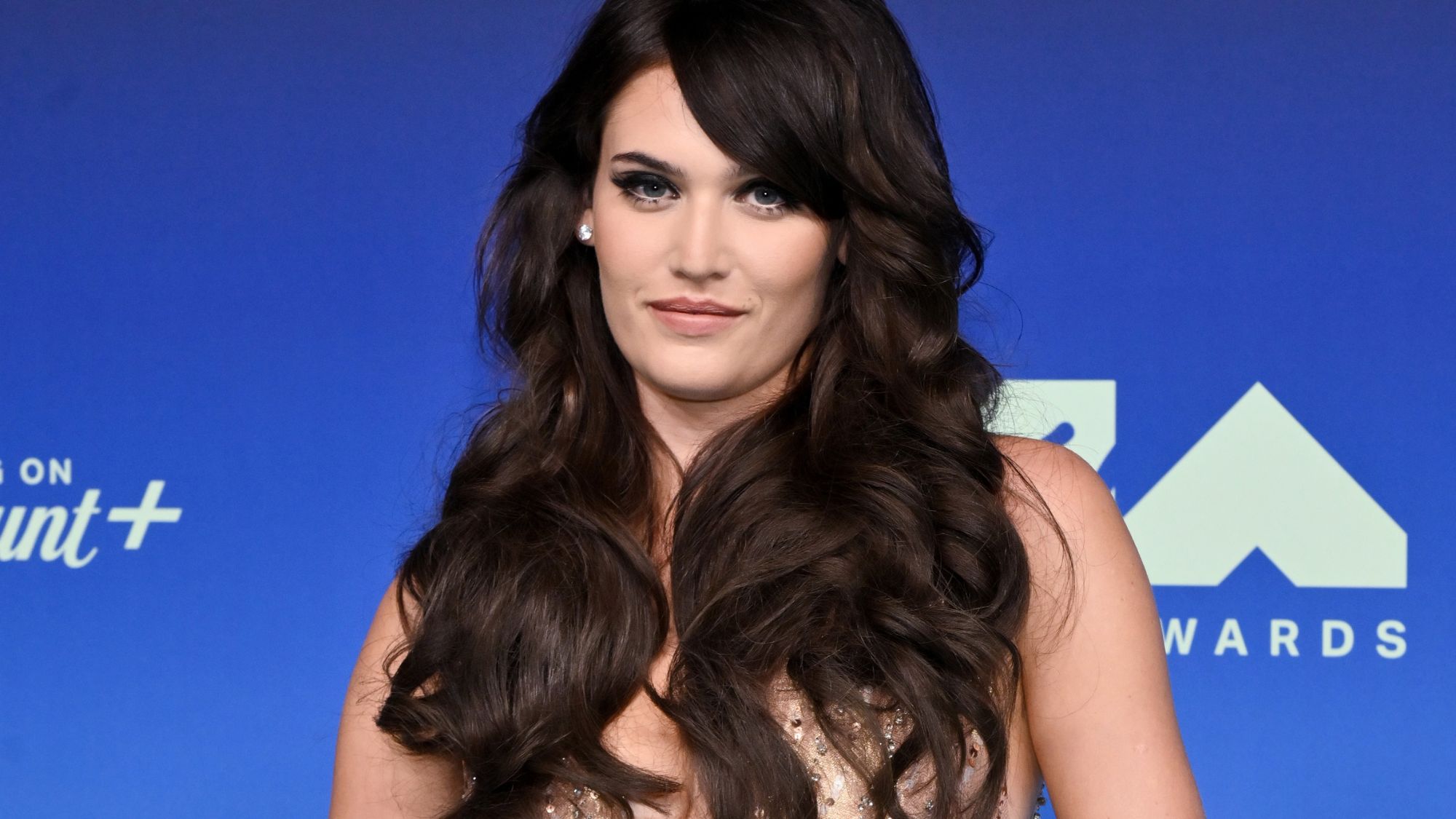
RAYE at the 2026 MTV VMAs
RAYE at the 2026 MTV VMAs. Photo: Getty Images
Sienna Spiro at the 2026 MTV VMAs
Sienna Spiro at the 2026 MTV VMAs. Photo: Michael Buckner / Billboard via Getty Images

The carpet stopped trying to be flattering

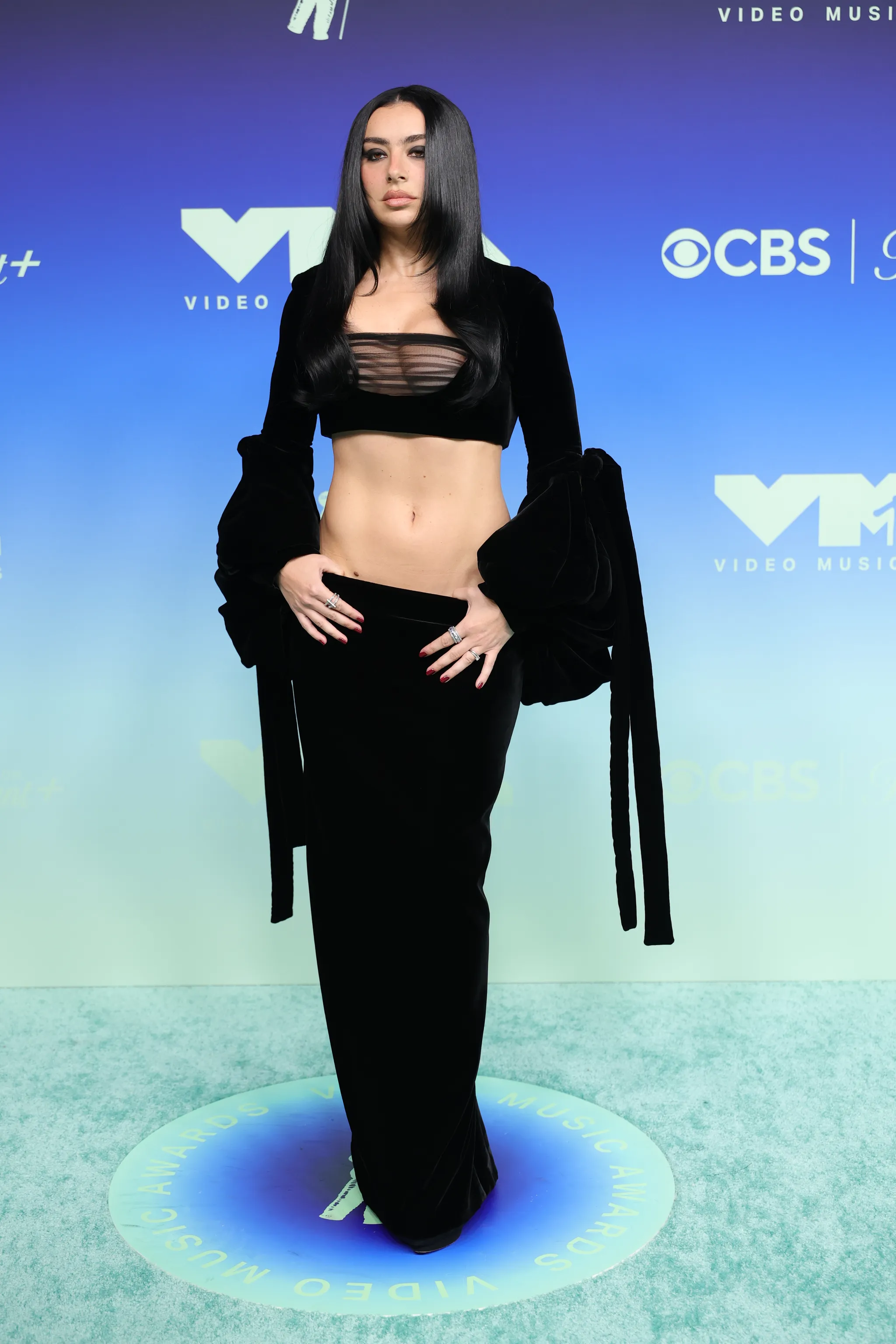
At the VMAs, clothing is not taste. It is evidence: proof that the wearer understands being photographed is a contact sport. Charli’s custom Saint Laurent dropped the waist until the dress seemed to be leaving her body on purpose. Teyana Taylor’s Zuhair Murad looked poured rather than fitted. PinkPantheress made Nina Ricci sweetness feel synthetic and sly. RAYE wore Georges Hobeika with the calm of someone arriving at her own coronation after singing without shoes.

The best silhouettes did not “celebrate the figure.” They argued with it. Waists sank, disappeared or returned as chains. Lace met hardware. Skin became another textile. Romantic clothes acquired bad posture. The carpet looked most modern when the styling refused to resolve into a single adjective.

That is why the night’s fashion worked beyond a best-dressed list. It understood that beauty is more memorable when it carries a little friction. The face does not need to match the dress. The dress does not need to make the body look reasonable. A photograph can be beautiful and still leave the viewer with a question.

Teyana Taylor in Zuhair Murad at the 2026 MTV VMAs
Teyana Taylor in Zuhair Murad. Photo: Getty Images
PinkPantheress in Nina Ricci at the 2026 MTV VMAs
PinkPantheress in Nina Ricci. Photo: Getty Images
RAYE in Georges Hobeika at the 2026 MTV VMAs
RAYE in Georges Hobeika. Photo: Getty Images
LISA at the 2026 MTV VMAs
LISA in The Attico and Quine Li. Photo: Getty Images

Nirvana refused the display case

A Video Vanguard tribute can turn a living influence into expensive furniture. Nirvana did not cooperate. Dave Grohl, Krist Novoselic and Pat Smear stood inside a history the industry has tried to frame neatly for three decades, but the empty space at its centre remained visible. Nobody pretended time had resolved it. That honesty kept the tribute from becoming décor.

Putting Nirvana in the same room as LISA, Charli, Taylor, RAYE and Yung Lean was more than awards-show range. It exposed a shared instinct. Each, in a different language and era, has turned private alienation into public style. The lonely feeling becomes a uniform; the uniform becomes a crowd; the crowd becomes culture.

Legacy is interesting only when it still puts pressure on the present. Nirvana’s appearance did. It did not ask the new performers to kneel before rock history. It made the room feel the damage and freedom that history left behind, then let the next song begin.

Yung Lean at the 2026 MTV VMAs
Yung Lean at the 2026 MTV VMAs. Photo: Getty Images
Dave Grohl, Krist Novoselic and Pat Smear at the 2026 MTV VMAs
Dave Grohl, Krist Novoselic and Pat Smear at the 2026 MTV VMAs. Photo: Getty Images

Pop left the door open

The broadcast drew 8.43 million viewers, its largest audience in eleven years. That figure will be used to say awards shows are back, which is a boring conclusion. The more interesting truth is that people still want a shared image large enough to interrupt the private algorithm. We want to see the same impossible thing at the same time and argue about it before the clip has finished uploading.

The VMAs works when it gives the internet something it cannot generate alone: a room. Not a feed pretending to be one, but an actual collision of bodies, egos, histories and clothes. A place where Madonna can open a cubicle, Charli can walk out, LISA can move the centre, Taylor can wear authorship on her body and a choir can make digital melancholy sound physical.

This year did not restore an old version of pop. It made the institution porous enough for several versions to occupy it at once. That is better than a comeback. It is bad manners with infrastructure.

The astronaut can keep the trophy. The bathroom mirror, the tuk-tuk, the dropped waist, the choir, the bare feet and the open door were the real awards.

Life & Culture
The VMAs Left the Bathroom Door Open
Madonna brought the club, Charli xcx brought the stall, LISA moved pop’s centre to Bangkok and television remembered that good manners have no business in a great pop show.

Text

Noah Cruz

An awards show can count. The VMAs was built to combust. On Sunday night, it remembered the difference. Madonna opened with “It’s mother,” Charli xcx surfaced from a bathroom stall, LISA dropped Bangkok into the middle of Los Angeles and the most polished room in pop spent two hours with its lipstick deliberately outside the lines.

The Moon Person is a trophy for making images, not behaving well. That distinction has always been the show’s only useful rule. Pop does not need another immaculate room where famous people applaud on cue; it needs a live camera, an unstable hierarchy and enough nerve for a performance to leave the stage looking slightly rearranged. The 2026 VMAs had all three.

Its best moments refused the neat logic of a recap. Madonna’s seven wins mattered less than the bathroom she built. Taylor Swift’s record mattered less than the fact that creative control had become part of her silhouette. LISA’s set did not “represent” Thailand for an American audience; it made America look like one stop on a much larger circuit. Nirvana did not arrive as heritage décor. RAYE did not sing like an item in a running order. Everyone brought a private world and pushed until the venue had to contain it.

This is what a real pop spectacle does: it turns proximity into trouble. Generations touch. Genres leak. Couture brushes against a toilet cubicle. The artist who was supposed to receive flowers takes the keys instead. By the end, the VMAs had become less a ceremony than a two-hour dressing room with the door jammed open. Exactly as it should be.

Mother, brat, bathroom

Madonna did not pass a torch. She left Charli the club keys and the code to the bathroom. Her first VMAs performance in 23 years opened with Sabrina Carpenter on “Bring Your Love,” then slipped into “Danceteria Afterhours,” where Charli appeared from behind a stall door. The casting did not announce a lineage. It staged one: three versions of pop femininity occupying the same set without asking which one was supposed to replace the other.

The bathroom was the right room for it. Public life treats it as an interruption; nightlife knows it is headquarters. It is where strangers lend eyeliner, dresses are rebuilt with safety pins and a face can be retired and relaunched before the next song. Nobody behaves like a finished product under a bathroom light. The mirror is too cruel, the queue is too intimate and the door never locks properly.

Making that room the centre of the show turned the usual celebrity image inside out. The VMAs did not present transformation as a polished reveal. It showed the mess around it: the cubicle, the mirror, the women moving in and out of one another’s eras. Madonna was not a monument admiring her influence. She was still manufacturing it in public.

Seven awards followed, including Artist of the Year. Fine. The sharper achievement was refusing the flattering role usually offered to a woman with four decades of history: arrive, receive tribute, bless the younger girls, disappear. Madonna arrived as active material. Charli did not look like her replacement; she looked contaminated in the best possible way. Pop history became something you could catch.

Bangkok was the centre

LISA’s “SaWaDiKa” performance arrived with Thai lettering, a red tuk-tuk and choreography cut hard enough to change the room’s coordinates. There was no explanatory preamble and no diplomatic packaging. Bangkok was not a reference placed inside an American spectacle. For the length of the song, Los Angeles was the visiting city.

That reversal matters because “global pop” is still too often used as polite industry language for success arriving from somewhere the old centres did not expect. LISA made the term look obsolete. Her scale is not a crossover story; it is the story. The audience already lives across languages, time zones and platforms. The stage finally looked like it knew.

The performance also refused the anonymous gloss that can make international superstardom feel like a luxury campaign with a chorus. Its details were specific, loud and unserious enough to be alive. A tuk-tuk had no interest in becoming tasteful scenery. Thai script did not wait to be translated into mood. The set carried its own street logic, then let the cameras orbit it.

Pop’s map has not expanded. It has lost its centre, which is much more exciting. LISA did not ask the VMAs for a seat at the table. She brought an entirely different table, parked it onstage and made everyone else look over.

Control looked expensive

Taylor Swift received the inaugural Artist Director Honor and became the most-awarded artist in VMA history with 33 wins. The numbers are enormous; the idea behind them is better. Pop has always liked women to appear fully formed while keeping the machinery that made them politely out of frame. Swift has spent years dragging that machinery forward: directing, editing, owning, timing, casting and turning the business of the image into part of the image itself.

Her Tamara Ralph look made control visible without making it dull. The dress had the posture of a final decision. It did not suggest a singer waiting to be adorned; it suggested the person who had already approved the set, chosen the lens and moved the release date. In a culture still addicted to the fantasy that female success simply happens to beautiful women, competence can be scandalous styling.

Video of the Year for “The Fate of Ophelia,” Direction for “Opalite” and the premiere of “Patient Zero,” featuring Colin Farrell and Dakota Johnson, completed the picture. Singing is now one department inside the Taylor Swift project. The auteur is no longer hiding behind the pop star. They arrived wearing the same dress.

Taylor Swift at the 2026 MTV VMAs
Taylor Swift at the 2026 MTV VMAs. Photo: Getty Images
LISA at the 2026 MTV VMAs
LISA at the 2026 MTV VMAs. Photo: Getty Images

The stage had no dress code

RAYE arrived in fur, shed it for red lace and sang barefoot among violins. It was old glamour with its shoes kicked off: precise, physical and far too hungry to become tasteful. Her voice does not decorate a song. It puts the song on trial, finds it guilty and kisses it on the way out.

Sienna Spiro performed “Great Expectation” in a metal mini that looked transmitted from a nightclub three years in the future. Yung Lean and GENER8ION brought a school-uniform choir to “STORM II,” turning internet melancholy into a secular hymn. Shaboozey built a saloon and let it burn. Each set had its own nervous system. None behaved like an advert waiting for a cutdown.

That difference is the entire point of live pop. The feed can distribute an image endlessly, but it cannot give it weight. A choir changes the air. Violins take up physical space. Fire changes the temperature. Bare feet make the floor real. The screen becomes interesting again when the body on it appears capable of disobeying the edit.

RAYE at the 2026 MTV VMAs
RAYE at the 2026 MTV VMAs. Photo: Getty Images
Sienna Spiro at the 2026 MTV VMAs
Sienna Spiro at the 2026 MTV VMAs. Photo: Michael Buckner / Billboard via Getty Images

The carpet stopped trying to be flattering

At the VMAs, clothing is not taste. It is evidence: proof that the wearer understands being photographed is a contact sport. Charli’s custom Saint Laurent dropped the waist until the dress seemed to be leaving her body on purpose. Teyana Taylor’s Zuhair Murad looked poured rather than fitted. PinkPantheress made Nina Ricci sweetness feel synthetic and sly. RAYE wore Georges Hobeika with the calm of someone arriving at her own coronation after singing without shoes.

The best silhouettes did not “celebrate the figure.” They argued with it. Waists sank, disappeared or returned as chains. Lace met hardware. Skin became another textile. Romantic clothes acquired bad posture. The carpet looked most modern when the styling refused to resolve into a single adjective.

That is why the night’s fashion worked beyond a best-dressed list. It understood that beauty is more memorable when it carries a little friction. The face does not need to match the dress. The dress does not need to make the body look reasonable. A photograph can be beautiful and still leave the viewer with a question.

Teyana Taylor in Zuhair Murad at the 2026 MTV VMAs
Teyana Taylor in Zuhair Murad. Photo: Getty Images
PinkPantheress in Nina Ricci at the 2026 MTV VMAs
PinkPantheress in Nina Ricci. Photo: Getty Images
RAYE in Georges Hobeika at the 2026 MTV VMAs
RAYE in Georges Hobeika. Photo: Getty Images
LISA at the 2026 MTV VMAs
LISA in The Attico and Quine Li. Photo: Getty Images

Nirvana refused the display case

A Video Vanguard tribute can turn a living influence into expensive furniture. Nirvana did not cooperate. Dave Grohl, Krist Novoselic and Pat Smear stood inside a history the industry has tried to frame neatly for three decades, but the empty space at its centre remained visible. Nobody pretended time had resolved it. That honesty kept the tribute from becoming décor.

Putting Nirvana in the same room as LISA, Charli, Taylor, RAYE and Yung Lean was more than awards-show range. It exposed a shared instinct. Each, in a different language and era, has turned private alienation into public style. The lonely feeling becomes a uniform; the uniform becomes a crowd; the crowd becomes culture.

Legacy is interesting only when it still puts pressure on the present. Nirvana’s appearance did. It did not ask the new performers to kneel before rock history. It made the room feel the damage and freedom that history left behind, then let the next song begin.

Yung Lean at the 2026 MTV VMAs
Yung Lean at the 2026 MTV VMAs. Photo: Getty Images
Dave Grohl, Krist Novoselic and Pat Smear at the 2026 MTV VMAs
Dave Grohl, Krist Novoselic and Pat Smear at the 2026 MTV VMAs. Photo: Getty Images

Pop left the door open

The broadcast drew 8.43 million viewers, its largest audience in eleven years. That figure will be used to say awards shows are back, which is a boring conclusion. The more interesting truth is that people still want a shared image large enough to interrupt the private algorithm. We want to see the same impossible thing at the same time and argue about it before the clip has finished uploading.

The VMAs works when it gives the internet something it cannot generate alone: a room. Not a feed pretending to be one, but an actual collision of bodies, egos, histories and clothes. A place where Madonna can open a cubicle, Charli can walk out, LISA can move the centre, Taylor can wear authorship on her body and a choir can make digital melancholy sound physical.

This year did not restore an old version of pop. It made the institution porous enough for several versions to occupy it at once. That is better than a comeback. It is bad manners with infrastructure.

The astronaut can keep the trophy. The bathroom mirror, the tuk-tuk, the dropped waist, the choir, the bare feet and the open door were the real awards.

Life & Culture
The VMAs Left the Bathroom Door Open
Madonna brought the club, Charli xcx brought the stall, LISA moved pop’s centre to Bangkok and television remembered that good manners have no business in a great pop show.

Text

Noah Cruz

An awards show can count. The VMAs was built to combust. On Sunday night, it remembered the difference. Madonna opened with “It’s mother,” Charli xcx surfaced from a bathroom stall, LISA dropped Bangkok into the middle of Los Angeles and the most polished room in pop spent two hours with its lipstick deliberately outside the lines.

The Moon Person is a trophy for making images, not behaving well. That distinction has always been the show’s only useful rule. Pop does not need another immaculate room where famous people applaud on cue; it needs a live camera, an unstable hierarchy and enough nerve for a performance to leave the stage looking slightly rearranged. The 2026 VMAs had all three.

Its best moments refused the neat logic of a recap. Madonna’s seven wins mattered less than the bathroom she built. Taylor Swift’s record mattered less than the fact that creative control had become part of her silhouette. LISA’s set did not “represent” Thailand for an American audience; it made America look like one stop on a much larger circuit. Nirvana did not arrive as heritage décor. RAYE did not sing like an item in a running order. Everyone brought a private world and pushed until the venue had to contain it.

This is what a real pop spectacle does: it turns proximity into trouble. Generations touch. Genres leak. Couture brushes against a toilet cubicle. The artist who was supposed to receive flowers takes the keys instead. By the end, the VMAs had become less a ceremony than a two-hour dressing room with the door jammed open. Exactly as it should be.

Mother, brat, bathroom

Madonna did not pass a torch. She left Charli the club keys and the code to the bathroom. Her first VMAs performance in 23 years opened with Sabrina Carpenter on “Bring Your Love,” then slipped into “Danceteria Afterhours,” where Charli appeared from behind a stall door. The casting did not announce a lineage. It staged one: three versions of pop femininity occupying the same set without asking which one was supposed to replace the other.

The bathroom was the right room for it. Public life treats it as an interruption; nightlife knows it is headquarters. It is where strangers lend eyeliner, dresses are rebuilt with safety pins and a face can be retired and relaunched before the next song. Nobody behaves like a finished product under a bathroom light. The mirror is too cruel, the queue is too intimate and the door never locks properly.

Making that room the centre of the show turned the usual celebrity image inside out. The VMAs did not present transformation as a polished reveal. It showed the mess around it: the cubicle, the mirror, the women moving in and out of one another’s eras. Madonna was not a monument admiring her influence. She was still manufacturing it in public.

Seven awards followed, including Artist of the Year. Fine. The sharper achievement was refusing the flattering role usually offered to a woman with four decades of history: arrive, receive tribute, bless the younger girls, disappear. Madonna arrived as active material. Charli did not look like her replacement; she looked contaminated in the best possible way. Pop history became something you could catch.

Bangkok was the centre

LISA’s “SaWaDiKa” performance arrived with Thai lettering, a red tuk-tuk and choreography cut hard enough to change the room’s coordinates. There was no explanatory preamble and no diplomatic packaging. Bangkok was not a reference placed inside an American spectacle. For the length of the song, Los Angeles was the visiting city.

That reversal matters because “global pop” is still too often used as polite industry language for success arriving from somewhere the old centres did not expect. LISA made the term look obsolete. Her scale is not a crossover story; it is the story. The audience already lives across languages, time zones and platforms. The stage finally looked like it knew.

The performance also refused the anonymous gloss that can make international superstardom feel like a luxury campaign with a chorus. Its details were specific, loud and unserious enough to be alive. A tuk-tuk had no interest in becoming tasteful scenery. Thai script did not wait to be translated into mood. The set carried its own street logic, then let the cameras orbit it.

Pop’s map has not expanded. It has lost its centre, which is much more exciting. LISA did not ask the VMAs for a seat at the table. She brought an entirely different table, parked it onstage and made everyone else look over.

Control looked expensive

Taylor Swift received the inaugural Artist Director Honor and became the most-awarded artist in VMA history with 33 wins. The numbers are enormous; the idea behind them is better. Pop has always liked women to appear fully formed while keeping the machinery that made them politely out of frame. Swift has spent years dragging that machinery forward: directing, editing, owning, timing, casting and turning the business of the image into part of the image itself.

Her Tamara Ralph look made control visible without making it dull. The dress had the posture of a final decision. It did not suggest a singer waiting to be adorned; it suggested the person who had already approved the set, chosen the lens and moved the release date. In a culture still addicted to the fantasy that female success simply happens to beautiful women, competence can be scandalous styling.

Video of the Year for “The Fate of Ophelia,” Direction for “Opalite” and the premiere of “Patient Zero,” featuring Colin Farrell and Dakota Johnson, completed the picture. Singing is now one department inside the Taylor Swift project. The auteur is no longer hiding behind the pop star. They arrived wearing the same dress.

Taylor Swift at the 2026 MTV VMAs
Taylor Swift at the 2026 MTV VMAs. Photo: Getty Images
LISA at the 2026 MTV VMAs
LISA at the 2026 MTV VMAs. Photo: Getty Images

The stage had no dress code

RAYE arrived in fur, shed it for red lace and sang barefoot among violins. It was old glamour with its shoes kicked off: precise, physical and far too hungry to become tasteful. Her voice does not decorate a song. It puts the song on trial, finds it guilty and kisses it on the way out.

Sienna Spiro performed “Great Expectation” in a metal mini that looked transmitted from a nightclub three years in the future. Yung Lean and GENER8ION brought a school-uniform choir to “STORM II,” turning internet melancholy into a secular hymn. Shaboozey built a saloon and let it burn. Each set had its own nervous system. None behaved like an advert waiting for a cutdown.

That difference is the entire point of live pop. The feed can distribute an image endlessly, but it cannot give it weight. A choir changes the air. Violins take up physical space. Fire changes the temperature. Bare feet make the floor real. The screen becomes interesting again when the body on it appears capable of disobeying the edit.

RAYE at the 2026 MTV VMAs
RAYE at the 2026 MTV VMAs. Photo: Getty Images
Sienna Spiro at the 2026 MTV VMAs
Sienna Spiro at the 2026 MTV VMAs. Photo: Michael Buckner / Billboard via Getty Images

The carpet stopped trying to be flattering

At the VMAs, clothing is not taste. It is evidence: proof that the wearer understands being photographed is a contact sport. Charli’s custom Saint Laurent dropped the waist until the dress seemed to be leaving her body on purpose. Teyana Taylor’s Zuhair Murad looked poured rather than fitted. PinkPantheress made Nina Ricci sweetness feel synthetic and sly. RAYE wore Georges Hobeika with the calm of someone arriving at her own coronation after singing without shoes.

The best silhouettes did not “celebrate the figure.” They argued with it. Waists sank, disappeared or returned as chains. Lace met hardware. Skin became another textile. Romantic clothes acquired bad posture. The carpet looked most modern when the styling refused to resolve into a single adjective.

That is why the night’s fashion worked beyond a best-dressed list. It understood that beauty is more memorable when it carries a little friction. The face does not need to match the dress. The dress does not need to make the body look reasonable. A photograph can be beautiful and still leave the viewer with a question.

Teyana Taylor in Zuhair Murad at the 2026 MTV VMAs
Teyana Taylor in Zuhair Murad. Photo: Getty Images
PinkPantheress in Nina Ricci at the 2026 MTV VMAs
PinkPantheress in Nina Ricci. Photo: Getty Images
RAYE in Georges Hobeika at the 2026 MTV VMAs
RAYE in Georges Hobeika. Photo: Getty Images
LISA at the 2026 MTV VMAs
LISA in The Attico and Quine Li. Photo: Getty Images

Nirvana refused the display case

A Video Vanguard tribute can turn a living influence into expensive furniture. Nirvana did not cooperate. Dave Grohl, Krist Novoselic and Pat Smear stood inside a history the industry has tried to frame neatly for three decades, but the empty space at its centre remained visible. Nobody pretended time had resolved it. That honesty kept the tribute from becoming décor.

Putting Nirvana in the same room as LISA, Charli, Taylor, RAYE and Yung Lean was more than awards-show range. It exposed a shared instinct. Each, in a different language and era, has turned private alienation into public style. The lonely feeling becomes a uniform; the uniform becomes a crowd; the crowd becomes culture.

Legacy is interesting only when it still puts pressure on the present. Nirvana’s appearance did. It did not ask the new performers to kneel before rock history. It made the room feel the damage and freedom that history left behind, then let the next song begin.

Yung Lean at the 2026 MTV VMAs
Yung Lean at the 2026 MTV VMAs. Photo: Getty Images
Dave Grohl, Krist Novoselic and Pat Smear at the 2026 MTV VMAs
Dave Grohl, Krist Novoselic and Pat Smear at the 2026 MTV VMAs. Photo: Getty Images

Pop left the door open

The broadcast drew 8.43 million viewers, its largest audience in eleven years. That figure will be used to say awards shows are back, which is a boring conclusion. The more interesting truth is that people still want a shared image large enough to interrupt the private algorithm. We want to see the same impossible thing at the same time and argue about it before the clip has finished uploading.

The VMAs works when it gives the internet something it cannot generate alone: a room. Not a feed pretending to be one, but an actual collision of bodies, egos, histories and clothes. A place where Madonna can open a cubicle, Charli can walk out, LISA can move the centre, Taylor can wear authorship on her body and a choir can make digital melancholy sound physical.

This year did not restore an old version of pop. It made the institution porous enough for several versions to occupy it at once. That is better than a comeback. It is bad manners with infrastructure.

The astronaut can keep the trophy. The bathroom mirror, the tuk-tuk, the dropped waist, the choir, the bare feet and the open door were the real awards.

Get Frenzy straight to your inbox!
Latest