Before Cristiano Ronaldo became CR7™—the immaculate haircut, the sculpted campaign face, the polished empire—he dressed like every pavement was a paparazzi call and every departure lounge had a guest list. Pink knit. Low-slung denim. A belt buckle announcing its own arrival. Gen Z has found the old photographs, sent them round TikTok, and reached a devastating verdict: the world lost a diva.
“Metrosexual” was the anxious little word the 2000s reached for when a famous man cared too visibly about getting dressed. It described grooming, not sexuality, and revealed more about the culture than the person. Ronaldo had better things to do than apologise to it. His wardrobe was fitted, flashy, occasionally absurd and completely committed. These are the looks worth digging up—not another safe suit holding another trophy.

Even in black, he refused to disappear. The neckline dropped, the fabric clung, a fine gold chain traced the exposed skin. Arms folded; eyes doing the rest. Nothing about it was accidental.


The knitwear deserves its own transfer fee. A pastel-pink sweater over a peeking white shirt, distressed jeans and a belt buckle roughly the size of his confidence. Then the red V-neck in 2008: open white collar, faded denim, jewellery, sunglasses hanging on the chest. Prep school had been dragged through a VIP room. Neither outfit asked whether pink or red was “too much” for a footballer. That was exactly why they worked.


And then there were the bags. A plum polo pulled taut, collar flipped, sunglasses on, leather pouch under one arm. Elsewhere, a champagne-coloured jacket and a Gucci monogram case carried with the seriousness of a match-day trophy. The details are wonderfully specific: high-shine watch, chain, logo buckle. He was accessorising like the airport was a nightclub and the nightclub was a runway.

In June 2009, on holiday in Sardinia, he made the whole decade look underdressed: powder-blue polo, tiny white shorts, pink cap, pink flower tucked behind an ear. The contemporary coverage treated it like a provocation. It was. Not because a man wore pink, but because he seemed to enjoy how badly everyone else wanted to police it.
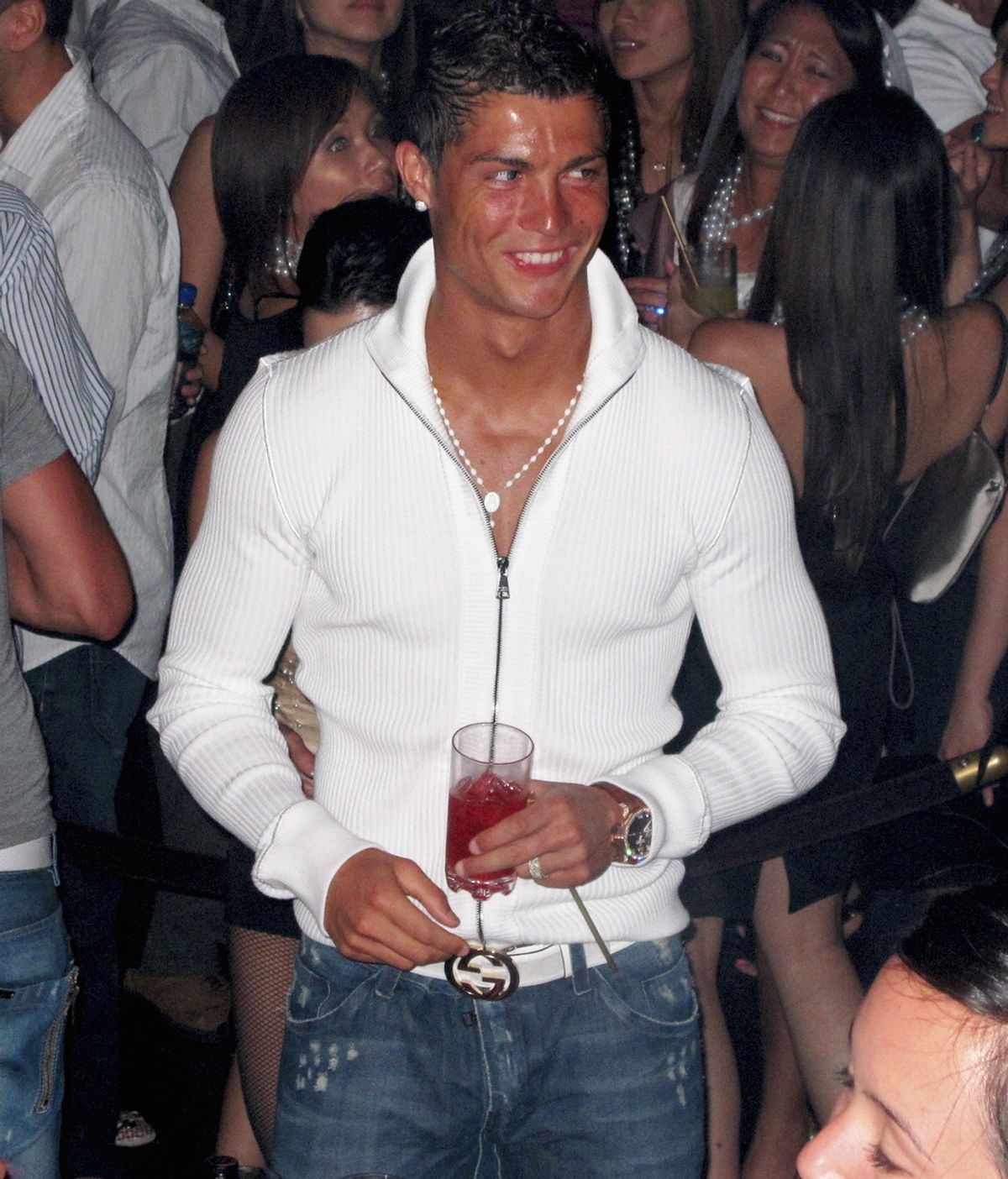
By June 2009, the afterparty had its own uniform. At XS Nightclub in Las Vegas: a white ribbed zip-up pulled tight, pearls at the open throat, jeans riding low, Gucci at the waist and a blood-red drink in hand. The zip stopped precisely where it needed to. He knew the camera was there. Of course he did.
That is what makes the old images feel so alive in today’s fashion edits. They are not just jokes about gel, earrings and aggressively endangered top buttons. They catch a celebrity before every appearance was made to obey one immaculate brand identity. Some of the fits are ridiculous. Excellent. Fashion is allowed to be. Ronaldo still knows how to dress, but the 2000s version dressed like the afterparty could break out anywhere—and he intended to be its best-dressed guest. The archive is still doing the rounds.