Music
Troye Sivan Is Redefining What a Gay Pop Star Is Allowed to Be
From the sweaty abandon of “Rush” to the aching romanticism of “FF”, Troye Sivan is challenging the narrow expectations placed on queer desire. But are we really ready to let gay pop be as messy, vulnerable and contradictory as straight pop?

Text

Simone Margett

Troye Sivan may have started on YouTube but now he’s created something of a queer pop icon. His new music video for “FF” in which he said “the gayest music video of my career” on social media opens up a world of sensuality, physical intimacy and unabashed gay desire. 

There is something I find genuinely moving about watching Troye Sivan want someone. Not because a gay man expressing desire should be remarkable in 2026, but because his music makes room for desire to be so many different things. It can be sweaty, playful and unapologetically sexual. It can also be lonely, sentimental, irrational and directed towards someone who does not exist in your life yet. 

Troye Sivan’s “FF” makes a compelling case for queer desire that doesn’t need to be softened or explained. I keep returning to the video because its portrayal of yearning is so beautiful, capturing the ache of wanting someone alongside the thrill of attraction. The chemistry between Sivan and Swiss actor Felix Mayr gives the video an intimacy that feels both tender and unmistakably sensual and Mayr’s screen presence is hard to ignore (many of us have also developed a new crush). As Sivan explained in his Vogue interview, “FF” is a love story about a relationship he imagines having in the future. It is a fantasy, but that does not make its feelings any less real. The song captures a particular kind of loneliness: not simply missing someone, but missing someone you have not met.

Watch: FF (Official Video) / Troye Sivan ↗

But it also raises a wider question about how that desire is received in pop culture. Criticism that Sivan’s public image revolves around his sexuality exposes a persistent double standard: heterosexuality is so ubiquitous that it rarely needs explaining, while queer artists can be accused of making their identity their entire brand simply by expressing their desire openly. Why, then, is gay desire still expected to justify its place in pop?

His artistry makes room for softness, sensuality and vulnerability without treating them as opposites to masculinity. He can be playful and provocative, delicate and sexually confident, without having to choose between these identities. In a genre where male pop stars have often been expected to project conventional masculinity, there is something refreshing about an artist who refuses to make himself smaller to fit those expectations.

That is what makes “FF” more interesting than a celebration of sexual freedom. It is not simply about being allowed to want somebody. It is about being allowed to want everything that might come with them.

Gay pop deserves to be horny, certainly. But it also deserves to be romantic, ridiculous, vulnerable and complicated. And Sivan's work makes me wonder why we still need reminding.

Revisiting Sivan's earlier work makes the evolution particularly striking. The “Blue Neighbourhood” trilogy, comprising “WILD”, “FOOLS” and “TALK ME DOWN”, follows a same-sex relationship from childhood friendship and first love to heartbreak and its devastating aftermath. The storytelling is cinematic, but its emotional vocabulary is familiar: the excitement of discovering somebody, the pain of losing them, the fear that love might not be enough.

What stayed with me about these videos was how little they asked the audience to do beyond recognise the relationship for what it was. This was not a gay romance that needed to explain itself. It was simply a romance, with all the tenderness and tragedy that entails. As the Recording Academy noted in its interview with Sivan, the trilogy also carried a wider message about LGBTQ+ suicide. Its emotional power lies partly in the tension between that social context and the specificity of the love story itself.

Then came “Bloom”, with its suggestive imagery and playful sensuality. The video is flirtatious without being embarrassed about it. Desire is no longer simply the beginning of a relationship or the prelude to heartbreak; it is something to explore, anticipate and enjoy.

By the time Sivan released “Rush” in 2023, he was inhabiting an altogether different world. Its sweaty bodies, exuberant choreography and unapologetically sexual imagery evoke the exhilaration of queer nightlife. There is no coming-out narrative here, no requirement to demonstrate that gay people can love deeply or suffer meaningfully. The point is pleasure. I love that the video does not make pleasure look particularly tidy. It is physical, communal and a little overwhelming. Watching it, I am struck by how rarely queer men have been allowed to occupy this kind of space in mainstream pop without their sexuality becoming a controversy in itself.

Watch: Rush (Official Video) / Troye Sivan ↗

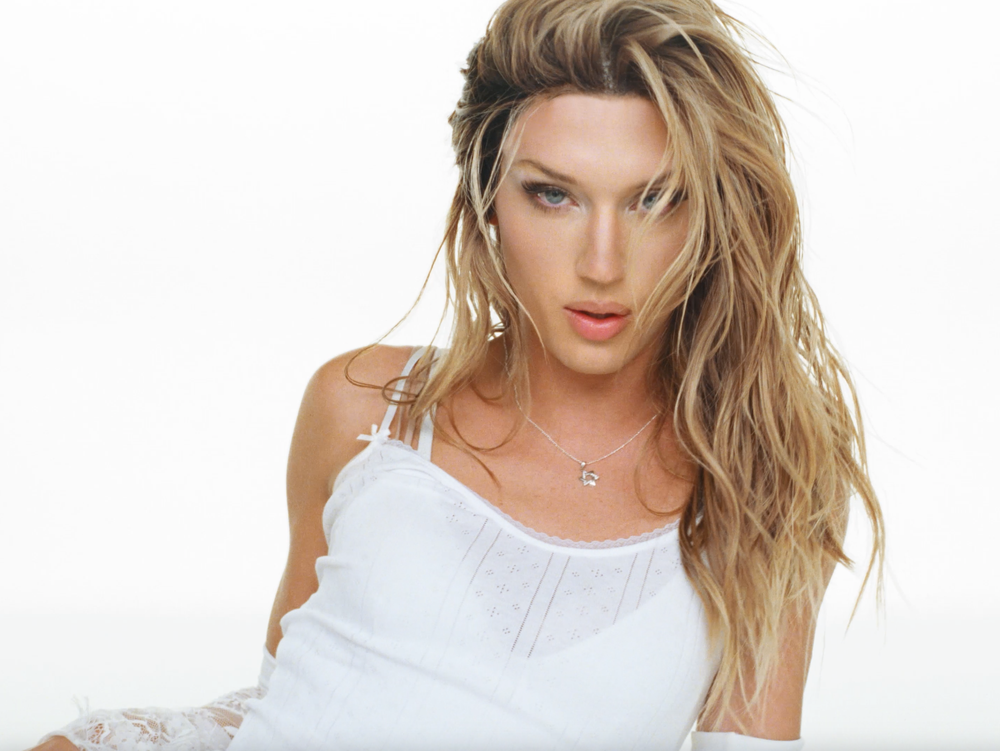
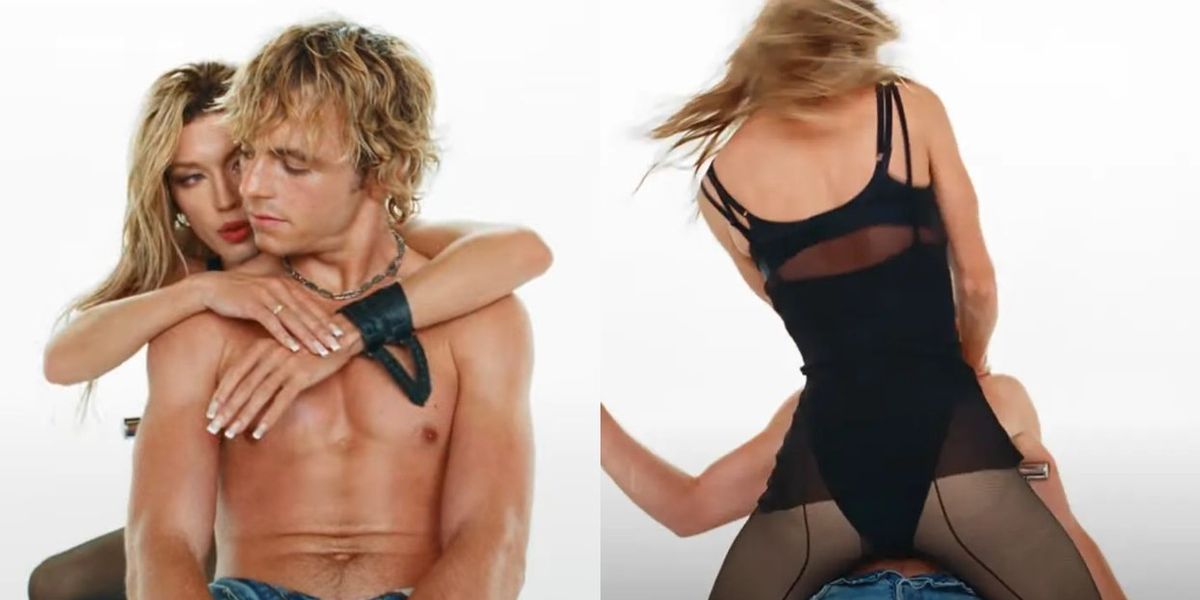
In “Got Me Started”, he moves through the streets and clubs of Bangkok, surrounded by dancers, performers and queer community. Its exuberance is infectious, but there is also a sense of connection that complicates any reading of the video as merely a celebration of sex. Meanwhile, “One of Your Girls”, featuring Ross Lynch, plays with femininity, performance and the power of being desired. Sivan's transformation into a glamorous, feminine figure complicates the relationship between masculinity and attraction without pretending to resolve it.

These videos are not chapters in a neat story about a gay man finally becoming comfortable with himself. They show an artist moving between different versions of desire, none of which cancels out the others.

That matters to me because queer representation can sometimes feel as though it comes with an instruction manual. We celebrate the coming-out story, the first kiss, the wholesome relationship. We celebrate the moment an artist becomes visible. But what happens after visibility? Are queer people allowed to be ordinary, difficult, horny, lonely, selfish, sentimental or simply unsure what they want?

Troye Sivan seems increasingly uninterested in choosing just one answer.

Straight male pop stars have spent decades building their identities around women: wanting them, losing them, idealising them, regretting them. Their desire is not automatically treated as the sum total of their identities. A love song about a woman can be universal; a music video featuring a man and a woman kissing rarely requires a paragraph of justification.

But when gay men express the same feelings, their sexuality can become the headline rather than the starting point.

I do not think every reaction to queer pop is hostile, nor do I think every sexual image needs to carry the same cultural significance. Sivan's mainstream visibility is something worth celebrating. But visibility and freedom are not interchangeable. An artist can be welcomed into the mainstream while still being expected to make their identity legible, reassuring or useful to an audience.

There is a particular burden in being treated as representative. Queer artists are frequently asked, implicitly or explicitly, to educate, inspire and demonstrate progress. Their work becomes evidence of how far society has come. Even sexual liberation can turn into a performance of respectability: be confident, but not too explicit; be visible, but not threatening; be queer, but make sure everyone understands what your queerness means.

The irony is that sex and romance are not inherently more complicated when the people involved are gay. They are complicated because people are complicated. We can want sex without commitment, commitment without certainty, or a relationship that exists first as a fantasy. We can crave intimacy and be frightened of it. We can be confident in our bodies and still feel lonely.

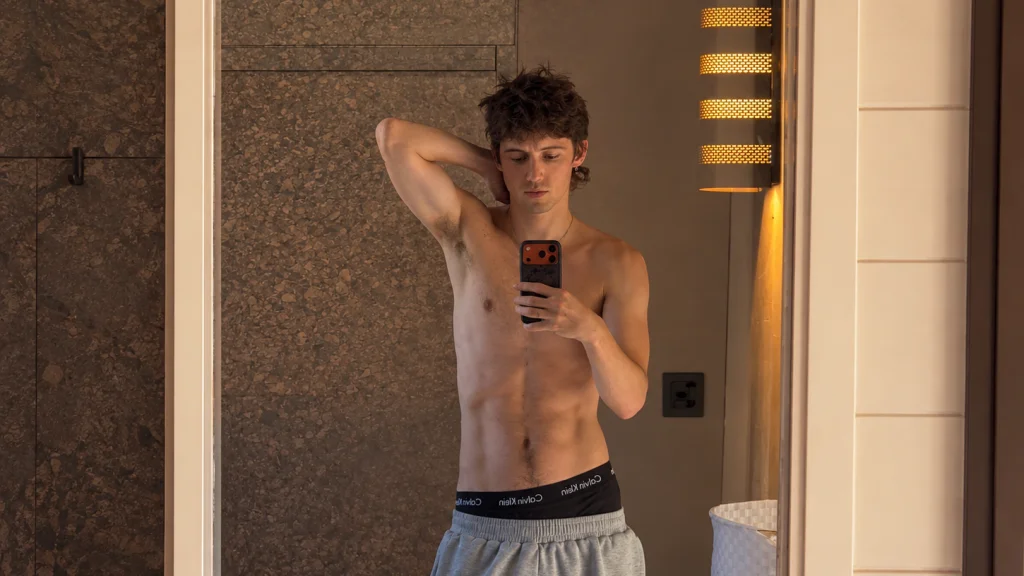
Troye Sivan in an intimate portrait for Vogue
Troye Sivan · Vogue ↗.

Sivan's work allows these contradictions to coexist without turning each one into a lesson.

Queer pop has a long history of challenging the limits of what mainstream audiences are willing to accept. David Bowie blurred the boundaries of masculinity with his androgynous glam-rock persona, while Freddie Mercury pushed the theatricality of male rock stardom to exhilarating extremes. Prince played with gender, sensuality and sexual ambiguity, refusing to be confined by conventional ideas of masculinity. Frankie Goes to Hollywood provoked controversy with the unapologetic sexuality of “Relax”, while George Michael’s “Outside” (1998) transformed a public scandal into a celebration of sexual freedom.

These artists didn’t all share the same identity or relationship with queerness, but their work challenged expectations around gender, sexuality and performance. Their legacies remind us that queer expression in pop isn’t new. What has changed is how much space artists are allowed to take up and the conditions attached to that freedom. 

This is why I keep returning to “FF”. Its sensuality is not at odds with its vulnerability; the two depend on each other. The video invites us to look at two men being physically intimate, but the song is preoccupied with a future that has not happened. The desire is real, even if its object remains partly imagined.

There is something beautifully irrational about that. Who has not built a fantasy around a person they barely know, or longed for a relationship before it has had the chance to exist? The experience is universal, but Sivan gives it a specifically queer setting without making it a problem to be solved.

I do not want every gay pop song to be explicit, any more than I want every queer love story to end happily. The freedom I am arguing for includes the freedom to be chaste, ambiguous, romantic, messy or completely uninterested in romance. The point is not that queer artists should have to express their sexuality. It is that they should not have to justify the forms that expression takes.

“Rush” and “FF” are particularly revealing when viewed together. One is a celebration of pleasure in the present; the other is a longing for a future that may never arrive. One is communal, physical and immediate. The other is intimate, imagined and tender. Neither is more authentically queer than the other. Both are part of the same emotional world.

That is what genuine representation should make possible: not just the opportunity to be seen, but the freedom to contradict yourself once you are.

I want gay pop to be allowed the same glorious excess as straight pop. I want it to be horny without apology, romantic without embarrassment and vulnerable without being reduced to a lesson about identity. I want queer artists to make music about wanting somebody simply because wanting somebody is one of the most ordinary, extraordinary things we do.

Troye Sivan is not just making room for gay desire in mainstream pop. He is making room for its contradictions. And perhaps that is the more meaningful kind of progress: not having to prove that queer people can love, lust or yearn, but finally being allowed to do all three without explanation.

Music
Troye Sivan Is Redefining What a Gay Pop Star Is Allowed to Be
From the sweaty abandon of “Rush” to the aching romanticism of “FF”, Troye Sivan is challenging the narrow expectations placed on queer desire. But are we really ready to let gay pop be as messy, vulnerable and contradictory as straight pop?

Text

Simone Margett

Troye Sivan may have started on YouTube but now he’s created something of a queer pop icon. His new music video for “FF” in which he said “the gayest music video of my career” on social media opens up a world of sensuality, physical intimacy and unabashed gay desire. 

There is something I find genuinely moving about watching Troye Sivan want someone. Not because a gay man expressing desire should be remarkable in 2026, but because his music makes room for desire to be so many different things. It can be sweaty, playful and unapologetically sexual. It can also be lonely, sentimental, irrational and directed towards someone who does not exist in your life yet. 

Troye Sivan’s “FF” makes a compelling case for queer desire that doesn’t need to be softened or explained. I keep returning to the video because its portrayal of yearning is so beautiful, capturing the ache of wanting someone alongside the thrill of attraction. The chemistry between Sivan and Swiss actor Felix Mayr gives the video an intimacy that feels both tender and unmistakably sensual and Mayr’s screen presence is hard to ignore (many of us have also developed a new crush). As Sivan explained in his Vogue interview, “FF” is a love story about a relationship he imagines having in the future. It is a fantasy, but that does not make its feelings any less real. The song captures a particular kind of loneliness: not simply missing someone, but missing someone you have not met.

Watch: FF (Official Video) / Troye Sivan ↗

But it also raises a wider question about how that desire is received in pop culture. Criticism that Sivan’s public image revolves around his sexuality exposes a persistent double standard: heterosexuality is so ubiquitous that it rarely needs explaining, while queer artists can be accused of making their identity their entire brand simply by expressing their desire openly. Why, then, is gay desire still expected to justify its place in pop?

His artistry makes room for softness, sensuality and vulnerability without treating them as opposites to masculinity. He can be playful and provocative, delicate and sexually confident, without having to choose between these identities. In a genre where male pop stars have often been expected to project conventional masculinity, there is something refreshing about an artist who refuses to make himself smaller to fit those expectations.

That is what makes “FF” more interesting than a celebration of sexual freedom. It is not simply about being allowed to want somebody. It is about being allowed to want everything that might come with them.

Gay pop deserves to be horny, certainly. But it also deserves to be romantic, ridiculous, vulnerable and complicated. And Sivan's work makes me wonder why we still need reminding.

Revisiting Sivan's earlier work makes the evolution particularly striking. The “Blue Neighbourhood” trilogy, comprising “WILD”, “FOOLS” and “TALK ME DOWN”, follows a same-sex relationship from childhood friendship and first love to heartbreak and its devastating aftermath. The storytelling is cinematic, but its emotional vocabulary is familiar: the excitement of discovering somebody, the pain of losing them, the fear that love might not be enough.

What stayed with me about these videos was how little they asked the audience to do beyond recognise the relationship for what it was. This was not a gay romance that needed to explain itself. It was simply a romance, with all the tenderness and tragedy that entails. As the Recording Academy noted in its interview with Sivan, the trilogy also carried a wider message about LGBTQ+ suicide. Its emotional power lies partly in the tension between that social context and the specificity of the love story itself.

Then came “Bloom”, with its suggestive imagery and playful sensuality. The video is flirtatious without being embarrassed about it. Desire is no longer simply the beginning of a relationship or the prelude to heartbreak; it is something to explore, anticipate and enjoy.
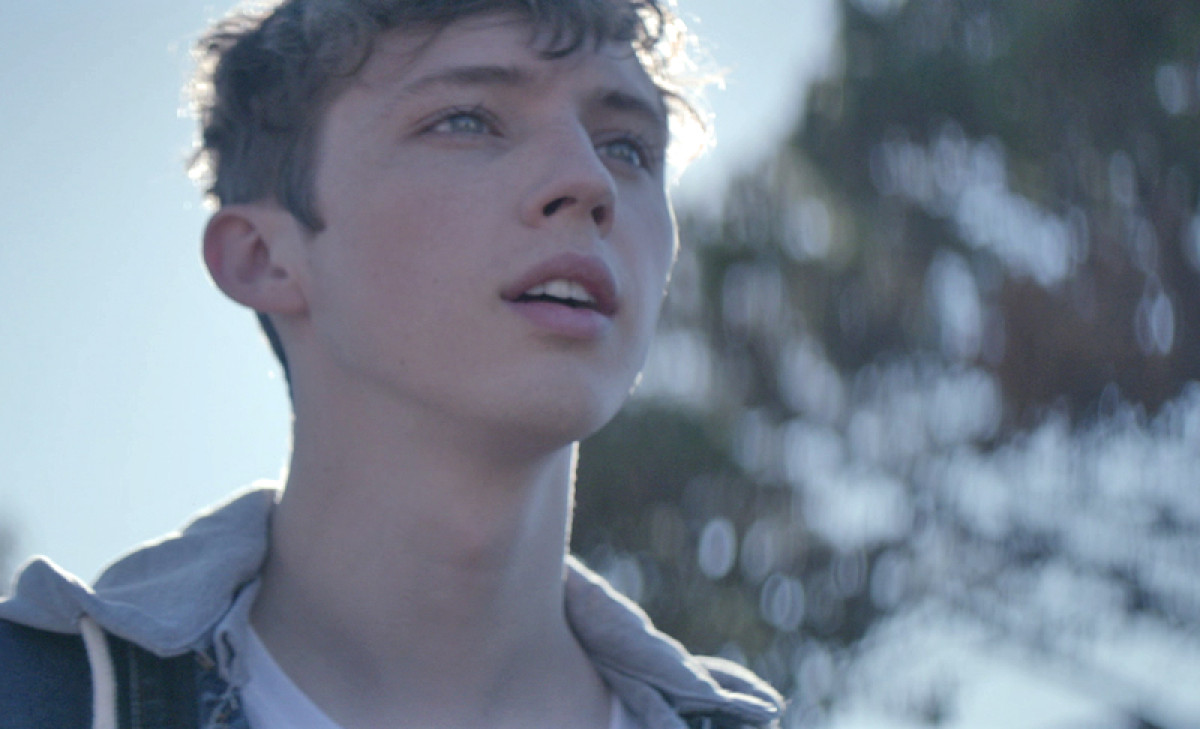
By the time Sivan released “Rush” in 2023, he was inhabiting an altogether different world. Its sweaty bodies, exuberant choreography and unapologetically sexual imagery evoke the exhilaration of queer nightlife. There is no coming-out narrative here, no requirement to demonstrate that gay people can love deeply or suffer meaningfully. The point is pleasure. I love that the video does not make pleasure look particularly tidy. It is physical, communal and a little overwhelming. Watching it, I am struck by how rarely queer men have been allowed to occupy this kind of space in mainstream pop without their sexuality becoming a controversy in itself.

Watch: Rush (Official Video) / Troye Sivan ↗

In “Got Me Started”, he moves through the streets and clubs of Bangkok, surrounded by dancers, performers and queer community. Its exuberance is infectious, but there is also a sense of connection that complicates any reading of the video as merely a celebration of sex. Meanwhile, “One of Your Girls”, featuring Ross Lynch, plays with femininity, performance and the power of being desired. Sivan's transformation into a glamorous, feminine figure complicates the relationship between masculinity and attraction without pretending to resolve it.

These videos are not chapters in a neat story about a gay man finally becoming comfortable with himself. They show an artist moving between different versions of desire, none of which cancels out the others.

That matters to me because queer representation can sometimes feel as though it comes with an instruction manual. We celebrate the coming-out story, the first kiss, the wholesome relationship. We celebrate the moment an artist becomes visible. But what happens after visibility? Are queer people allowed to be ordinary, difficult, horny, lonely, selfish, sentimental or simply unsure what they want?

Troye Sivan seems increasingly uninterested in choosing just one answer.

Straight male pop stars have spent decades building their identities around women: wanting them, losing them, idealising them, regretting them. Their desire is not automatically treated as the sum total of their identities. A love song about a woman can be universal; a music video featuring a man and a woman kissing rarely requires a paragraph of justification.

But when gay men express the same feelings, their sexuality can become the headline rather than the starting point.

I do not think every reaction to queer pop is hostile, nor do I think every sexual image needs to carry the same cultural significance. Sivan's mainstream visibility is something worth celebrating. But visibility and freedom are not interchangeable. An artist can be welcomed into the mainstream while still being expected to make their identity legible, reassuring or useful to an audience.

There is a particular burden in being treated as representative. Queer artists are frequently asked, implicitly or explicitly, to educate, inspire and demonstrate progress. Their work becomes evidence of how far society has come. Even sexual liberation can turn into a performance of respectability: be confident, but not too explicit; be visible, but not threatening; be queer, but make sure everyone understands what your queerness means.

The irony is that sex and romance are not inherently more complicated when the people involved are gay. They are complicated because people are complicated. We can want sex without commitment, commitment without certainty, or a relationship that exists first as a fantasy. We can crave intimacy and be frightened of it. We can be confident in our bodies and still feel lonely.

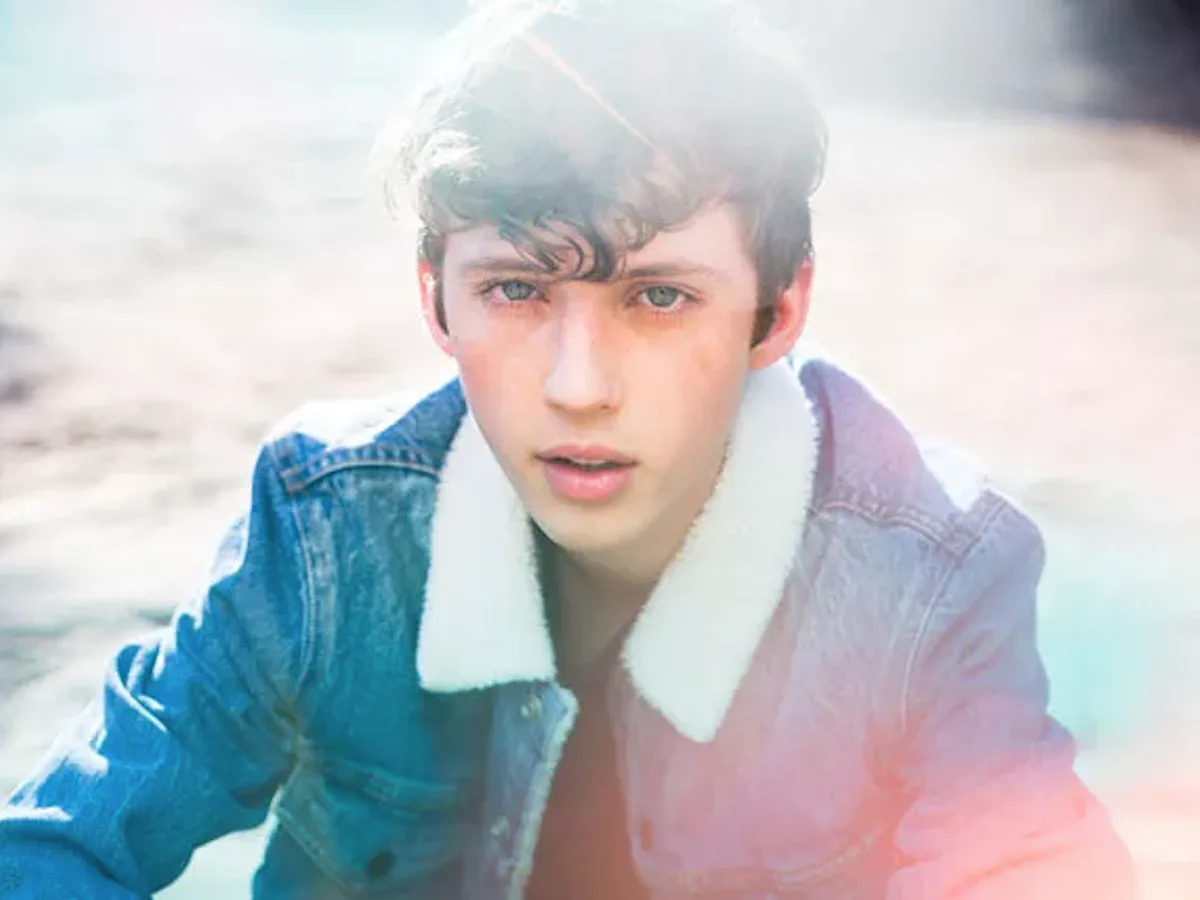
Troye Sivan in an intimate portrait for Vogue
Troye Sivan · Vogue ↗.

Sivan's work allows these contradictions to coexist without turning each one into a lesson.

Queer pop has a long history of challenging the limits of what mainstream audiences are willing to accept. David Bowie blurred the boundaries of masculinity with his androgynous glam-rock persona, while Freddie Mercury pushed the theatricality of male rock stardom to exhilarating extremes. Prince played with gender, sensuality and sexual ambiguity, refusing to be confined by conventional ideas of masculinity. Frankie Goes to Hollywood provoked controversy with the unapologetic sexuality of “Relax”, while George Michael’s “Outside” (1998) transformed a public scandal into a celebration of sexual freedom.

These artists didn’t all share the same identity or relationship with queerness, but their work challenged expectations around gender, sexuality and performance. Their legacies remind us that queer expression in pop isn’t new. What has changed is how much space artists are allowed to take up and the conditions attached to that freedom. 

This is why I keep returning to “FF”. Its sensuality is not at odds with its vulnerability; the two depend on each other. The video invites us to look at two men being physically intimate, but the song is preoccupied with a future that has not happened. The desire is real, even if its object remains partly imagined.

There is something beautifully irrational about that. Who has not built a fantasy around a person they barely know, or longed for a relationship before it has had the chance to exist? The experience is universal, but Sivan gives it a specifically queer setting without making it a problem to be solved.

I do not want every gay pop song to be explicit, any more than I want every queer love story to end happily. The freedom I am arguing for includes the freedom to be chaste, ambiguous, romantic, messy or completely uninterested in romance. The point is not that queer artists should have to express their sexuality. It is that they should not have to justify the forms that expression takes.

“Rush” and “FF” are particularly revealing when viewed together. One is a celebration of pleasure in the present; the other is a longing for a future that may never arrive. One is communal, physical and immediate. The other is intimate, imagined and tender. Neither is more authentically queer than the other. Both are part of the same emotional world.

That is what genuine representation should make possible: not just the opportunity to be seen, but the freedom to contradict yourself once you are.

I want gay pop to be allowed the same glorious excess as straight pop. I want it to be horny without apology, romantic without embarrassment and vulnerable without being reduced to a lesson about identity. I want queer artists to make music about wanting somebody simply because wanting somebody is one of the most ordinary, extraordinary things we do.

Troye Sivan is not just making room for gay desire in mainstream pop. He is making room for its contradictions. And perhaps that is the more meaningful kind of progress: not having to prove that queer people can love, lust or yearn, but finally being allowed to do all three without explanation.