Film & TV
The Best Horror Movies of the 2000s
Slashers, psychological nightmares and the films we watched way too young. Twenty reasons to leave the light on.
Film & TV
The Best Horror Movies of the 2000s
Slashers, psychological nightmares and the films we watched way too young. Twenty reasons to leave the light on.

Text

Noah Cruz

Forget tasteful. The 2000s had a chainsaw, a cursed tape, a wrong turn and two slashers fighting over the same kill.

This was horror at its most gloriously indecent: multiplex remakes with teeth, monsters in the woods, a bathroom nobody wanted to wake up in, and a backpacking trip that made every hostel booking feel suspect. We watched them too young, passed the DVDs around and pretended the cover art did not already have us sweating.

Twenty films, all from 2000–2009, ranked by fear factor, cultural afterlife and how badly they changed an ordinary place. A few are immaculate; a few are beautifully unhinged. The point is that we still talk about them with the lights on.

20
2005/slasher

House of Wax

Yes, Paris Hilton is in it. No, that is not the only reason it belongs here. The premise turns a tourist-trap town into a sticky, human-sized display case, then refuses to let anybody leave. Its cruelty is glossy, its set design is deranged, and the whole thing has the illicit thrill of a DVD you were definitely too young to rent. A mid-2000s slasher that understood a memorable location can do as much damage as a masked killer.

Paris Hilton in a frightened close-up from House of Wax
House of Wax (2005) · Image: IMDb.
19
2009/curse

Drag Me to Hell

Sam Raimi came back to horror with the manners of a carnival barker and the aim of a surgeon. A denied bank loan becomes a supernatural punishment; Alison Lohman gets thrown through a sequence of increasingly disgusting public humiliations. It is loud, funny, mean and perfectly aware that a flying set of dentures can be both ridiculous and terrifying. The ending snaps shut like a trapdoor. A rare studio horror film that seems delighted by its own bad behaviour.

Alison Lohman caught in a muddy supernatural ordeal in Drag Me to Hell
Drag Me to Hell (2009) · Image: KPBS.
18
2009/psychological

Orphan

Esther arrives looking like a child from an antique photograph and immediately makes the family home feel rented from someone else. Isabelle Fuhrman’s performance is a controlled little catastrophe: every polite smile lands like a warning. The film is pulp, absolutely, but it knows how to make adults doubt the evidence in front of them. Do not let anybody explain the twist before you watch it. The first half is already wicked enough.

Esther standing in a snowy setting in Orphan
Orphan (2009) · Image: IMDb.
17
2009/teen horror

Jennifer’s Body

Megan Fox is not a joke the film is making; she is the weapon it knows exactly how to use. Karyn Kusama and Diablo Cody turn the high-school man-eater premise into something sharper about friendship, desire and the way girls are consumed before anyone calls it horror. Amanda Seyfried gives it the ache underneath the blood. The original marketing missed the point. The audience that found it later did not.

Megan Fox as Jennifer in a fiery scene from Jennifer’s Body
Jennifer’s Body (2009) · Image: MUBI.
16
2007/found footage

Paranormal Activity

An ordinary bedroom, a locked-off camera and a door that might have moved. Oren Peli made almost nothing visible and forced the audience to do the exhausting work of watching every corner. The film premiered in 2007 and became a mainstream event in 2009; both dates belong to the story. Its real trick was making the walk from your own bed to the light switch feel like an unreasonable risk.

Night-vision bedroom camera view from Paranormal Activity
Paranormal Activity (2007) · Image: AlloCiné.
15
2004/supernatural

The Grudge

Takashi Shimizu remade his own Japanese nightmare for Hollywood and kept the thing that mattered: the curse does not negotiate. Sarah Michelle Gellar enters a Tokyo house where a sound, a staircase and a patch of dark hair can all announce the end. Some of its jump scares have been copied into exhaustion. That first experience—hearing the death rattle when the screen is already off—has not.
Sarah Michelle Gellar with a ghostly figure behind her in The Grudge
The Grudge (2004) · Image: TMDB.
14
2004/zombie siege

Dawn of the Dead

The first ten minutes are a full-scale suburban collapse. By the time Sarah Polley reaches the mall, Zack Snyder has already made ordinary daylight feel unsafe. The zombies run; the survivors stock up on snacks and weapons beneath fluorescent lights, as if capitalism might still open at nine. Romero’s original remains untouchable. This remake understood that the 2000s needed its apocalypse with the accelerator pressed through the floor.
Sarah Polley and fellow survivors run through the mall in Dawn of the Dead
Dawn of the Dead (2004) · Image: SensaCine.
13
2003/backwoods slasher

Wrong Turn

A flat tyre, no signal, trees everywhere: the road trip is over before the monsters even arrive. Wrong Turn takes a simple backwoods setup and squeezes it until every rustle beyond the frame sounds expensive. Eliza Dushku gives the group a fighting chance; the practical-creature nastiness does the rest. This is the film that made a shortcut through the woods feel like a personal threat.

Eliza Dushku stands near a rusted car in a forest in Wrong Turn
Wrong Turn (2003) · Image: IMDb.
12
2008/home invasion

The Strangers

Three masks. A house with too many windows. Liv Tyler trying to listen her way through the dark. Bryan Bertino strips the home-invasion film down until an ordinary room feels like an exposed stage. The scares do not depend on a complicated mythology or a killer’s manifesto. They depend on someone standing behind you for one second longer than you can bear.

A masked intruder appears inside the home in The Strangers
The Strangers (2008) · Image: IMDb.
11
2003/slasher showdown

Freddy vs. Jason

The title is the pitch, the poster and the entire dare. Freddy has jokes and razor fingers; Jason has a hockey mask and absolutely no interest in conversation. The film lets both franchises be ridiculous, then gives the monsters the messy, firelit showdown fans came for. Kelly Rowland is here too, because 2003 knew a crossover should behave like an event. Is it tasteful? Obviously not. Is it essential sleepover horror? Absolutely.

Freddy Krueger and Jason Voorhees clash in a burning building in Freddy vs. Jason
Freddy vs. Jason (2003) · Image: 2x2.
10
2000/death trap

Final Destination

The first film teaches a brilliantly horrible lesson: once death is hunting you, every loose screw, puddle and kitchen appliance becomes suspicious. Devon Sawa’s airplane premonition is the starting gun. The sequels made the elaborate kills an art form, but the original has a colder idea underneath the spectacle: you cannot see the monster because the monster is probability. It changed the way we looked at everyday objects, which is a pretty serious achievement for a sleepover movie.

Devon Sawa as Alex before the doomed flight in Final Destination
Final Destination (2000) · Image: CBS.
09
2008/extreme horror

Martyrs

A warning, not a dare: Pascal Laugier’s film contains sustained, severe violence. Its place here is not a trophy for enduring it. Martyrs starts as a revenge story, breaks its own shape and asks what happens when pain is turned into a system of belief. You can reject what it does and still recognise how fiercely it commits to doing it. This is the decade’s most difficult entry to recommend—and one of its hardest to forget.

A haunted close-up of a woman in the 2008 film Martyrs
Martyrs (2008) · Image: IMDb.
08
2005/extreme horror

Hostel

The backpacker fantasy curdles fast. Eli Roth sends young Americans chasing a bargain version of pleasure, then reveals the truly rich clientele: people paying to hurt them. The shock is not only the violence; it is how quickly bodies become a product in a locked room. Hostel premiered in 2005 and hit US cinemas in 2006. Either way, its nasty vision of tourism, entitlement and money belongs to this decade.

Paxton restrained in a dim torture chamber in Hostel
Hostel (2005) · Image: Slashfilm.
07
2007/found footage

[REC]

A television reporter follows firefighters into an apartment building. The doors close. The camera keeps rolling. Jaume Balagueró and Paco Plaza make found footage feel less like a gimmick than a pulse you cannot slow down. Every floor changes the rules; the final stretch makes the lens itself seem frightened. The American remake Quarantine has its admirers, but the Spanish original is the one that leaves the air in the room feeling used up.
Reporter Ángela Vidal in a terrified scene from the Spanish film REC
[REC] (2007) · Image: AlloCiné.
06
2006/desert survival

The Hills Have Eyes

A family stranded in the desert discovers that empty land is not empty at all. Alexandre Aja’s remake is vicious, sun-blasted and hard to shake; every possible route out looks like another way in. Its violence is genuinely upsetting, not a party trick. But the film has the nerve to make survival ugly too, turning an ordinary family trip into a fight that changes everybody who gets back.

Aaron Stanford stands bloodied in the desert in The Hills Have Eyes
The Hills Have Eyes (2006) · Image: IMDb.
05
2003/slasher

The Texas Chainsaw Massacre

The remake did not need to improve the 1974 original. It needed to make a multiplex audience feel grimy on the way out, and it did. Jessica Biel is run through a landscape of rotting wood, bad decisions and relentless pursuit; Leatherface feels less like an icon than a very large practical problem. This is 2000s studio horror at its most punishing and most brutally efficient.

Jessica Biel in a tense scene from the 2003 Texas Chainsaw Massacre
The Texas Chainsaw Massacre (2003) · Image: IMDb.
04
2004/psychological trap

Saw

Before the franchise became a warehouse of engineering problems, the first Saw was two men, a filthy bathroom and a question that keeps getting worse. James Wan and Leigh Whannell turned a contained premise into a cultural machine: a puppet, a voice, a set of rules and a final reveal built to make the whole room shout. Its imitators remembered the traps. The original also knew how to make time itself feel like the trap.

Cary Elwes chained inside the bathroom in Saw
Saw (2004) · Image: Film Cred.
03
2002/outbreak

28 Days Later

Cillian Murphy wakes to an empty London and the 2000s suddenly have their defining apocalypse image. Danny Boyle’s grainy digital camera makes the city look both recognisable and already lost. The infected move with terrifying speed, but the film’s deepest fear is what survivors will do once institutions have vanished. It did not just revive the outbreak movie. It made modern life itself look frighteningly easy to switch off.

Cillian Murphy walking alone across an empty Westminster Bridge in 28 Days Later
28 Days Later (2002) · Image: Inverse.
02
2002/cursed media

The Ring

A videotape, a phone call, seven days. The premise was so clean it could travel through a playground as a rumour, which is exactly why it worked on kids who had no business watching it. Gore Verbinski drenched the American remake in a sickly blue-green light; Naomi Watts brought the dread down to human scale. And then Samara crossed the television screen. For a while, no blank TV in any room felt blank again.

Samara emerging from a television in The Ring
The Ring (2002) · Image: IMDb.
01
2005/survival horror

The Descent

Six women go underground. That is enough to make the palms sweat before the creatures arrive. Neil Marshall understands that darkness is not an absence on screen; it is a place the audience has to enter with the characters. The friendships fracture, the cave gets narrower, and every new source of light shows something you would rather not see. For sheer physical terror, nothing else in this decade gets under the skin as completely. Watch the original UK cut.

Women crawling through a narrow cave passage in The Descent
The Descent (2005) · Image: IMDb.

Somewhere between the woods, the desert, the mall and that cave, the decade learned a meaner rule: getting out alive is not the same as getting over it.

20:46

Text

Noah Cruz

Forget tasteful. The 2000s had a chainsaw, a cursed tape, a wrong turn and two slashers fighting over the same kill.

This was horror at its most gloriously indecent: multiplex remakes with teeth, monsters in the woods, a bathroom nobody wanted to wake up in, and a backpacking trip that made every hostel booking feel suspect. We watched them too young, passed the DVDs around and pretended the cover art did not already have us sweating.

Twenty films, all from 2000–2009, ranked by fear factor, cultural afterlife and how badly they changed an ordinary place. A few are immaculate; a few are beautifully unhinged. The point is that we still talk about them with the lights on.

20
2005/slasher

House of Wax

Yes, Paris Hilton is in it. No, that is not the only reason it belongs here. The premise turns a tourist-trap town into a sticky, human-sized display case, then refuses to let anybody leave. Its cruelty is glossy, its set design is deranged, and the whole thing has the illicit thrill of a DVD you were definitely too young to rent. A mid-2000s slasher that understood a memorable location can do as much damage as a masked killer.

Paris Hilton in a frightened close-up from House of Wax
House of Wax (2005) · Image: IMDb.
19
2009/curse

Drag Me to Hell

Sam Raimi came back to horror with the manners of a carnival barker and the aim of a surgeon. A denied bank loan becomes a supernatural punishment; Alison Lohman gets thrown through a sequence of increasingly disgusting public humiliations. It is loud, funny, mean and perfectly aware that a flying set of dentures can be both ridiculous and terrifying. The ending snaps shut like a trapdoor. A rare studio horror film that seems delighted by its own bad behaviour.

Alison Lohman caught in a muddy supernatural ordeal in Drag Me to Hell
Drag Me to Hell (2009) · Image: KPBS.
18
2009/psychological

Orphan

Esther arrives looking like a child from an antique photograph and immediately makes the family home feel rented from someone else. Isabelle Fuhrman’s performance is a controlled little catastrophe: every polite smile lands like a warning. The film is pulp, absolutely, but it knows how to make adults doubt the evidence in front of them. Do not let anybody explain the twist before you watch it. The first half is already wicked enough.

Esther standing in a snowy setting in Orphan
Orphan (2009) · Image: IMDb.
17
2009/teen horror

Jennifer’s Body

Megan Fox is not a joke the film is making; she is the weapon it knows exactly how to use. Karyn Kusama and Diablo Cody turn the high-school man-eater premise into something sharper about friendship, desire and the way girls are consumed before anyone calls it horror. Amanda Seyfried gives it the ache underneath the blood. The original marketing missed the point. The audience that found it later did not.

Megan Fox as Jennifer in a fiery scene from Jennifer’s Body
Jennifer’s Body (2009) · Image: MUBI.
16
2007/found footage

Paranormal Activity

An ordinary bedroom, a locked-off camera and a door that might have moved. Oren Peli made almost nothing visible and forced the audience to do the exhausting work of watching every corner. The film premiered in 2007 and became a mainstream event in 2009; both dates belong to the story. Its real trick was making the walk from your own bed to the light switch feel like an unreasonable risk.

Night-vision bedroom camera view from Paranormal Activity
Paranormal Activity (2007) · Image: AlloCiné.
15
2004/supernatural

The Grudge

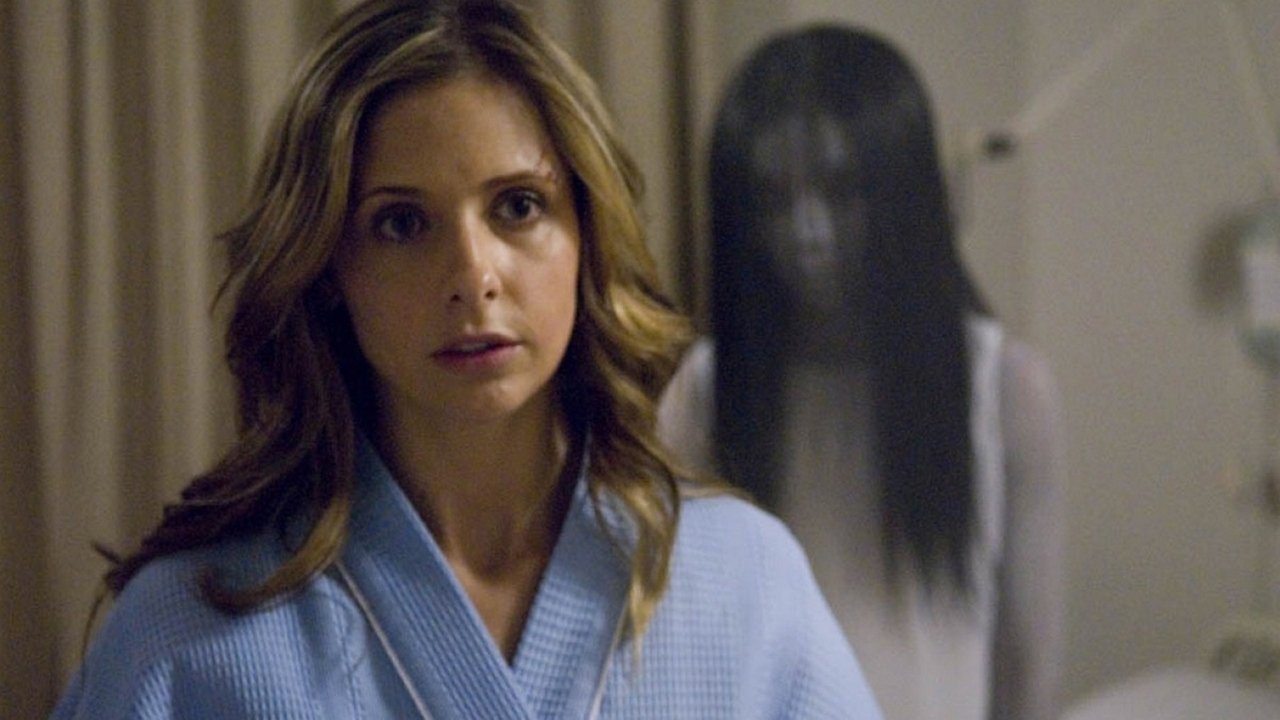
Takashi Shimizu remade his own Japanese nightmare for Hollywood and kept the thing that mattered: the curse does not negotiate. Sarah Michelle Gellar enters a Tokyo house where a sound, a staircase and a patch of dark hair can all announce the end. Some of its jump scares have been copied into exhaustion. That first experience—hearing the death rattle when the screen is already off—has not.

Sarah Michelle Gellar with a ghostly figure behind her in The Grudge
The Grudge (2004) · Image: TMDB.
14
2004/zombie siege

Dawn of the Dead

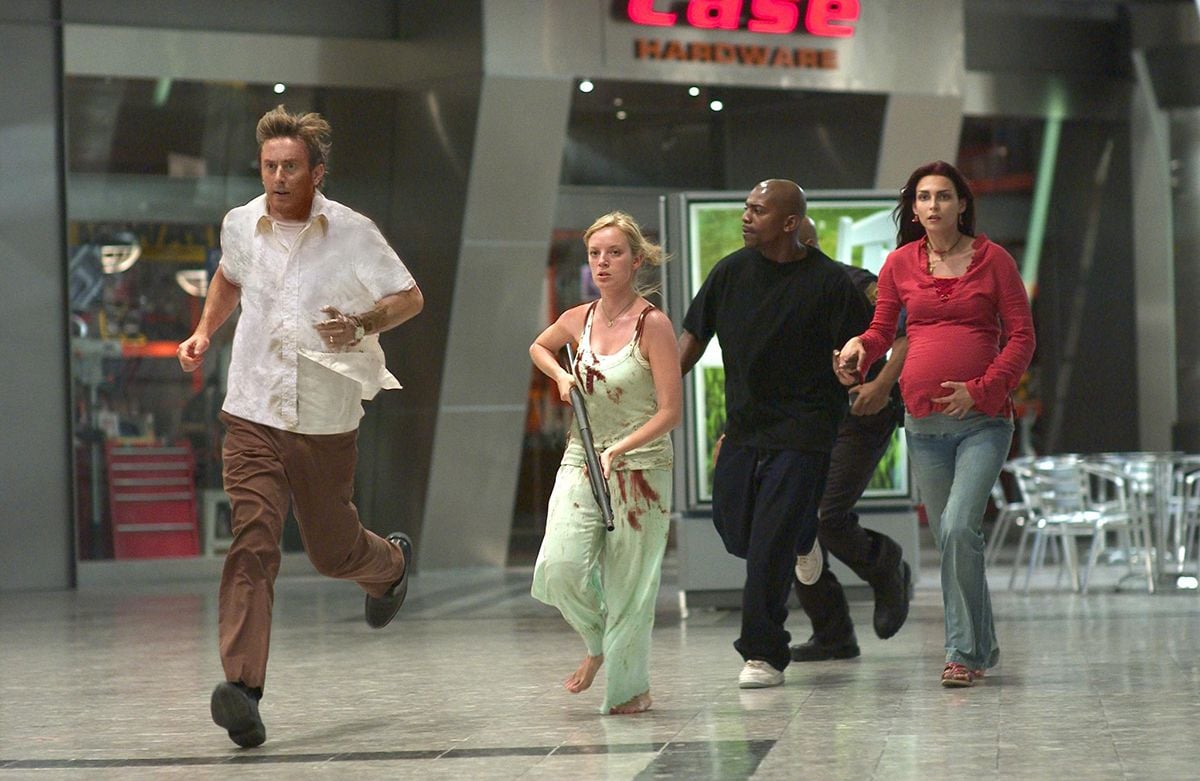
The first ten minutes are a full-scale suburban collapse. By the time Sarah Polley reaches the mall, Zack Snyder has already made ordinary daylight feel unsafe. The zombies run; the survivors stock up on snacks and weapons beneath fluorescent lights, as if capitalism might still open at nine. Romero’s original remains untouchable. This remake understood that the 2000s needed its apocalypse with the accelerator pressed through the floor.

Sarah Polley and fellow survivors run through the mall in Dawn of the Dead
Dawn of the Dead (2004) · Image: SensaCine.
13
2003/backwoods slasher

Wrong Turn

A flat tyre, no signal, trees everywhere: the road trip is over before the monsters even arrive. Wrong Turn takes a simple backwoods setup and squeezes it until every rustle beyond the frame sounds expensive. Eliza Dushku gives the group a fighting chance; the practical-creature nastiness does the rest. This is the film that made a shortcut through the woods feel like a personal threat.

Eliza Dushku stands near a rusted car in a forest in Wrong Turn
Wrong Turn (2003) · Image: IMDb.
12
2008/home invasion

The Strangers

Three masks. A house with too many windows. Liv Tyler trying to listen her way through the dark. Bryan Bertino strips the home-invasion film down until an ordinary room feels like an exposed stage. The scares do not depend on a complicated mythology or a killer’s manifesto. They depend on someone standing behind you for one second longer than you can bear.

A masked intruder appears inside the home in The Strangers
The Strangers (2008) · Image: IMDb.
11
2003/slasher showdown

Freddy vs. Jason

The title is the pitch, the poster and the entire dare. Freddy has jokes and razor fingers; Jason has a hockey mask and absolutely no interest in conversation. The film lets both franchises be ridiculous, then gives the monsters the messy, firelit showdown fans came for. Kelly Rowland is here too, because 2003 knew a crossover should behave like an event. Is it tasteful? Obviously not. Is it essential sleepover horror? Absolutely.

Freddy Krueger and Jason Voorhees clash in a burning building in Freddy vs. Jason
Freddy vs. Jason (2003) · Image: 2x2.
10
2000/death trap

Final Destination

The first film teaches a brilliantly horrible lesson: once death is hunting you, every loose screw, puddle and kitchen appliance becomes suspicious. Devon Sawa’s airplane premonition is the starting gun. The sequels made the elaborate kills an art form, but the original has a colder idea underneath the spectacle: you cannot see the monster because the monster is probability. It changed the way we looked at everyday objects, which is a pretty serious achievement for a sleepover movie.

Devon Sawa as Alex before the doomed flight in Final Destination
Final Destination (2000) · Image: CBS.
09
2008/extreme horror

Martyrs

A warning, not a dare: Pascal Laugier’s film contains sustained, severe violence. Its place here is not a trophy for enduring it. Martyrs starts as a revenge story, breaks its own shape and asks what happens when pain is turned into a system of belief. You can reject what it does and still recognise how fiercely it commits to doing it. This is the decade’s most difficult entry to recommend—and one of its hardest to forget.

A haunted close-up of a woman in the 2008 film Martyrs
Martyrs (2008) · Image: IMDb.
08
2005/extreme horror

Hostel

The backpacker fantasy curdles fast. Eli Roth sends young Americans chasing a bargain version of pleasure, then reveals the truly rich clientele: people paying to hurt them. The shock is not only the violence; it is how quickly bodies become a product in a locked room. Hostel premiered in 2005 and hit US cinemas in 2006. Either way, its nasty vision of tourism, entitlement and money belongs to this decade.

Paxton restrained in a dim torture chamber in Hostel
Hostel (2005) · Image: Slashfilm.
07
2007/found footage

[REC]

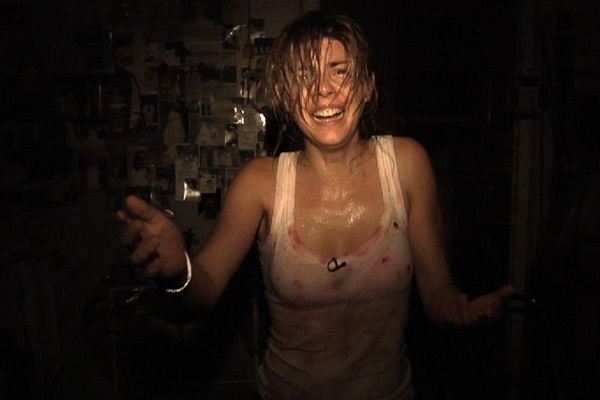
A television reporter follows firefighters into an apartment building. The doors close. The camera keeps rolling. Jaume Balagueró and Paco Plaza make found footage feel less like a gimmick than a pulse you cannot slow down. Every floor changes the rules; the final stretch makes the lens itself seem frightened. The American remake Quarantine has its admirers, but the Spanish original is the one that leaves the air in the room feeling used up.

Reporter Ángela Vidal in a terrified scene from the Spanish film REC
[REC] (2007) · Image: AlloCiné.
06
2006/desert survival

The Hills Have Eyes

A family stranded in the desert discovers that empty land is not empty at all. Alexandre Aja’s remake is vicious, sun-blasted and hard to shake; every possible route out looks like another way in. Its violence is genuinely upsetting, not a party trick. But the film has the nerve to make survival ugly too, turning an ordinary family trip into a fight that changes everybody who gets back.

Aaron Stanford stands bloodied in the desert in The Hills Have Eyes
The Hills Have Eyes (2006) · Image: IMDb.
05
2003/slasher

The Texas Chainsaw Massacre

The remake did not need to improve the 1974 original. It needed to make a multiplex audience feel grimy on the way out, and it did. Jessica Biel is run through a landscape of rotting wood, bad decisions and relentless pursuit; Leatherface feels less like an icon than a very large practical problem. This is 2000s studio horror at its most punishing and most brutally efficient.

Jessica Biel in a tense scene from the 2003 Texas Chainsaw Massacre
The Texas Chainsaw Massacre (2003) · Image: IMDb.
04
2004/psychological trap

Saw

Before the franchise became a warehouse of engineering problems, the first Saw was two men, a filthy bathroom and a question that keeps getting worse. James Wan and Leigh Whannell turned a contained premise into a cultural machine: a puppet, a voice, a set of rules and a final reveal built to make the whole room shout. Its imitators remembered the traps. The original also knew how to make time itself feel like the trap.

Cary Elwes chained inside the bathroom in Saw
Saw (2004) · Image: Film Cred.
03
2002/outbreak

28 Days Later

Cillian Murphy wakes to an empty London and the 2000s suddenly have their defining apocalypse image. Danny Boyle’s grainy digital camera makes the city look both recognisable and already lost. The infected move with terrifying speed, but the film’s deepest fear is what survivors will do once institutions have vanished. It did not just revive the outbreak movie. It made modern life itself look frighteningly easy to switch off.

Cillian Murphy walking alone across an empty Westminster Bridge in 28 Days Later
28 Days Later (2002) · Image: Inverse.
02
2002/cursed media

The Ring

A videotape, a phone call, seven days. The premise was so clean it could travel through a playground as a rumour, which is exactly why it worked on kids who had no business watching it. Gore Verbinski drenched the American remake in a sickly blue-green light; Naomi Watts brought the dread down to human scale. And then Samara crossed the television screen. For a while, no blank TV in any room felt blank again.

Samara emerging from a television in The Ring
The Ring (2002) · Image: IMDb.
01
2005/survival horror

The Descent

Six women go underground. That is enough to make the palms sweat before the creatures arrive. Neil Marshall understands that darkness is not an absence on screen; it is a place the audience has to enter with the characters. The friendships fracture, the cave gets narrower, and every new source of light shows something you would rather not see. For sheer physical terror, nothing else in this decade gets under the skin as completely. Watch the original UK cut.

Women crawling through a narrow cave passage in The Descent
The Descent (2005) · Image: IMDb.

Somewhere between the woods, the desert, the mall and that cave, the decade learned a meaner rule: getting out alive is not the same as getting over it.

20:46
Film & TV
The Best Horror Movies of the 2000s
Slashers, psychological nightmares and the films we watched way too young. Twenty reasons to leave the light on.

Text

Noah Cruz

Forget tasteful. The 2000s had a chainsaw, a cursed tape, a wrong turn and two slashers fighting over the same kill.

This was horror at its most gloriously indecent: multiplex remakes with teeth, monsters in the woods, a bathroom nobody wanted to wake up in, and a backpacking trip that made every hostel booking feel suspect. We watched them too young, passed the DVDs around and pretended the cover art did not already have us sweating.

Twenty films, all from 2000–2009, ranked by fear factor, cultural afterlife and how badly they changed an ordinary place. A few are immaculate; a few are beautifully unhinged. The point is that we still talk about them with the lights on.

20
2005/slasher

House of Wax

Yes, Paris Hilton is in it. No, that is not the only reason it belongs here. The premise turns a tourist-trap town into a sticky, human-sized display case, then refuses to let anybody leave. Its cruelty is glossy, its set design is deranged, and the whole thing has the illicit thrill of a DVD you were definitely too young to rent. A mid-2000s slasher that understood a memorable location can do as much damage as a masked killer.

Paris Hilton in a frightened close-up from House of Wax
House of Wax (2005) · Image: IMDb.
19
2009/curse

Drag Me to Hell

Sam Raimi came back to horror with the manners of a carnival barker and the aim of a surgeon. A denied bank loan becomes a supernatural punishment; Alison Lohman gets thrown through a sequence of increasingly disgusting public humiliations. It is loud, funny, mean and perfectly aware that a flying set of dentures can be both ridiculous and terrifying. The ending snaps shut like a trapdoor. A rare studio horror film that seems delighted by its own bad behaviour.

Alison Lohman caught in a muddy supernatural ordeal in Drag Me to Hell
Drag Me to Hell (2009) · Image: KPBS.
18
2009/psychological

Orphan

Esther arrives looking like a child from an antique photograph and immediately makes the family home feel rented from someone else. Isabelle Fuhrman’s performance is a controlled little catastrophe: every polite smile lands like a warning. The film is pulp, absolutely, but it knows how to make adults doubt the evidence in front of them. Do not let anybody explain the twist before you watch it. The first half is already wicked enough.

Esther standing in a snowy setting in Orphan
Orphan (2009) · Image: IMDb.
17
2009/teen horror

Jennifer’s Body

Megan Fox is not a joke the film is making; she is the weapon it knows exactly how to use. Karyn Kusama and Diablo Cody turn the high-school man-eater premise into something sharper about friendship, desire and the way girls are consumed before anyone calls it horror. Amanda Seyfried gives it the ache underneath the blood. The original marketing missed the point. The audience that found it later did not.

Megan Fox as Jennifer in a fiery scene from Jennifer’s Body
Jennifer’s Body (2009) · Image: MUBI.
16
2007/found footage

Paranormal Activity

An ordinary bedroom, a locked-off camera and a door that might have moved. Oren Peli made almost nothing visible and forced the audience to do the exhausting work of watching every corner. The film premiered in 2007 and became a mainstream event in 2009; both dates belong to the story. Its real trick was making the walk from your own bed to the light switch feel like an unreasonable risk.

Night-vision bedroom camera view from Paranormal Activity
Paranormal Activity (2007) · Image: AlloCiné.
15
2004/supernatural

The Grudge

Takashi Shimizu remade his own Japanese nightmare for Hollywood and kept the thing that mattered: the curse does not negotiate. Sarah Michelle Gellar enters a Tokyo house where a sound, a staircase and a patch of dark hair can all announce the end. Some of its jump scares have been copied into exhaustion. That first experience—hearing the death rattle when the screen is already off—has not.

Sarah Michelle Gellar with a ghostly figure behind her in The Grudge
The Grudge (2004) · Image: TMDB.
14
2004/zombie siege

Dawn of the Dead

The first ten minutes are a full-scale suburban collapse. By the time Sarah Polley reaches the mall, Zack Snyder has already made ordinary daylight feel unsafe. The zombies run; the survivors stock up on snacks and weapons beneath fluorescent lights, as if capitalism might still open at nine. Romero’s original remains untouchable. This remake understood that the 2000s needed its apocalypse with the accelerator pressed through the floor.

Sarah Polley and fellow survivors run through the mall in Dawn of the Dead
Dawn of the Dead (2004) · Image: SensaCine.
13
2003/backwoods slasher

Wrong Turn

A flat tyre, no signal, trees everywhere: the road trip is over before the monsters even arrive. Wrong Turn takes a simple backwoods setup and squeezes it until every rustle beyond the frame sounds expensive. Eliza Dushku gives the group a fighting chance; the practical-creature nastiness does the rest. This is the film that made a shortcut through the woods feel like a personal threat.

Eliza Dushku stands near a rusted car in a forest in Wrong Turn
Wrong Turn (2003) · Image: IMDb.
12
2008/home invasion

The Strangers

Three masks. A house with too many windows. Liv Tyler trying to listen her way through the dark. Bryan Bertino strips the home-invasion film down until an ordinary room feels like an exposed stage. The scares do not depend on a complicated mythology or a killer’s manifesto. They depend on someone standing behind you for one second longer than you can bear.

A masked intruder appears inside the home in The Strangers
The Strangers (2008) · Image: IMDb.
11
2003/slasher showdown

Freddy vs. Jason

The title is the pitch, the poster and the entire dare. Freddy has jokes and razor fingers; Jason has a hockey mask and absolutely no interest in conversation. The film lets both franchises be ridiculous, then gives the monsters the messy, firelit showdown fans came for. Kelly Rowland is here too, because 2003 knew a crossover should behave like an event. Is it tasteful? Obviously not. Is it essential sleepover horror? Absolutely.

Freddy Krueger and Jason Voorhees clash in a burning building in Freddy vs. Jason
Freddy vs. Jason (2003) · Image: 2x2.
10
2000/death trap

Final Destination

The first film teaches a brilliantly horrible lesson: once death is hunting you, every loose screw, puddle and kitchen appliance becomes suspicious. Devon Sawa’s airplane premonition is the starting gun. The sequels made the elaborate kills an art form, but the original has a colder idea underneath the spectacle: you cannot see the monster because the monster is probability. It changed the way we looked at everyday objects, which is a pretty serious achievement for a sleepover movie.

Devon Sawa as Alex before the doomed flight in Final Destination
Final Destination (2000) · Image: CBS.
09
2008/extreme horror

Martyrs

A warning, not a dare: Pascal Laugier’s film contains sustained, severe violence. Its place here is not a trophy for enduring it. Martyrs starts as a revenge story, breaks its own shape and asks what happens when pain is turned into a system of belief. You can reject what it does and still recognise how fiercely it commits to doing it. This is the decade’s most difficult entry to recommend—and one of its hardest to forget.

A haunted close-up of a woman in the 2008 film Martyrs
Martyrs (2008) · Image: IMDb.
08
2005/extreme horror

Hostel

The backpacker fantasy curdles fast. Eli Roth sends young Americans chasing a bargain version of pleasure, then reveals the truly rich clientele: people paying to hurt them. The shock is not only the violence; it is how quickly bodies become a product in a locked room. Hostel premiered in 2005 and hit US cinemas in 2006. Either way, its nasty vision of tourism, entitlement and money belongs to this decade.

Paxton restrained in a dim torture chamber in Hostel
Hostel (2005) · Image: Slashfilm.
07
2007/found footage

[REC]

A television reporter follows firefighters into an apartment building. The doors close. The camera keeps rolling. Jaume Balagueró and Paco Plaza make found footage feel less like a gimmick than a pulse you cannot slow down. Every floor changes the rules; the final stretch makes the lens itself seem frightened. The American remake Quarantine has its admirers, but the Spanish original is the one that leaves the air in the room feeling used up.

Reporter Ángela Vidal in a terrified scene from the Spanish film REC
[REC] (2007) · Image: AlloCiné.
06
2006/desert survival

The Hills Have Eyes

A family stranded in the desert discovers that empty land is not empty at all. Alexandre Aja’s remake is vicious, sun-blasted and hard to shake; every possible route out looks like another way in. Its violence is genuinely upsetting, not a party trick. But the film has the nerve to make survival ugly too, turning an ordinary family trip into a fight that changes everybody who gets back.

Aaron Stanford stands bloodied in the desert in The Hills Have Eyes
The Hills Have Eyes (2006) · Image: IMDb.
05
2003/slasher

The Texas Chainsaw Massacre

The remake did not need to improve the 1974 original. It needed to make a multiplex audience feel grimy on the way out, and it did. Jessica Biel is run through a landscape of rotting wood, bad decisions and relentless pursuit; Leatherface feels less like an icon than a very large practical problem. This is 2000s studio horror at its most punishing and most brutally efficient.

Jessica Biel in a tense scene from the 2003 Texas Chainsaw Massacre
The Texas Chainsaw Massacre (2003) · Image: IMDb.
04
2004/psychological trap

Saw

Before the franchise became a warehouse of engineering problems, the first Saw was two men, a filthy bathroom and a question that keeps getting worse. James Wan and Leigh Whannell turned a contained premise into a cultural machine: a puppet, a voice, a set of rules and a final reveal built to make the whole room shout. Its imitators remembered the traps. The original also knew how to make time itself feel like the trap.

Cary Elwes chained inside the bathroom in Saw
Saw (2004) · Image: Film Cred.
03
2002/outbreak

28 Days Later

Cillian Murphy wakes to an empty London and the 2000s suddenly have their defining apocalypse image. Danny Boyle’s grainy digital camera makes the city look both recognisable and already lost. The infected move with terrifying speed, but the film’s deepest fear is what survivors will do once institutions have vanished. It did not just revive the outbreak movie. It made modern life itself look frighteningly easy to switch off.

Cillian Murphy walking alone across an empty Westminster Bridge in 28 Days Later
28 Days Later (2002) · Image: Inverse.
02
2002/cursed media

The Ring

A videotape, a phone call, seven days. The premise was so clean it could travel through a playground as a rumour, which is exactly why it worked on kids who had no business watching it. Gore Verbinski drenched the American remake in a sickly blue-green light; Naomi Watts brought the dread down to human scale. And then Samara crossed the television screen. For a while, no blank TV in any room felt blank again.

Samara emerging from a television in The Ring
The Ring (2002) · Image: IMDb.
01
2005/survival horror

The Descent

Six women go underground. That is enough to make the palms sweat before the creatures arrive. Neil Marshall understands that darkness is not an absence on screen; it is a place the audience has to enter with the characters. The friendships fracture, the cave gets narrower, and every new source of light shows something you would rather not see. For sheer physical terror, nothing else in this decade gets under the skin as completely. Watch the original UK cut.

Women crawling through a narrow cave passage in The Descent
The Descent (2005) · Image: IMDb.

Somewhere between the woods, the desert, the mall and that cave, the decade learned a meaner rule: getting out alive is not the same as getting over it.

20:46
Get Frenzy straight to your inbox!
Latest